
Manage your tracker preferences
We use cookies and similar tracking technologies to remember preferences, analyze traffic, and deliver ads. Using some kinds of trackers (like cross-site or behavioral advertising cookies) may be considered a “sale” or “sharing” of personal data under certain state laws. You can opt in or out of these trackers below.
Targeted advertising cookies and similar trackers On
Setting this to “off” disables targeted advertising and related trackers in your current browser. To fully opt out, you must disable tracking on each browser and device you use. Clearing cookies may reset your preferences. Because we can't link your Axios subscriber account (email) to browser cookies, you may also want to update your settings in the Privacy Center to ensure your account is fully opted out. See our Privacy Policy for more on how we use personal data and your rights. Review our Privacy Policy at axios.com/legal for more on how we use personal data and your rights.
Save
2 hours ago - Business
ABC's FCC battle could redefine press freedom

-
email (opens in new window)
-
sms (opens in new window)
-
facebook (opens in new window)
twitter (opens in new window)
linkedin (opens in new window)
bluesky (opens in new window)
Add Axios as your preferred source to
see more of our stories on Google.
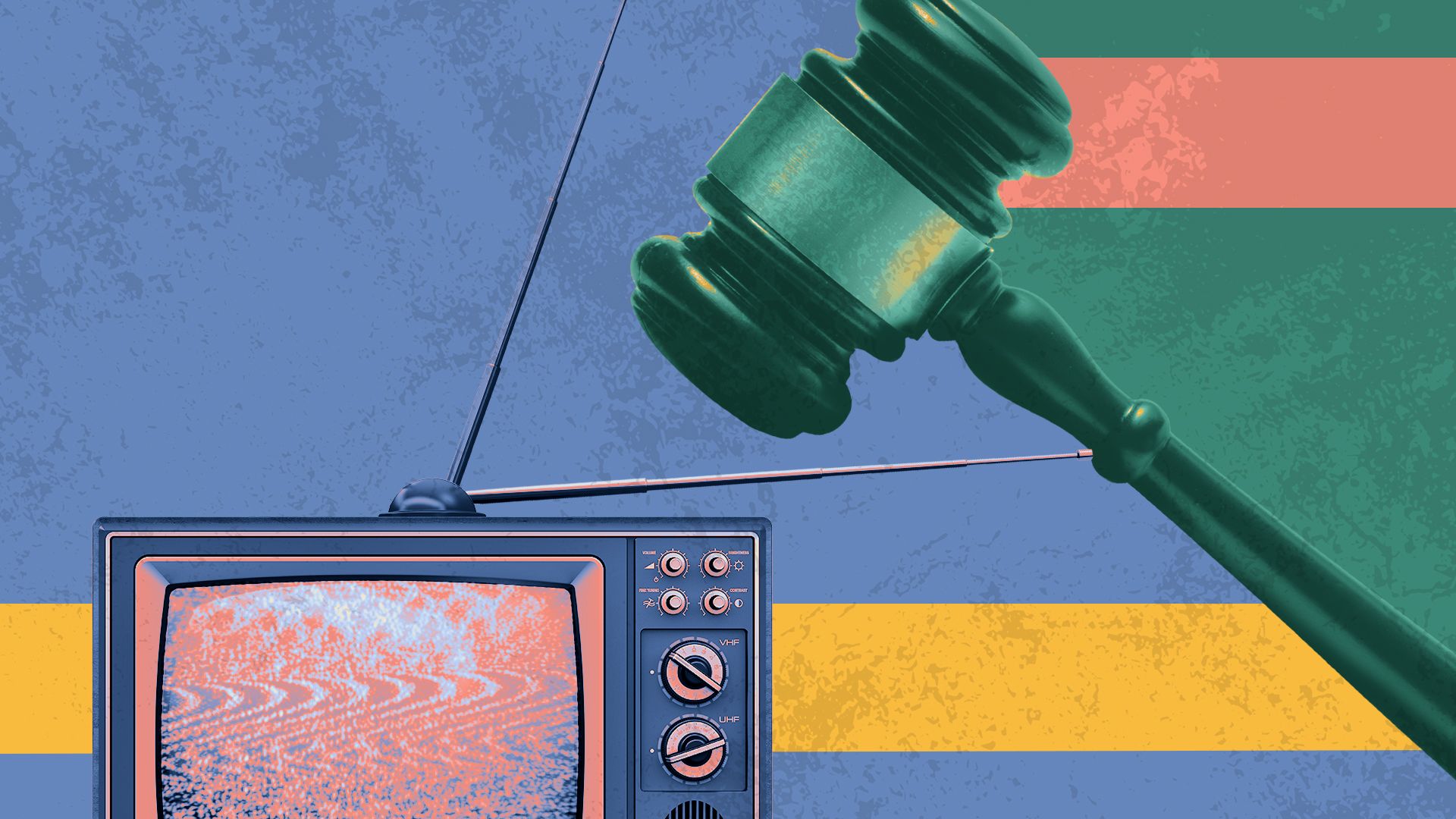
Illustration: Sarah Grillo/Axios. Stock: Getty Images
The outcome of ABC's legal battle with the Federal Communications Commission could set a landmark precedent around press freedom and the role businesses play in supporting American democracy.
Why it matters: The FCC's efforts to target broadcasters deemed critical of the president speak to a broader trend of regulatory agencies losing or conceding power to the executive branch during the Trump era.
- FCC chair Brendan Carr has suggested his agency isn't independent and that commissioners who are supposed to independently regulate broadcasters are ultimately governed by the president.
State of play: Carr is targeting late-night and daytime talk shows, like ABC's "The View," arguing they shouldn't be exempt from rules that require "bona fide news interview programs" to allot equal air time for competing political candidates.
- In a notable departure from its previous effort to acquiesce to political pressure from the president, ABC has lambasted Carr, arguing his actions threaten to "upend decades of settled law and practice and chill critical protected speech."
Zoom out: The FCC has simultaneously ordered an accelerated review of ABC's local station broadcast licenses as it investigates whether those stations violated rules that are meant to prevent "unlawful discrimination" related to ABC's diversity, equity and inclusion policies.
-
ABC called the order "unlawful, arbitrary, and unconstitutional" when submitting the applications the following month.
-
The FCC has launched investigations into multiple broadcasters for their DEI practices, including NBC and CBS.
This story is part of an Axios Deep Dive on the policy debates shaping America's future. Read more in the series:
America's killer app: The dollar as the world's currency
AI oversight gap could leave a lasting legacy
The power decisions that could shape the next century
The fight over America's vaccine future
America's race categories face a stress test
-
email (opens in new window)
-
sms (opens in new window)
-
facebook (opens in new window)
twitter (opens in new window)
linkedin (opens in new window)
bluesky (opens in new window)