
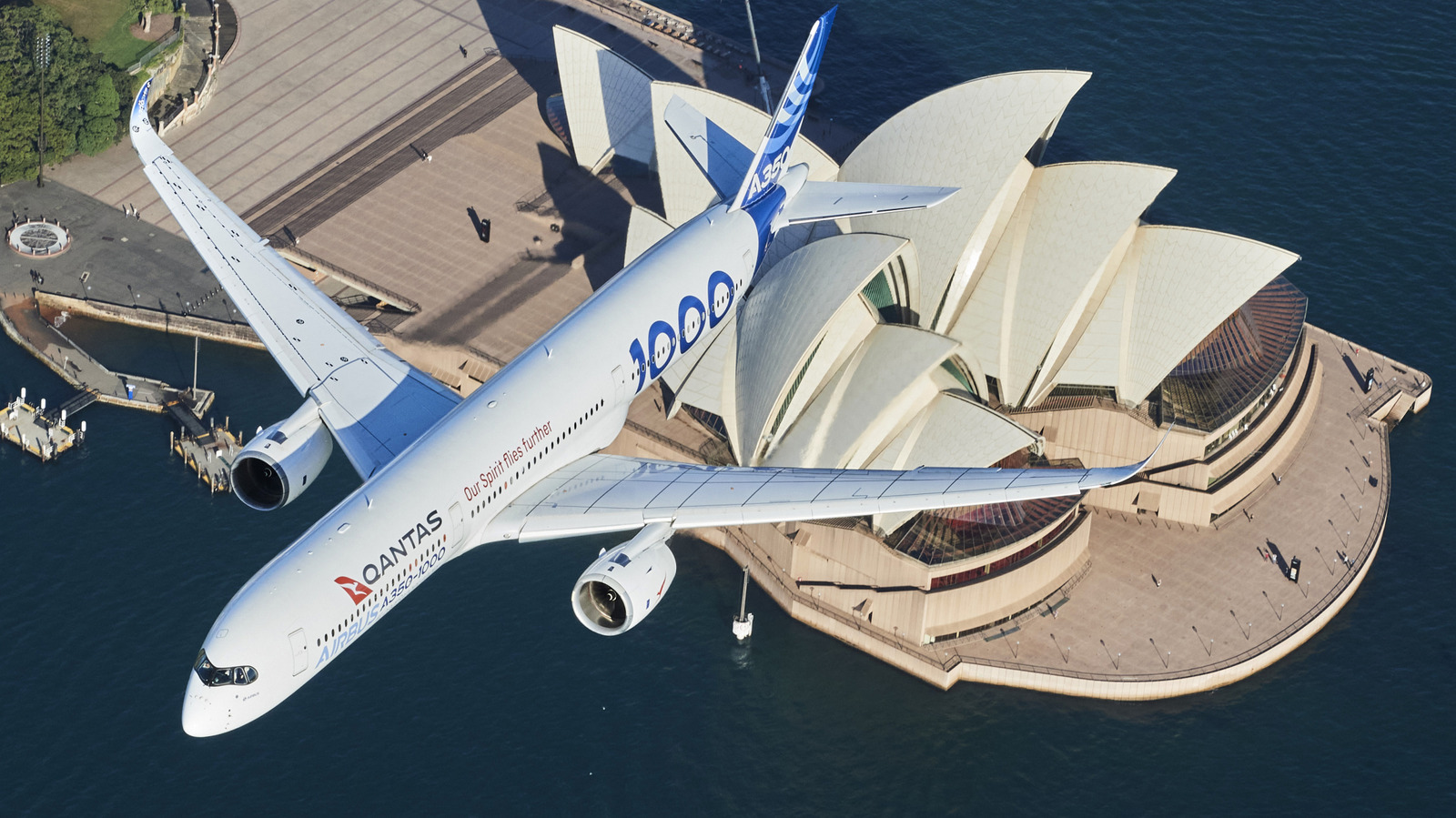
Airbus Wants Near-10,000 Mile Nonstop Flights, And This Is The Plane To Do It
By Brontë WielandJune 20, 2026 10:25 pm EST
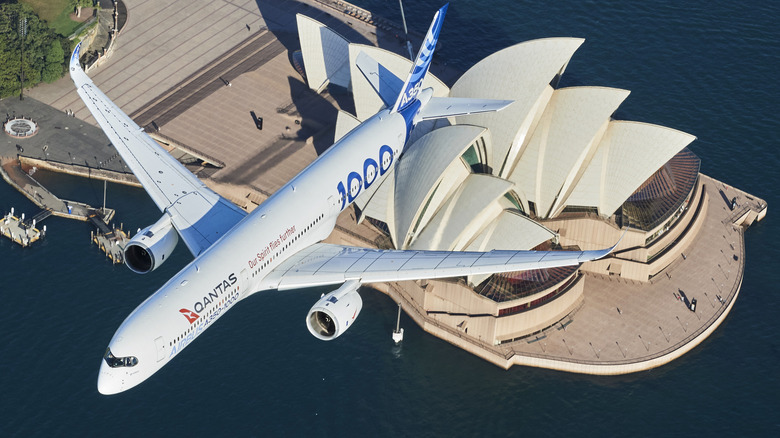 James D. Morgan/Getty Images
For now, the longest nonstop flights available commercially all take around 18 or 19 hours to complete, and they cover distances ranging approximately between 7,000 and 9,500 miles. These routes connect such far-distant places as New York City and Singapore, London to Perth, and Auckland to New York City. There's no denying that these long-haul flights cover massive distances, but there are still a couple popular routes that most commercial planes simply can't cover on a nonstop flight. Qantas Airways and Airbus have teamed up to try and fill this long-anticipated niche, and their newly developed Project Sunrise planes are poised to pull it off.
Project Sunrise is named after the 33-hour nonstop flights Qantas ran between Sri Lanka and Western Australia during World War II. The project began in 2017 as Qantas sought the technology necessary to complete the 10,000-nautical-mile (11,000-mile) routes between Sydney, Australia and NYC, and between London and Sydney without stopping. Either route is estimated to take about 22 hours, and Qantas hasn't yet unveiled which route it will choose to run first, though the plan is to eventually get both NYC-to-Sydney and London-to-Sydney up and running.
Airbus and Qantas completed the first experimental flight of the new A350-1000ULR in June 2026 outside Toulouse, France, where two pilots and a flight engineer motored around in the experimental craft for nearly four hours to collect data. Tests of this first ultra-long-range version of the A350-1000 are expected to last for two months, and if all goes well, the final product should be ready for commercial flights by April 2027. Maybe by then, Republicans' war to make gas expensive will be over, in which case this long-awaited nonstop route might actually be accessible(-ish) to the average person.
Check out the newest ultra-long-range Airbus
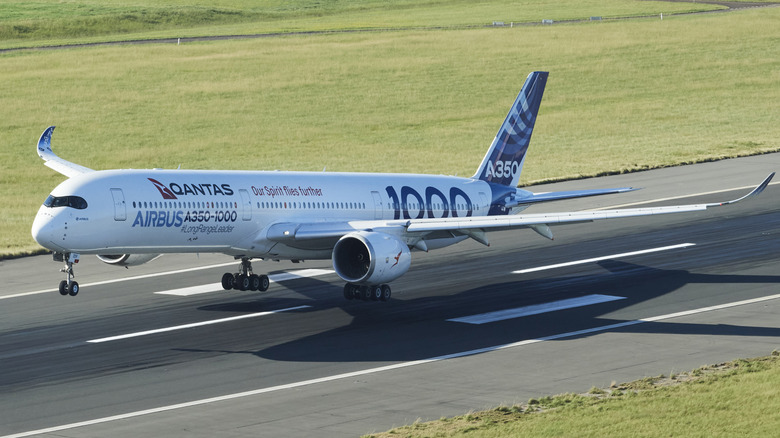 James D. Morgan/Getty Images
While you might expect the world's longest-range commercial aircraft to also be one of the largest planes you can fly on, that's not the case. The Airbus A380 still holds that record and is capable of carrying up to 853 passengers. Instead of increasing plane size to try to fit more fuel, the Project Sunrise planes use the same baseline as the A350-1000. In its standard configuration, the A350-1000 seats up to 480 passengers, but Project Sunrise's A350-1000ULR is slated to have seats for only 238 passengers. This means increased space and comfort for passengers on such a long flight, but removing seats has the added benefit of freeing up weight that can be allocated to more fuel.
The layout will include 140 economy-class seats, 40 premium economy seats, 52 business-class seats, and six first-class suites, which you have to imagine will be among the bougiest in the skies. According to Airbus, there will also be a "Wellbeing Zone" where passengers can walk and stretch throughout the flight.
Some people say the future of aviation might be boring, but on this Airbus you'll at least get to pace nervously for 22 hours. What allows the A350-1000ULR to reach the long-awaited 10,000-nautical-mile range is the addition of a 20,000-liter (or 5,283-gallon) fuel tank in the rear center of the fuselage. The development of the ULR variant has also increased the A350-1000's maximum take-off weight from 319 metric tons to 322 metric tons, which will help account for a good chunk of that extra fuel weight.
Assuming all goes according to plan, Project Sunrise will offer the world's first nonstop commercial flights at this distance, making travel to and from Australia significantly more comfortable, if not necessarily cheaper or quicker.