
Trendingnow
1
2
3
Meet the Zillennials: The luckiest micro-generation in the workforce, born between 1993 and 1998
1
2
3
Meet the Zillennials: The luckiest micro-generation in the workforce, born between 1993 and 1998
Even as Elon Musk calls philanthropy ‘very hard,’ everyday Americans gave a record $617 billion—despite feeling the squeeze over the cost of living

By Preston Fore Preston Fore
Success Reporter Down Arrow Button Icon
By Preston Fore Preston Fore
Success Reporter Down Arrow Button Icon
July 4, 2026, 3:00 AM ET
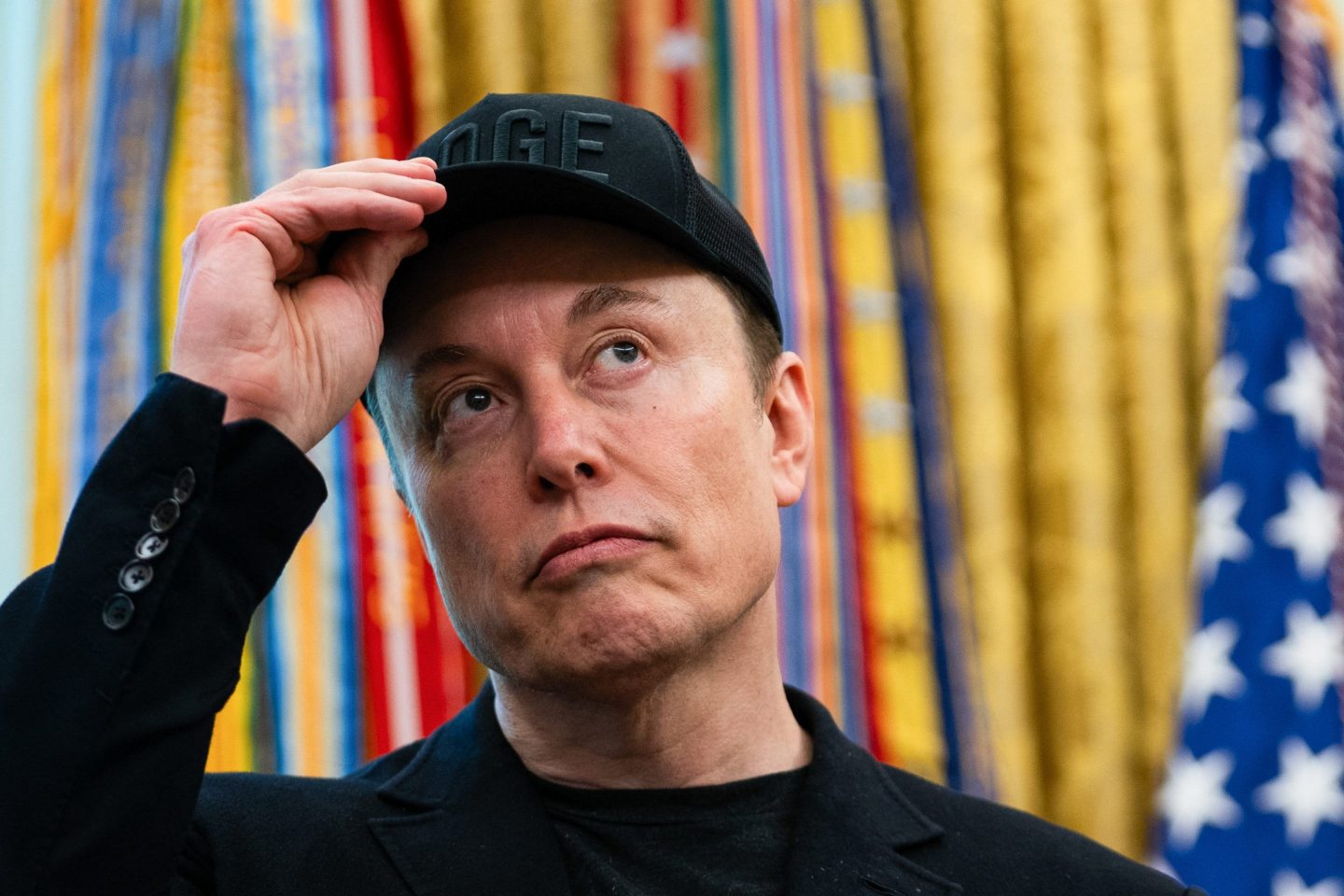
Despite Elon Musk's view that giving is "very hard," Americans donated a record $617 billion in 2025.ALLISON ROBBERT/AFP via Getty Images
Add Fortune on Google for similar content.
Add us on Google
Add us on Google
2025 brought a mixed picture for the U.S. economy. The stock market ended the year with double-digit gains, but inflation had not fully faded—leaving prices for everyday essentials like groceries and utilities elevated and many households still feeling squeezed. Still, many Americans found room in their budget to give to others.
Recommended Video
U.S. charitable giving reached a record $617.2 billion in 2025, according to a new report from Giving USA Foundation, researched and written by Indiana University’s Lilly Family School of Philanthropy.
About $394 billion, or 64%, of total contributions, came from individuals—up 1.4% when adjusted for inflation compared with the year prior. Foundation giving, which often reflects billionaire philanthropy, climbed nearly 3% to $117 billion. Giving through bequests jumped nearly 17% after adjusting for inflation. The increase likely reflects, in part, the strong performance of financial markets in recent years, which boosted the value of estates, said Amir Pasic, dean of the Lilly Family School of Philanthropy.
Overall, while charitable giving set a new high, it still lagged the explosive growth in billionaire wealth, which surged 16% in 2025.
The rise in bequests in particular—the report’s fastest-growing category—suggests philanthropy may be entering a new era and mark the beginning of the long-anticipated Great Wealth Transfer. Roughly $124 trillion is expected to change hands to Millennials and Gen Xers by 2048, according to UBS, and that shift could dramatically reshape the future of giving.
Younger heirs are beginning to rewrite the rules of giving
The rise in bequests—the report’s fastest-growing category—suggests philanthropy may be entering a new era and marks the beginning of the long-anticipated Great Wealth Transfer. Roughly $124 trillion is expected to change hands to Millennials and Gen Xers by 2048, according to UBS, and that shift could dramatically reshape the future of giving.
As younger generations inherit more wealth, pressure to accelerate payouts and rethink how quickly charitable dollars move from donors to nonprofits is beginning to emerge.
In some cases, those conversations are already underway inside families—often shaped by a growing focus on wealth inequality and how philanthropy should function in a more polarized world, said Melissa Stevens, executive vice president of Milken Institute Strategic Philanthropy.
She previously told Fortune younger donors are increasingly interested in deploying capital through impact investing, advocacy, and venture-style philanthropy, rather than traditional grantmaking alone. Donors are also prioritizing trust-based giving, meaning that instead of telling recipients exactly how to spend their donations, they give unrestricted gifts, trusting nonprofits to know better than donors where the money will have the greatest impact.
Their priorities also tend to skew toward systemic issues such as climate change, racial justice, and gender equity, compared with older generations’ broader focus on health and education.
Billionaires like Elon Musk believe giving has its limitations
The shifting landscape is playing out most visibly at the top of the wealth pyramid, where some of the world’s richest individuals are dramatically scaling up their philanthropy. MacKenzie Scott has become one of the most prominent examples. In 2025 alone, the 56-year-old philanthropist and ex-wife of Amazon founder Jeff Bezos gave away $19.2 billion, accounting for roughly one-third of all megagifts tracked that year. DEI has been a major focus of her philanthropy, including an $80 million unrestricted gift to Howard University and a $40 million donation to the African American Cultural Heritage Action Fund.
Others, however, have been more openly skeptical about the mechanics of giving at scale.
Just last month, Elon Musk, whose net worth surged past $1 trillion earlier this year following the SpaceX IPO, attacked Scott directly— arguing her philanthropy is actually making the world “worse off.”
The criticism reflects a belief Musk has expressed repeatedly: that donating money wisely is “very hard.”
“The biggest challenge I find with my foundation is trying to give money away in a way that is truly beneficial to people,” Musk said on the WTF podcast last year. “It’s very easy to give money away to get the appearance of goodness. It is very difficult to give money away for the reality of goodness. Very difficult.”
Liz Baker, CEO of global nonprofit Greater Good Charities, said the challenge of deploying large-scale philanthropy is often underestimated.
“I wish I had a billion dollars to give away,” Baker previously told Fortune. “But as somebody who’s responsible for giving away money, yeah, it’s hard, because there’s a really big responsibility that goes with that.”
She added that effective philanthropy requires navigating complex tradeoffs that go far beyond simply writing checks.
“If you give me $1, I’m going to spend it the way that you want it spent. But there’s all this stuff that goes into it—geopolitical stuff, you don’t want to create dependencies in communities—like, what is the right avenue, and what are things that are really needed?”
The Fortune 500 Innovation Forum will convene Fortune 500 executives, U.S. policy officials, top founders, and thought leaders to help define what’s next for the American economy, Nov. 16-17 in Detroit. Apply here.
About the Author
By Preston ForeSuccess Reporter
Preston Fore is a reporter on Fortune's Success team.
See full bioRight Arrow Button Icon
Add Fortune on Google for similar content.
Add us on Google
Latest in Success

C-Suite chief executive officer (CEO)
By Rachel VentrescaJuly 5, 2026
2 hours ago

By Marco Quiroz-GutierrezJuly 5, 2026
3 hours ago

The CEO using AI to double revenue with 1,000 fewer hires: ‘Nobody’s going to replace the last mile’
By Nick LichtenbergJuly 5, 2026
4 hours ago

Success Day in the Life of a CEO
By Orianna Rosa RoyleJuly 5, 2026
4 hours ago
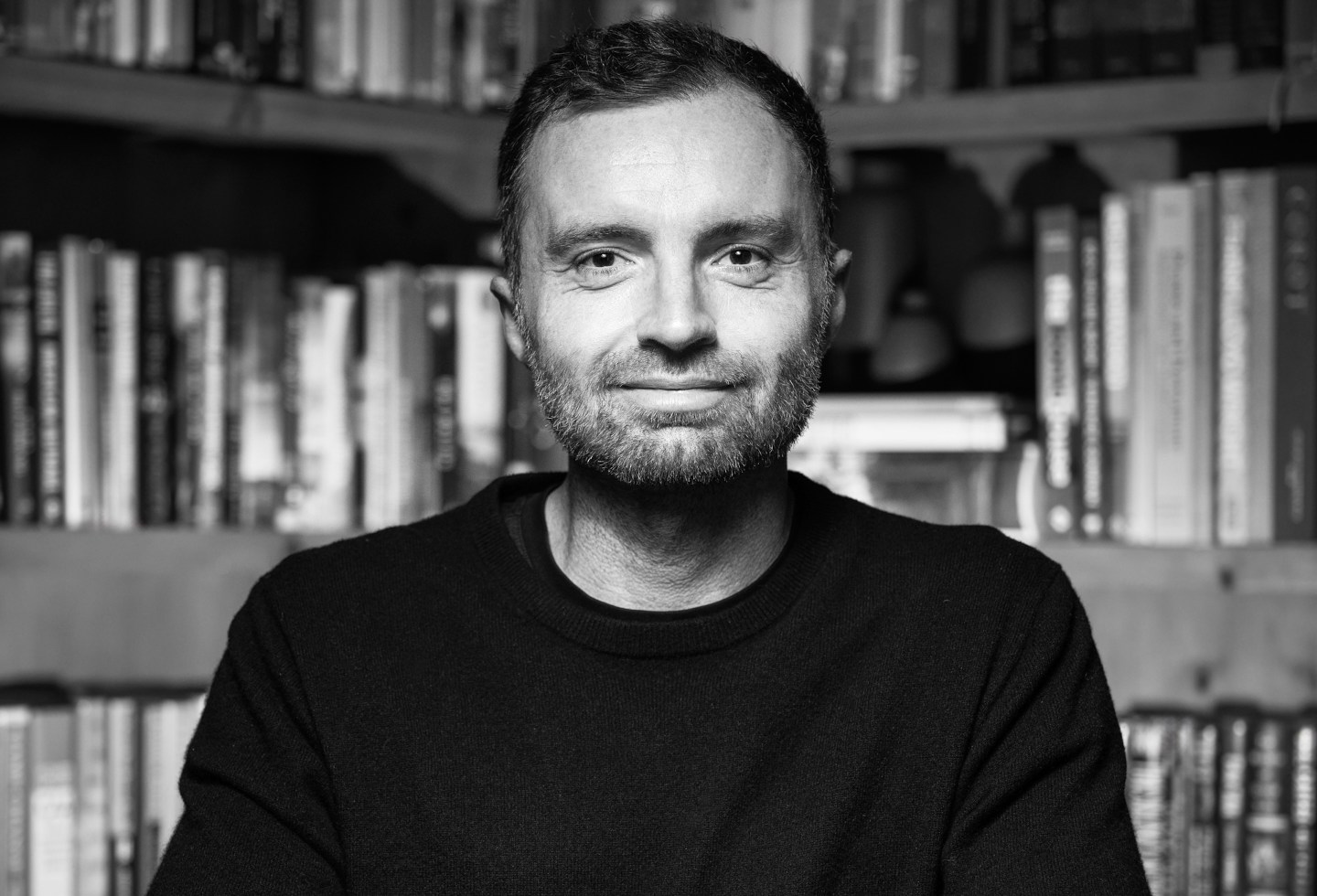
How David Senra built the podcast the world’s most powerful CEOs can’t stop listening to
By Lily Mae LazarusJuly 5, 2026
5 hours ago

By Emma BurleighJuly 4, 2026
1 day ago
Most Popular
By Preston ForeJuly 4, 2026
1 day ago

By Wyatte Grantham-Philips and The Associated PressJuly 2, 2026
3 days ago

Meet the Zillennials: The luckiest micro-generation in the workforce, born between 1993 and 1998
By Nick LichtenbergJuly 3, 2026
2 days ago

By Orianna Rosa RoyleJuly 3, 2026
2 days ago

Economists have found an answer to slowing cognitive decline: Avoid retiring early, study finds
By Sasha RogelbergJuly 2, 2026
3 days ago
By Emma BurleighJuly 4, 2026
1 day ago
Read Original at Fortune →