
New
Marketplace
Messages (0)
account - logged out
UtahFeaturesCountiesIdahoU.S.World

Here's what Utahns need to know about significant student loan changes set to take effect in July
By Logan Stefanich, KSL | Posted - June 8, 2026 at 8:07 a.m.

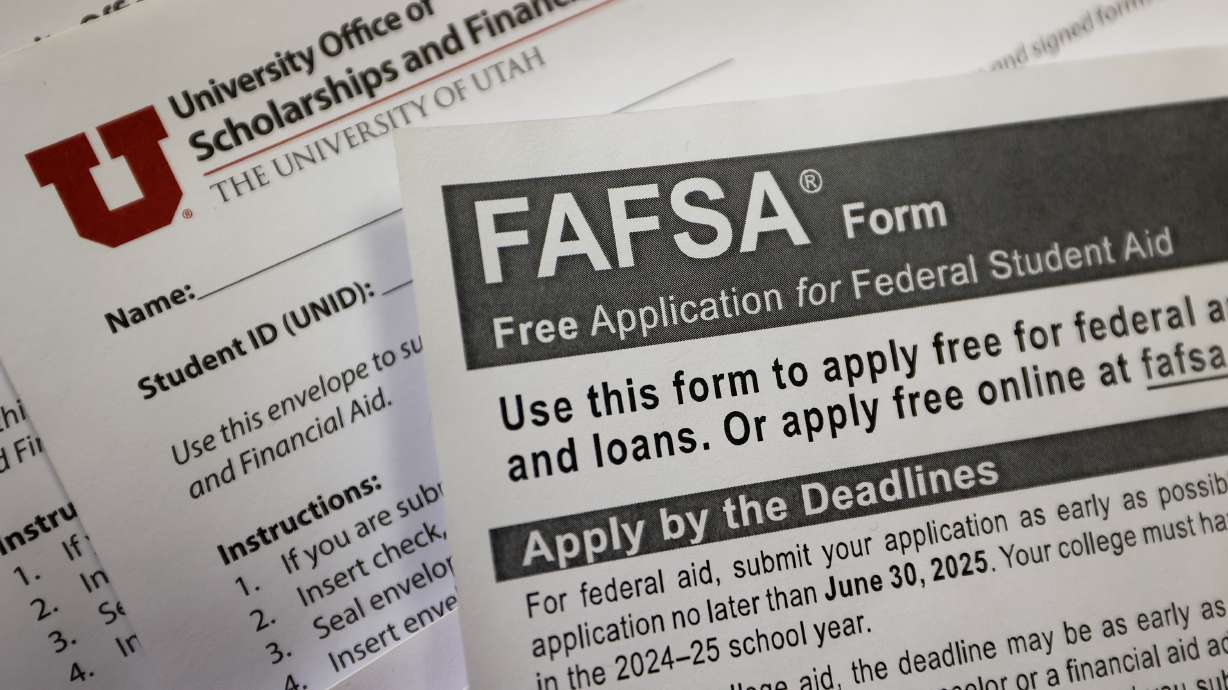
Significant changes to federal student loan laws enacted through the passage of the One Big Beautiful Bill Act are set to take effect on July 1, with major shakeups for both current borrowers and those looking to apply. (Kristin Murphy, Deseret News)
Save Story
KEY TAKEAWAYS
- Significant student loan changes take effect July 1 under the One Big Beautiful Bill Act.
- New borrowing limits impact Parent PLUS, Grad PLUS programs; some repayment options have been altered.
- Anthony Jones, executive director of scholarships and financial aid at the University of Utah, advises borrowers to consult loan servicers and document communications for clarity.
SALT LAKE CITY — Significant changes to federal student loan laws enacted through the passage of the One Big Beautiful Bill Act are set to take effect on July 1, with major shakeups for both current borrowers and those looking to apply.
Most notably, the amount of money someone can borrow has been capped and repayment options have changed.
Anthony Jones, executive director of scholarships and financial aid at the University of Utah, described the current student loan landscape as "definitely tumultuous."
"It's changing more than I've ever seen, and I've been in the business 35 years," Jones said. I'll go ahead and call it turmoil, because they've (Department of Education) given us such a short time. Normally, we have about eight to nine months to implement new regulations. They gave us two."
But beyond complicating things for universities, what exactly did the reconciliation bill change and how will it impact students?
Loan program changes
Jones said the biggest change is the stricter limits on how much a student can borrow — both annually and in the total amount that can be borrowed from a certain program.
One of the most significant adjustments came to the Parent PLUS program, which allows parents to take out loans for their child's undergraduate education.
Historically, parents could borrow up to the cost of attendance. But when July rolls around, parents will be capped at $20,000 per year and $65,000 total per student.
The bill also eliminated the Grad PLUS program entirely, which was established in 2006 and allowed graduate students to borrow up to the full cost of attendance with no aggregate or lifetime limit.
Now, the annual borrowing limit is set at $20,500 ($100,00 aggregate) for graduate students and $50,000 ($200,000 aggregate) for professional students.
The bill also brought changes for part-time students.
"If you're not enrolled full-time, institutions have to reduce the student's loan. So, for example, if 12 hours for a semester is full-time and you're enrolled for 10, for that semester you can only get ten-twelfths of your loan," Jones said. "And that goes for the entire year. So let's say in the fall you were full-time, but you withdraw from a course later on — when it comes to spring, we have to recalculate because you didn't remain full-time in the fall."
And aside from a few caveats, anyone who gets a loan on or after July 1 will be under a lifetime loan limit of $257,000, according to the Education Department.
Fewer repayment options
And for those still chipping away at their student loans, the bill likely further complicates matters.
Those who took out loans before July 1 will still be able to access the existing repayment options, which include:
- Standard Repayment Plan
- Extended Repayment Plan
- Graduated Repayment Plan
- Income-Based Repayment
However, two current income-driven repayment plans are set to be phased out and expire in 2028, at which point borrowers will need to switch to a different repayment plan. The programs set to end in 2028 include:
- Pay As You Earn
- Income-Contingent Repayment
But anyone enrolled in the standard, extended, graduated or income-based repayment plans can stay put, given they don't take out a new loan.
Jones said his best advice for current loan holders is to educate themselves about the looming changes.
"The two bits of advice would be to talk to their (loan) servicer ... I would encourage folks who are facing or in repayment or having trouble making payments or understanding these new changes to contact their servicer," Jones said. "And my other advice would be, document even phone conversations, keep records, not only your conversations, but any papers that you have, or documents that you have; it's really important to keep all of that."
More information on the changes set to take effect July 1 can be found here.
The Key Takeaways for this article were generated with the assistance of large language models and reviewed by our editorial team. The article, itself, is solely human-written.
Most recent Education stories
-
BYU student builds AI-powered resale app
-
Utah's startup culture is thriving. So why are some college programs showing decline?
-
Utah introduces AI tools in classrooms statewide
Related topics
Utah higher educationUtahEducation
 Logan Stefanich
Logan Stefanich is a reporter with KSL, covering southern Utah communities, education, business and tech news.
More stories you may be interested in

BYU student builds AI-powered resale app
Utah introduces AI tools in classrooms statewide

Utah girl named national Children's Miracle Network champion after lifetime of health challenges

