
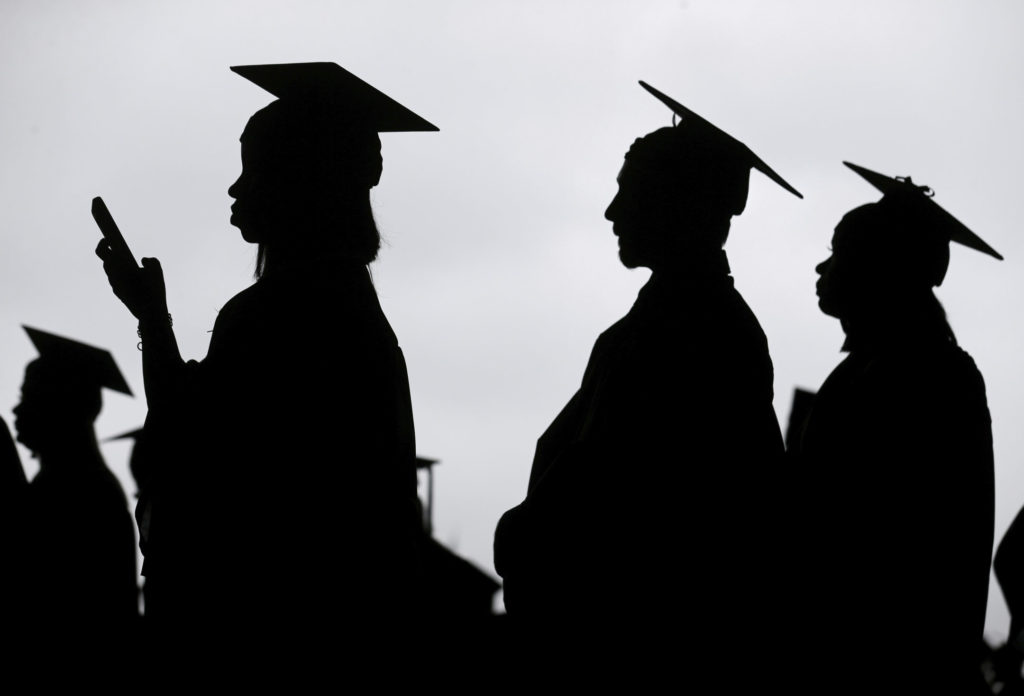
How the federal student loan changes could impact borrowers
Jun 23, 2026 6:35 PM EDT

By —
By —
Federal student loans will undergo significant changes starting July 1. These changes will not only restructure the loan system, but also the repayment options for millions of borrowers. Some might see higher monthly payments, others will have to deal with stricter caps on how much they can borrow and fewer forgiveness options. Stephanie Sy discussed more with Danielle Douglas-Gabriel.
Read the Full Transcript
Notice: Transcripts are machine and human generated and lightly edited for accuracy. They may contain errors.
Geoff Bennett:
Federal student loans will undergo major changes starting July 1. The changes will not only restructure the loan system, but also repayment options for millions of Americans.
Stephanie Sy tells us more.
Stephanie Sy:
Geoff, some borrowers might see higher monthly payments. Others will have to deal with stricter caps on how much they can borrow, and there will be fewer loan forgiveness options.
Four key revisions include an increase in interest rates for most loans. One benefit, a discount of 1 percent for eligible borrowers who enroll in autopay. The elimination of the Biden era SAVE Plan, which affects 7.5 million borrowers, and new borrowing caps for graduate and Parent PLUS Loans.
For more on how all these changes will further impact folks and their finances, I'm joined by Danielle Douglas-Gabriel, national higher education reporter for The Washington Post.
Danielle, welcome to the "News Hour."
So let's jump right in with this new discount being offered to borrowers. Is 1 percent going to make a dent for a lot of folks? What should we know about that benefit?
Danielle Douglas-Gabriel, The Washington Post:
Certainly, over the lifetime of the loan, it does make a difference in terms of how much you end up paying.
Unfortunately, this is only good for two years, for people who are hoping that this is for the life of the repayment cycle, but it could mean it make a significant difference for people who have higher interest rates and for people who have larger loans. So it's worth looking into.
Stephanie Sy:
So, a big question is what happens to these seven million folks that were on the Biden era SAVE Plan. That ends on July 1. Critics of this plan, of course, said it overpromised, it was too generous. But millions of borrowers plan their budgets around it and saw those monthly payments skyrocket.
Do the new replacement options out there help those folks out?
Danielle Douglas-Gabriel:
For some borrowers, it won't be that much of a difference in their pay repayment plan. But, for many borrowers, it's -- it could be a pretty significant jump in their bill.
Keep in mind that almost half of the people who were on that SAVE Plan had incomes low enough that they qualified for zero monthly payments. That's not going to be the case on the payment plans that they will have to switch into.
Even with the new repayment plan that's coming online July 1, you still have to pay $10 a month. And there are a lot of borrowers I have spoken to who said that they certainly cannot fit another payment in their household budget at this time, when they're dealing with inflation in grocery prices, gas prices, and the like.
So it's going to be a tough road ahead for some borrowers who are on the lowest income of the SAVE Plan.
Stephanie Sy:
So would you expect that you would continue to see defaults on student loans go up, as we have been seeing for the last few years anyway?
Danielle Douglas-Gabriel:
I think there's a real risk of that right now. We have a pretty high delinquency and default percentage at this stage. I think there are about nine million people who are in default on their student loans who are behind by several months.
And a lot of economists are worried that switching all of these borrowers out for of SAVE and just people moving into some of these new repayment plan options could increase that spike. Certainly, the Department of Education is trying to get the message out. They have been e-mailing borrowers, they have been notifying them of these coming changes, the need to switch out of SAVE for several months.
I do think that this interest subsidy that's in play for two years, the autopay, is another way to try to encourage borrowers to go back into consistent repayment and to stay current on their loans. Will it be successful? I think it's too soon to tell, but it's certainly something worth watching as -- over the next six months as we start to see borrowers migrate out of some of these plans into some of these newer options.
Stephanie Sy:
Danielle, I'm hearing a lot of borrowers, online especially, expressing their frustrations that they really don't know what to do next, that they don't really trust the system anymore, and that they feel like the rules have changed enough that they're not sure what to do.
Here's what one woman said on TikTok.
Caylie Porter, Student Loan Borrower:
I have no idea what the heck I'm supposed to do. I'm going and looking at some of these repayment plans, and some of them look a little insane, some of them not terrible, but I don't know what I'm committing to.
And then I'm trying to get online and get more information. None of this stuff makes sense to me.
Stephanie Sy:
So this new Repayment Assistance Plan, or RAP, has been described, as you know, by the Department of Ed as a simpler income plan. Is it simpler -- income repayment plan. Is it simpler? And will the new system help or further hurt low-income borrowers?
Danielle Douglas-Gabriel:
I think that's debatable.
Certain features of the RAP plan, there has been research that shows, especially I think coming out of American University, that some lower-income borrowers, because of an interest subsidy that's attached to the RAP plan where, if you make consistent monthly payments on time, the government will pay whatever unpaid interest is still accruing on the loan, that could help some low-income borrowers pay off their loans faster.
But there's also a great concern that, because of the structure of the plan, you could see a rise in defaults and delinquencies for low-income borrowers who simply cannot even keep up with the $10 payment, which is a possibility and a reality for many Americans.
So it's difficult to say if it's so much easier than what has existed. It is certainly not as generous as what SAVE was offering, which was much lower monthly payments and a much faster path to forgiveness. But this is effectively the government trying to split the difference to help people.
But we certainly could see a lot of people repaying their loans for longer. Keep in mind that, under this new income-driven repayment plan, it'll take 30 years of payments before you see the remaining balance forgiven. That's different than the 20 or 25 years that currently exists, and that's definitely different than the decades' worth of payments that SAVE was willing to let borrowers off for them if they had low balances in total.
So this is not quite as generous as what we have seen in the past. In some ways, it is very beneficial to some populations, but it could be very detrimental to others who have in the past and may continue to struggle in repaying their student loans.
Stephanie Sy:
Quickly, Danielle, can you talk about loan forgiveness and where that stands?
Danielle Douglas-Gabriel:
It still exists for certainly for public servants through public service loan forgiveness. The existing income-driven repayment plants also have a forgiveness feature that is still in play, oftentimes after 20 or 25 years of repayment.
So that is still an option for borrowers, just not quite as widespread as what we'd seen in the past.
Stephanie Sy:
That is Danielle Douglas-Gabriel with The Washington Post joining us.
That was very helpful. Thank you.
Danielle Douglas-Gabriel:
You're welcome.
Listen to this Segment

Watch the Full Episode
PBS NewsHour from Jun 23, 2026
By —
Stephanie Sy is a PBS News Hour correspondent. Throughout her career, she served in anchor and correspondent capacities for ABC News, Al Jazeera America, CBSN, CNN International, and PBS News Hour Weekend. Prior to joining News Hour, she was with Yahoo News where she anchored coverage of the 2018 Midterm Elections and reported from Donald Trump’s victory party on Election Day 2016.
By —
Read Original at PBS →