
Site SearchClear
SEARCH
Search Results
Symbols
No results found
- All News
- Articles
- Video
- Podcasts
0 Results
No Results Found
Authors
No results found
Sections
No results found
Columns
No results found
Market Extra
Inflation could top 4% this week. The bond market wants Fed Chair Warsh to prove he’ll fight it.
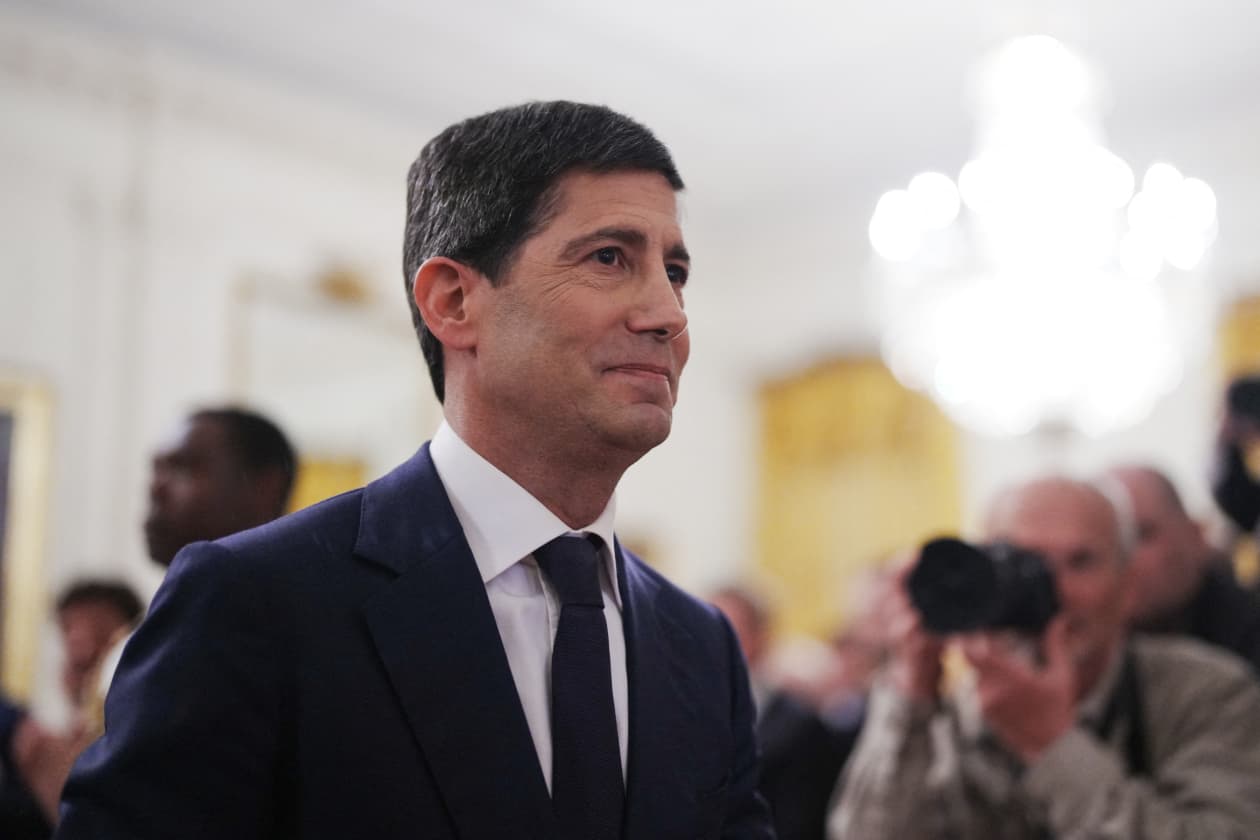
Kevin Warsh, the new chair of the Federal Reserve, may need to defy President Trump and talk about rate hikes next week
By
Published: June 8, 2026 at 4:52 p.m. ET
Share
Add us on Google
Choose MarketWatch as a preferred source of financial news
Resize
(4 min)
Investors are growing impatient with inflation that looks unlikely to be tamed on its own.
That anxiety can be seen in the reaction to Friday’s strong jobs report for May, which sent highflying tech stocks sharply lower and bond yields higher.
Volatility eased on Monday, but investors still have May’s consumer-price index on deck for Wednesday. It’s expected to reach 4.2% based on current forecasts, up from a 3.8% yearly rate a month before and well above the Federal Reserve’s 2% target.
“Is inflation a question?” asked Robert Tipp, chief investment strategist at PGIM on Monday. “It’s more of an accepted problem at this point.”
Fed officials were hoping inflation would be transitory over the past few years, Tipp said. “That hasn’t worked out.”
President Donald Trump on Sunday reiterated his desire for lower interest rates, despite recent signs of an improving labor market. Tipp said it now looks as though the economy could have supported a higher fed-funds rate some time ago. That might not mean Warsh will increase rates next week at his first policy meeting as head of the central bank, but he may need to start talking about it.
Read: The key to the upcoming Fed meeting? How Warsh reacts to all the hints of a rate hike.
“The market is not going to have a problem with a very slow, cautious approach to rate hikes to make sure there is price stability,” Tipp said.
That’s partly because higher interest rates already have been priced into the market, with the rate-sensitive 2-year Treasury yield
near on 4.16% on Monday, the high so far in 2026. That’s well above theFed’s 3.75% upper limit for its short-term policy rate.
Stocks on Monday mostly rebounded, despite ongoing investor angst about the S&P 500’s
narrow rise in April and May to fresh record highs. That shows reluctance to give up on the artificial-intelligence winners of this year, including in memory, chips and South Korean stocks.
Semiconductor shares
, like those of Marvel Technology
, Micron Technology
and the Samsung-heavy
iShares MSCI South Korea exchange-traded fund
, were all up Monday after Friday’s tech swoon.
Investors in the stock market have remained focused on AI, even with the Iran war hitting the 100-day mark, the roughly 60% increase in oil
prices this year and questions around how Warsh will lead the U.S. central bank.
That could continue, but much also hinges on interest rates. Should long-term Treasury yields move higher from here, it would make the build-out of AI more expensive to finance in the debt markets. Big tech companies have only recently considered adding equity issuance to the funding mix.
The 10-year-year yield
was close to 4.57% Monday, and the 30-year
edged back above 5%.
“The thing we are most concerned about is the AI capex cycle,” said Brad Conger, chief investment officer at Hirtle & Co. While he expects the U.S. economy to hold up and the wealthy to keep spending, he worries that anything that “disrupts the AI narrative” is likely to send a lot of people rushing for the exit.
“Given how strong the sentiment is, anything can tip the story just a little bit away from euphoria,” Conger said.
On the other hand, longer-duration Treasurys are likely to respond positively if the Fed ends up hiking rates, he said. “It will show the Fed isn’t one-sided.”
Neil Dutta, head of economic research at Renaissance Marco Research, expects front-end Treasury yields to continue pushing higher, given that the “insurance cuts at the end of 2025 look unnecessary in the context of current economic conditions,” he wrote in a Monday client note.
“After all, the insurance was to protect against a weaker labor market that seems to no longer exist.”
See: AI may be killing some high-tech jobs, but it’s also creating others. See who’s winning and losing.
Copyright ©2026 MarketWatch, Inc. All Rights Reserved. 87990cbe856818d5eddac44c7b1cdeb8

My golf buddy worked as a financial adviser. Here’s how I knew his friendship was fake.

Your tech portfolio could be on the wrong side of the AI boom

An inflation storm is brewing in the Pacific Ocean — and your portfolio isn’t ready

Mrs. Dow Jones on why no one should be day trading

Eli Lilly stock rises after late-stage trial of next-generation weight-loss drug
About the Author
Joy Wiltermuth is a news editor and senior markets reporter based in New York.
Show Conversation (0)
What to Read Next
products.gobankingrates.com
products.gobankingrates.com is blocked
This page has been blocked by an extension
- Try disabling your extensions.
ERR_BLOCKED_BY_CLIENT
Reload
This page has been blocked by an extension