
Accessibility links
WAMU 88.5On Air Now
- Hourly News
- Listen Live
- My Playlist
Kalshi, Polymarket offer bets on clinical trials and FDA approvals Researchers warn betting on clinical trials could incentivize insider trading and interfere with drug development. But Kalshi and Polymarket say they provide valuable information to patients.
Technology
Kalshi and Polymarket bets on clinical trials criticized as 'ghastly'
August 7, 20266:00 AM ET


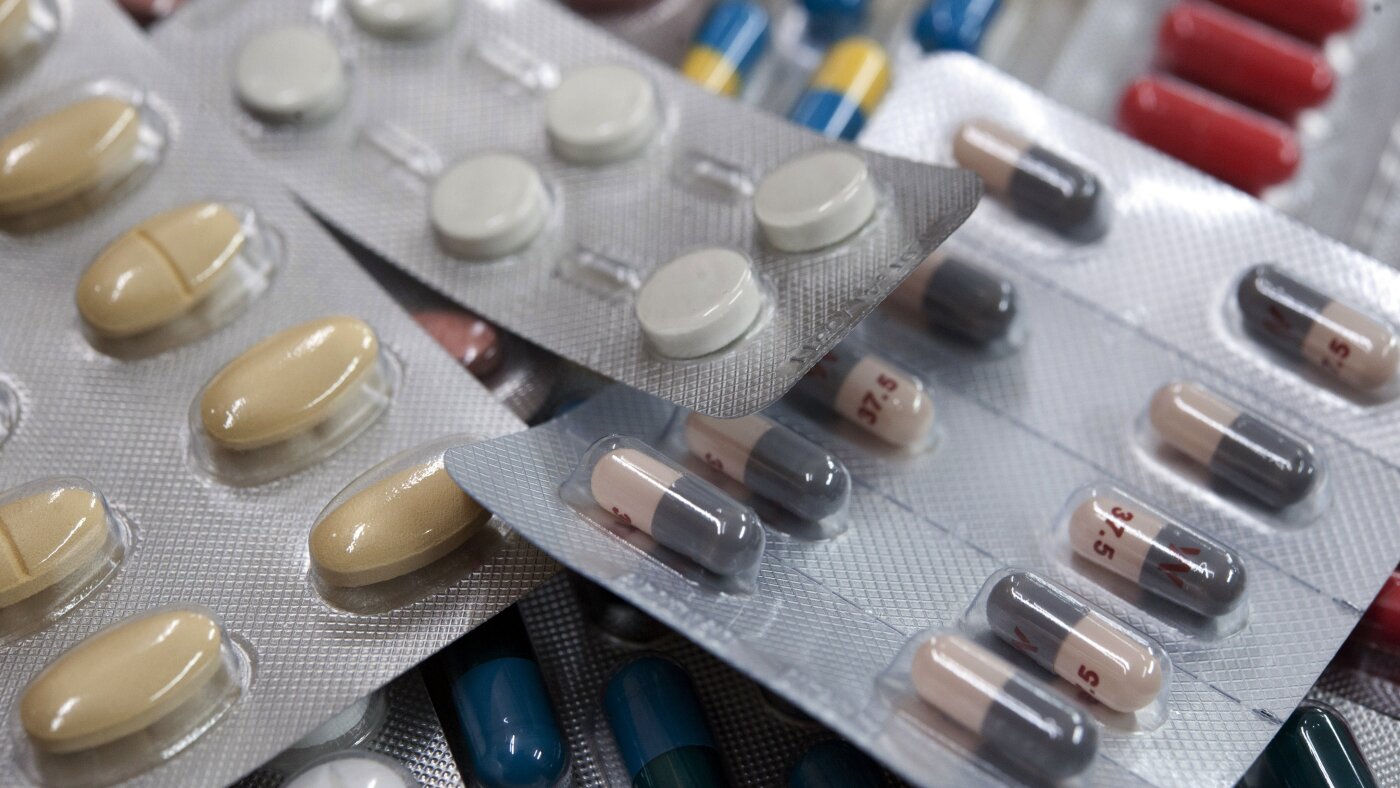
Kalshi and Polymarket say allowing people to bet on the outcomes of clinical trials and FDA drug approvals provides valuable information about drug development. But researchers warn the bets could incentivize insider trading and interfere with the integrity of the process. Fred Tanneau/AFP via Getty Images hide caption
toggle caption
Fred Tanneau/AFP via Getty Images
As a soon-to-be seventh grader, Joshua Pederson's son is not exactly brimming with enthusiasm when he talks about the upcoming school year.
"The thing I'm looking forward to most in seventh grade is lunch, and the thing I'm looking forward to least is everything else," said the 12-year-old.
Planet Money
Do prediction market bettors make anything better?
Art is his passion, but he doesn't take classes. He likes teaching himself.
"I like drawing scary stuff and robots," he said. "Because I think scary stuff and robots are cool."
Two years ago, his parents, who live in Boston, noticed a lump around his ribs that quickly spiraled into a nightmare scenario: It was cancer.
Pederson asked that his son's name be withheld to discuss details of his medical condition.
After months of grueling chemotherapy and radiation, he was declared cancer-free last summer. Months later, however, the cancer returned. So Pederson entered his son into a clinical trial for a novel treatment.
That's around the time Pederson read the news that prediction market sites Kalshi and Polymarket have begun allowing people to bet on the outcomes of clinical trials and whether the Food and Drug Administration will approve new medications.
"What seemed to be missed in the CEO statements was the fact that there were going to be patients on the other side of these bets," said Pederson, who is a humanities professor at Boston University.
Bettors will make or lose money based on the success or failure of a clinical trial, a situation Pederson views as horrific.
"A clinical trial failing is a more sanitized euphemism for, people are going to suffer, people are going to die, people are going to have one fewer clinical option available to them in one of the most difficult medical situations of their entire life," he said.
Researchers fear 'undermining trial integrity'

Technology
Kalshi says it's not a sportsbook even as World Cup bets surge
Billions of dollars are traded every week on the lightly regulated prediction market sites, where users bet on everything from movie reviews to elections to conflicts in the Middle East. Clinical trials are just the latest area where the industry's rapid growth is raising ethical questions.
Kalshi claims such bets will provide a new source of information about which drugs will get approved, and what clinical trials will show promising results, which the company says can help investors decide what new drugs to fund.
Elections
Kalshi attacks a Wisconsin law banning election bets as 'voter suppression'
"If you want to ban profiting from the failure of clinical trials, you would start with the stock market, where the financial incentive for this type of profit is orders of magnitude larger," said Kalshi spokesman Jack Such, pointing to stock market short sellers who have profited from clinical trial failures.
"While Kalshi and the stock market are the same in this regard, they do differ in one important way: the stock market doesn't give any valuable information to researchers," Such said.
Drug trial researchers, though, are far from convinced.
David Tsai, who runs clinical trials at a biotech company in the San Francisco Bay Area, started an online petition pushing for such betting to be banned, making the case that betting on drug trials "threatens the very foundation of trust and integrity in biotechnology."
Tsai is concerned that the prospect of betting provides those involved with a clinical trial a reason to tamper with the results for a prediction market payout.
"If we were running a trial for an oncology drug that requires an infusion, a pharmacist who had placed a bet saying that it's gonna work well, or doesn't work well, could obviously adjust the infusion rate, could adjust the source temperature of the drug," he said. "They could change any number of variables that could obviously have a direct impact [on] how the trial and the data and the patient safety would come out."
Another skeptic is Nicholas Zaorsky, a professor of radiation oncology at the Mayo Clinic in Jacksonville, Fla., who has helped run clinical trials and agrees that prediction markets can interfere with the advancement of life-saving drugs.
"Prediction markets can be valuable in some settings because they aggregate information, but clinical trials are fundamentally different: investigators, coordinators, and sometimes even participants can directly influence aspects of the outcomes being wagered on," Zaorsky said. "That creates financial incentives that risk undermining trial integrity."
Patient's father: People betting on trials are 'distanced from the real cost'
Kalshi has tapped its own experts, including Anne Wojcicki, the founder of genetic testing company 23andMe, to vouch for the markets as a way of staying ahead of medical breakthroughs and for making clinical trials more accessible.
"Most patients don't know about the choices available in clinical trials or which programs are most promising. The opportunity to have an open, transparent dataset about trial probabilities is extremely promising and empowering for people," a white paper sponsored by Kalshi stated.
On Kalshi, users can currently bet on whether a weight-loss medication and a breast cancer treatment will be approved by federal regulators and on what date.
Polymarket, which declined to comment, is taking wagers on the approval of cancer treatments and whether the U.S. will allow Chinese peptides to be sold to Americans.
The possibility of insider trading, Kalshi argues, will be minimized by company safeguards verifying employment and tools to surveil for unusual market activity.

Politics
Officials probe whether White House teleprompter operator profited off Trump's words
Indeed, prediction markets have helped identify insider traders in other markets, from President Trump's teleprompter operator to former Congressman George Santos to a special forces soldier who was betting based on military intelligence about the toppling of Venezuelan leader Nicolás Maduro.

Politics
DOJ is investigating former congressman George Santos for insider trading on Kalshi
Given just how many people can be involved with clinical trials, Tsai thinks it might not be so easy to preemptively catch every bad actor.
Pederson is also skeptical. He argues the markets obscure the patients at the center of clinical trials, who have the most at stake from their outcomes.
"One of the things that has struck me about these platforms is that they're flashy and they're gamified in such a way that you're often kind of distanced from the real cost," he said.
Kalshi says it is offering bets on late-stage clinical trials where participants have already been chosen. And it says it won't allow betting on markets where all trial subjects are minors. But that could change.
If it does, Pederson says wondering whether researchers in a trial could be motivated by prediction market profits will add to his anxieties — and to the burden his son is already carrying.
"The weight on him and what he's being asked to do, and what he's being asked to endure, is already so much," Pederson said.
He hopes that Kalshi and Polymarket will stop letting speculators place bets that clinical trials won't succeed.
Bettors, he argues, should not be rooting for an experimental medicine to fail just to earn a buck.
"It's a dark idea," he said. "It's quite ghastly."
-
Facebook
-
Flipboard
-
Email

Exclusive benefits
Give a little. Get a lot.
Support mission-driven journalism while getting something great in return. Enjoy bonus content, early access and sponsor-free listening from your favorite NPR podcasts.
Already have NPR+? Sign In
Close modal

Privacy Preference Center
NPR and our service providers and vendors use cookies and similar technologies to collect information. A cookie is a string of characters that can be written to a file on the user's computer or device when the user visits a site, application, platform or service. When you visit a website or use a mobile application, a computer asks your computer or mobile device for permission to store this file on your computer or mobile device and access information from it. Information gathered through cookies may include the date and time of visits and how you are using the website. Note that if you disable or delete cookies, you may lose access to certain features of the NPR Services.
User ID: f7e8f4a3-deaa-43a3-8d87-d79092ebdbf6
This User ID will be used as a unique identifier while storing and accessing your preferences for future.
Timestamp: --
Allow All
Manage Consent Preferences
Strictly Necessary or Essential Cookies
Always Active
These cookies are essential to provide you with services available through the NPR Services and to enable you to use some of their features. For example, these cookies allow NPR to remember your registration information while you are logged in. Local station customization, the NPR Shop, and other interactive features also use cookies. Without these cookies, the services that you have asked for cannot be provided, and we only use these cookies to provide you with those services.
Performance and Analytics Cookies
Performance and Analytics Cookies
These cookies are used to collect information about traffic to our Services and how users interact with the NPR Services. The information collected includes the number of visitors to the NPR Services, the websites that referred visitors to the NPR Services, the pages that they visited on the NPR Services, what time of day they visited the NPR Services, whether they have visited the NPR Services before, and other similar information. We use this information to help operate the NPR Services more efficiently, to gather broad demographic information and to monitor the level of activity on the NPR Services.
Functional Cookies
Functional Cookies
These cookies allow our Services to remember choices you make when you use them, such as remembering your Member station preferences and remembering your account details. The purpose of these cookies is to provide you with a more personal experience and to prevent you from having to re-enter your preferences every time you visit the NPR Services.
Targeting and Sponsor Cookies
Targeting and Sponsor Cookies
These cookies track your browsing habits or other information, such as location, to enable us to show sponsorship credits which are more likely to be of interest to you. These cookies use information about your browsing history to group you with other users who have similar interests. Based on that information, and with our permission, we and our sponsors can place cookies to enable us or our sponsors to show sponsorship credits and other messages that we think will be relevant to your interests while you are using third-party services.
Back Button
Cookie List
Search Icon
Filter Icon
Clear
- checkbox labellabel
ApplyCancel
ConsentLeg.Interest
checkbox labellabel
checkbox labellabel
checkbox labellabel
Reject AllConfirm My Choices

reCAPTCHA
Recaptcha requires verification.
protected by reCAPTCHA
Read Original at NPR →