

Accessibility links
Meta was in talks to acquire Kalshi but deal fell apart Mark Zuckerberg met with Kalshi's CEO last year about a potential deal, but talks did not move forward. Now Meta is making its own prediction market app.
Exclusive
Technology
Meta considered buying Kalshi before developing its own prediction market app
June 30, 20264:33 PM ET

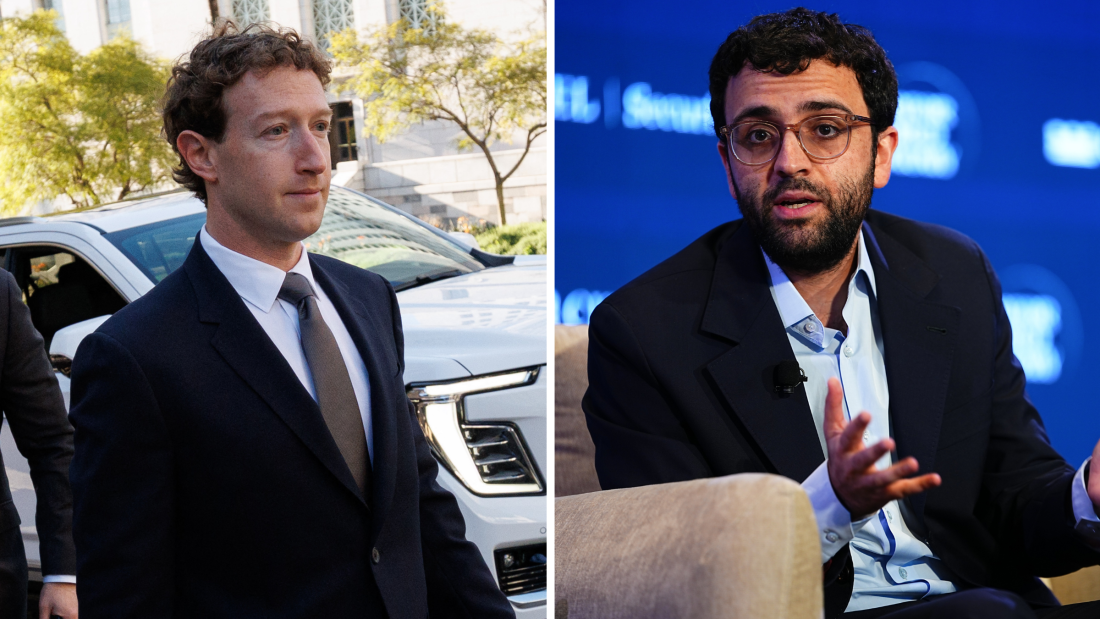
Left: Meta CEO and Chairman Mark Zuckerberg arrives at Los Angeles Superior Court in February. Right: Tarek Mansour, co-founder of Kalshi, at the Semafor World Economy Summit in April. Patrick T. Fallon/AFP and Aaron Schwartz/Bloomberg via Getty Images hide caption
toggle caption
Patrick T. Fallon/AFP and Aaron Schwartz/Bloomberg via Getty Images
Before Meta CEO Mark Zuckerberg directed employees to build a standalone prediction market app, he proposed buying Kalshi, the leading company in the prediction market sector, according to three people with knowledge of the discussions who were not authorized to speak publicly.

Planet Money
Do prediction market bettors make anything better?
Zuckerberg met with Kalshi CEO Tarek Mansour about a possible takeover last year as Kalshi's popularity surged, but the negotiations never advanced, according to one of the people who had direct knowledge of the meeting.
There are competing narratives about why the talks broke down, with some saying Mansour would not move forward with a sale and others indicating Meta considered the legal and ethical questions surrounding Kalshi too messy.

Technology
Meta plans to release AI-powered prediction market app, documents show
Whatever made the discussions fall apart, Meta still wants to tap into the prediction market craze. Zuckerberg has stood up a team that is now working to release its own prediction market app called Arena, which internal documents reviewed by NPR show will allow people to make guesses about future events.
Unlike Kalshi and its main competitor, Polymarket, Meta's app will not take bets using real money. Instead, users will wager "play money" on the outcome of happenings in the news and topics trending online. Meta's documents say the company's artificial intelligence systems will power the questions and determine who wins or loses based on something happening or not.
Neither Kalshi nor Meta would provide NPR with a comment when asked about the acquisition talks.
Prediction markets have become one of the fastest-growing parts of the tech industry in recent years. The sites allow people to place bets on everything from sports to elections to whether Iran will develop a nuclear weapon.
The massive influx of users into prediction markets makes the space an obvious target for Zuckerberg, according to Tim Wu, a Columbia University law professor who advised the Biden White House on tech policy.
"Meta seems to clutch at every shiny object," Wu said. "With the help of their advertising cash cow, they've been able to fail again and again without consequence," he said, citing Meta's pullback from the so-called " metaverse," and the abandonment of its cryptocurrency project, Libra. "I can't imagine a casino app with fake money is going to be much of a thrill," he said. "But maybe it's something my children would like, I don't know."

Technology
2 young billionaires are behind the prediction market boom. They hate each other
Thanks in part to a permissive regulatory environment in Washington, prediction markets have seen staggering growth.
In June 2025, about $28 billion was traded every month on Kalshi and Polymarket. A year later, monthly volume on the sites is nearly $220 billion, driven mostly by sports-related betting, according to The Block, a news and research company that tracks prediction market data.
Kalshi, which is overseen by commodities regulators in Washington, was valued at $22 billion in its latest funding round in May, up from a $2 billion valuation last year. Polymarket, which operates an overseas exchange outside the reach of U.S. regulators, is valued at $10.7 billion, according to the private market data firm PitchBook.

Technology
Minnesota becomes first state to ban prediction markets
The rise of prediction markets has set off dozens of legal battles pitting the tech companies against state gaming officials, who insist the sites are gambling under a different name.
President Trump has vowed to protect prediction market companies, even as controversies over insider trading and market manipulation plague the industry.

Law
U.S. soldier charged with using classified information to bet on Maduro's removal
Justice Department officials have opened two criminal cases over alleged insider trading on Polymarket. One involves a special forces soldier who allegedly profited from classified information about the capture of Venezuelan leader Nicolás Maduro by U.S. forces. In the other case, DOJ accuses a Google employee who earned more than $1 million of using confidential data about search trends to correctly guess the most-Googled people of 2025.
Meta's "buy or bury" strategy
Zuckerberg's interest in acquiring Kalshi follows a familiar corporate pattern. Meta has amassed a user base of more than 3 billion worldwide through the takeover of emerging social media platforms. Notably, Meta's purchases of Instagram in 2012 and WhatsApp in 2014 supercharged its reach and allowed it to become a colossal force in digital advertising. More recently, Meta bought AI wearable company Limitless and Moltbook, a social network for AI bots.
Meta's takeovers have attracted scrutiny from federal regulators. The Federal Trade Commission alleged at a trial last year that Meta engages in a "buy or bury" strategy in which nascent rivals are either acquired by the company, or Meta introduces a service cloning the competitor to squash their business.

Business
Judge sides with Meta in antitrust trial, will not spin off WhatsApp and Instagram
A judge sided with Meta, ruling that the company did not violate any competition laws when it gobbled up Instagram and WhatsApp. Lawyers with the FTC are appealing the decision.
While the acquisition talks never advanced, Meta did strike a partnership with Kalshi in March, allowing for easy integration of Kalshi markets on Meta's social media app Threads.
Wu, the former White House tech policy adviser, said Meta became a company worth more than $1 trillion by acquiring apps rather than building its own. He argues Meta throws its power and money around like a monopoly and distorts the competitive field for everyone else.
"WhatsApp and Instagram have given them never-ending profits, but normal companies cannot fail five times in a row," he said. "Meta looking to take over Kalshi fits in with the company's long-standing practices."
-
Facebook
-
Flipboard
-
Email
a11107397707.cdn.optimizely.com
a11107397707.cdn.optimizely.com is blocked
This page has been blocked by an extension
- Try disabling your extensions.
ERR_BLOCKED_BY_CLIENT
Reload
This page has been blocked by an extension

Privacy Preference Center
NPR and our service providers and vendors use cookies and similar technologies to collect information. A cookie is a string of characters that can be written to a file on the user's computer or device when the user visits a site, application, platform or service. When you visit a website or use a mobile application, a computer asks your computer or mobile device for permission to store this file on your computer or mobile device and access information from it. Information gathered through cookies may include the date and time of visits and how you are using the website. Note that if you disable or delete cookies, you may lose access to certain features of the NPR Services.
User ID: be316ef5-9fd9-4cc3-a724-d569bc6febba
This User ID will be used as a unique identifier while storing and accessing your preferences for future.
Timestamp: --
Allow All
Manage Consent Preferences
Strictly Necessary or Essential Cookies
Always Active
These cookies are essential to provide you with services available through the NPR Services and to enable you to use some of their features. For example, these cookies allow NPR to remember your registration information while you are logged in. Local station customization, the NPR Shop, and other interactive features also use cookies. Without these cookies, the services that you have asked for cannot be provided, and we only use these cookies to provide you with those services.
Performance and Analytics Cookies
Performance and Analytics Cookies
These cookies are used to collect information about traffic to our Services and how users interact with the NPR Services. The information collected includes the number of visitors to the NPR Services, the websites that referred visitors to the NPR Services, the pages that they visited on the NPR Services, what time of day they visited the NPR Services, whether they have visited the NPR Services before, and other similar information. We use this information to help operate the NPR Services more efficiently, to gather broad demographic information and to monitor the level of activity on the NPR Services.
Functional Cookies
Functional Cookies
These cookies allow our Services to remember choices you make when you use them, such as remembering your Member station preferences and remembering your account details. The purpose of these cookies is to provide you with a more personal experience and to prevent you from having to re-enter your preferences every time you visit the NPR Services.
Targeting and Sponsor Cookies
Targeting and Sponsor Cookies
These cookies track your browsing habits or other information, such as location, to enable us to show sponsorship credits which are more likely to be of interest to you. These cookies use information about your browsing history to group you with other users who have similar interests. Based on that information, and with our permission, we and our sponsors can place cookies to enable us or our sponsors to show sponsorship credits and other messages that we think will be relevant to your interests while you are using third-party services.
Back Button
Cookie List
Search Icon
Filter Icon
Clear
- checkbox labellabel
ApplyCancel
ConsentLeg.Interest
checkbox labellabel
checkbox labellabel
checkbox labellabel
Reject AllConfirm My Choices
