
Site SearchClear
SEARCH
Search Results
Symbols
No results found
- All News
- Articles
- Video
- Podcasts
0 Results
No Results Found
Authors
No results found
Sections
No results found
Columns
No results found
Tech Stocks
Micron is about to be more profitable than any U.S. company except Nvidia and Google
Big Tech companies are willing to pay astronomical prices for AI memory components, helping spark a dramatic turnaround in Micron’s finances
By
and
June 28, 2026, 10:00 a.m. ET
Share
Add us on Google
Choose MarketWatch as a preferred source of financial news
Resize
(4 min)
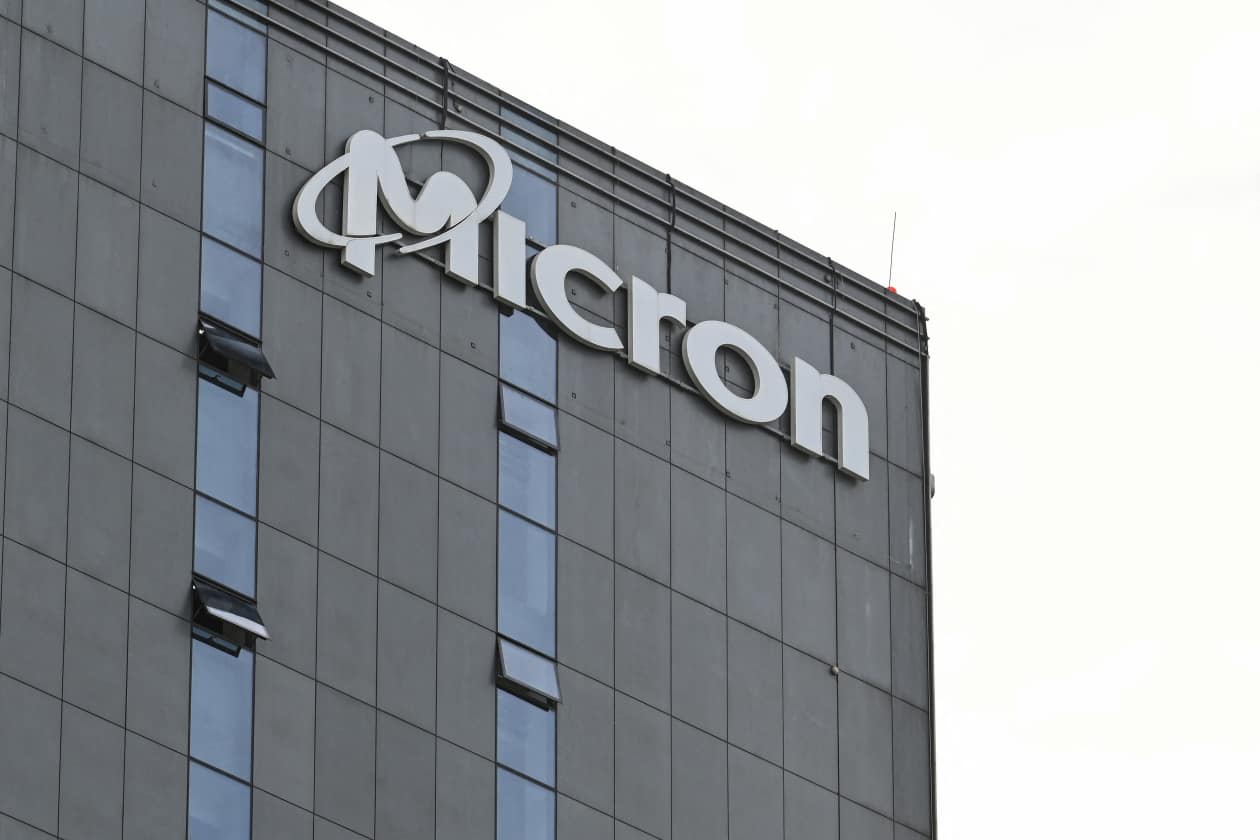
Three years ago, Micron Technology was losing money. Now, it’s one of the most profitable companies in the U.S.
That dramatic transformation reflects how essential memory chips have become to the artificial-intelligence wave. Micron
and its few rivals can’t make enough chips to satisfy the demand, and AI companies are willing to pay sky-high prices for what’s available.
Morningstar’s William Kerwin told MarketWatch recently that Micron’s exponential revenue growth has been coming at nearly “pure profit” thanks to dramatic price hikes on memory products.
“Not enough memory fabs were constructed to handle the amount of memory demand” brought on by generative and agentic AI, added Stifel analyst Brian Chin. He noted that average selling prices for dynamic random-access memory have been up more than 60% sequentially in recent quarters.
Micron is on an unorthodox reporting cadence, so its published results don’t line up with the traditional calendar. However, based on FactSet adjustments that standardize metrics to correspond with the calendar year, Micron is expected to be the fifth-most profitable company in the S&P 500
this year on the basis of operating income — behind Nvidia
, Alphabet
, Microsoft
and Apple
.
What’s more, next year’s projections put Micron above every company except Nvidia and Alphabet.
Below are the 10 companies in the S&P 500 expected to show the highest operating profits in 2027, with adjustments made by FactSet to match the calendar year. (The operating-profit estimates are in billions.)
| Company | Estimated 2026 operating income<br>(billions) | Estimated 2027 operating income<br>(billions) | Estimated 2028 operating income<br>(billions) | Expected change in 2027 | Expected change in 2028 | Forward P/E |
| Nvidia <br>NVDA<br><br>-1.64% | $249.0 | $359.4 | $438.4 | 44% | 22% | 18.9 |
| Alphabet <br>GOOGL<br><br>-1.84% | $169.7 | $207.6 | $246.8 | 22% | 19% | 23.8 |
| Micron Technology <br>MU<br><br>-6.69% | $130.4 | $200.8 | $221.3 | 54% | 10% | 9.2 |
| Microsoft <br>MSFT<br><br>+5.71% | $166.4 | $194.0 | $226.9 | 17% | 17% | 18.2 |
| Apple <br>AAPL<br><br>+3.14% | $158.1 | $170.5 | $182.1 | 8% | 7% | 29.2 |
| Amazon.com <br>AMZN<br><br>+2.50% | $103.9 | $131.8 | $171.2 | 27% | 30% | 24.1 |
| Broadcom <br>AVGO<br><br>-3.67% | $77.5 | $121.7 | $158.3 | 57% | 30% | 22.7 |
| Meta Platforms <br>META<br><br>+1.36% | $90.4 | $104.2 | $121.7 | 15% | 17% | 16.0 |
| JPMorgan Chase <br>JPM<br><br>-1.81% | $89.0 | $92.5 | $97,8 | 4% | 6% | 14.5 |
| Exxon Mobil <br>XOM<br><br>-0.73% | $67.4 | $59.6 | $54.2 | -12% | -9% | 12.7 |
| Source: FactSet |
One quirk of the trend is that hyperscalers are directly and indirectly helping to drive Micron’s operating income to such levels as their AI needs increase.
These companies “support most of the investments on the data-center supply chain, which in turn supports most of the investments and advancements in AI today,” Itau BBA analyst Stephano Gabriel told MarketWatch.
Don’t miss: Trump regrets once selling IBM’s stock. Now he’s cheering its quantum future and dealing its shares.
As AI spending eats into the free cash flow of cloud providers, Micron and other chip companies are turning into major free-cash-flow generators, Gabriel noted.
Micron’s forward price-to-earnings multiple is only 9.2, which is especially low for a company projected to increase its operating profit by 54% during calendar 2027. That valuation is less than half of the weighted forward P/E of 20.2 for the S&P 500 and 22.8 for the index’s information-technology sector
.
See also: Micron’s stock is still dirt cheap. Some analysts say that’s about to change.
The table also includes projected changes in operating income over the next two years. Micron’s growth pace is expected to slow to 10% in 2028. While booming memory demand is likely to persist into 2028, the company won’t necessarily be benefiting from the level of rapid price increases that it’s seen recently.
That’s partly because of new strategic long-term customer agreements that, as Chin noted, showcase how Micron has “the leverage to lock in some future supply at price levels, which will allow margins to sustain above historical high levels for several years.
“Hyperscalers are willing to entertain these contracts because memory is vital [and] necessary to their data-center buildout plans and to arrest the rate of future cost increase[s] beyond what has already occurred,” he told MarketWatch. But if hyperscalers are locking in some pricing now that’s more pegged to current levels, that could limit the rate of pricing growth in 2028, according to Chin.
Read more: Microsoft’s stock is suffering a historic June rout as investors balk at heavy spending
Copyright ©2026 MarketWatch, Inc. All Rights Reserved. 87990cbe856818d5eddac44c7b1cdeb8

Oil prices, stock futures inch higher as U.S. and Iran reportedly agree to halt attacks

Forget the ‘Sell America’ trade: Why U.S. markets keep proving the naysayers wrong

Micron is about to be more profitable than any U.S. company except Nvidia and Google

Big Tech is obsessed with smart glasses. Now it has to convince people to wear them.

‘I’ve become unhappy.’ I’m 73, married and retired with $717K saved. I want to change things up, but how important is it that I work with a top-50 financial adviser?
About the Author

Philip van Doorn writes the Deep Dive investing column for MarketWatch.
Hannah Pedone is a New York–based technology reporter for MarketWatch.
Show Conversation (1)
What to Read Next
products.gobankingrates.com
products.gobankingrates.com is blocked
This page has been blocked by an extension
- Try disabling your extensions.
ERR_BLOCKED_BY_CLIENT
Reload
This page has been blocked by an extension