

Breaking News
Click to pause breaking news tickerpause-simpleClose Breaking News Tickerclose-prominent
Iran claims attacks on Bahrain, Kuwait and JordanUS military says latest wave of attacks against Iran now overUS attack on water pumping station in Iran’s Mahshar kills 1, wounds 4
Click to pause breaking news tickerpause-simpleClose Breaking News Tickerclose-prominent
ListenListen (4 mins)
Save
Click here to share on social media share-nodes
Share
facebook x whatsapp-stroke copylink
googleAdd Al Jazeera on Googleinfo

Vessels in the Strait of Hormuz, as seen from Musandam, Oman, on July 9, 2026 [Reuters]

By John Power
Published On 13 Jul 202613 Jul 2026
Oil prices have jumped amid the latest outbreak of hostilities between the United States and Iran over the Strait of Hormuz.
Brent crude, the main international benchmark, rose more than 4 percent on Monday as Washington and Tehran traded attacks amid their escalating standoff over control of the critical waterway.
Recommended Stories
list of 4 items
- list 1 of 4 Detained by settlers, US Democrat Ro Khanna now faces pro-Israel attacks
- list 2 of 4 US launches new wave of strikes against Iran, aimed at ‘degrading’ military
- list 3 of 4 Mitch McConnell releases health update, says he is ‘regaining’ strength
- list 4 of 4 US launches more strikes on Iran as Strait of Hormuz standoff deepens
end of list
Brent futures for September delivery stood at $79.29 a barrel as of 02:00 GMT, the highest since June 22.
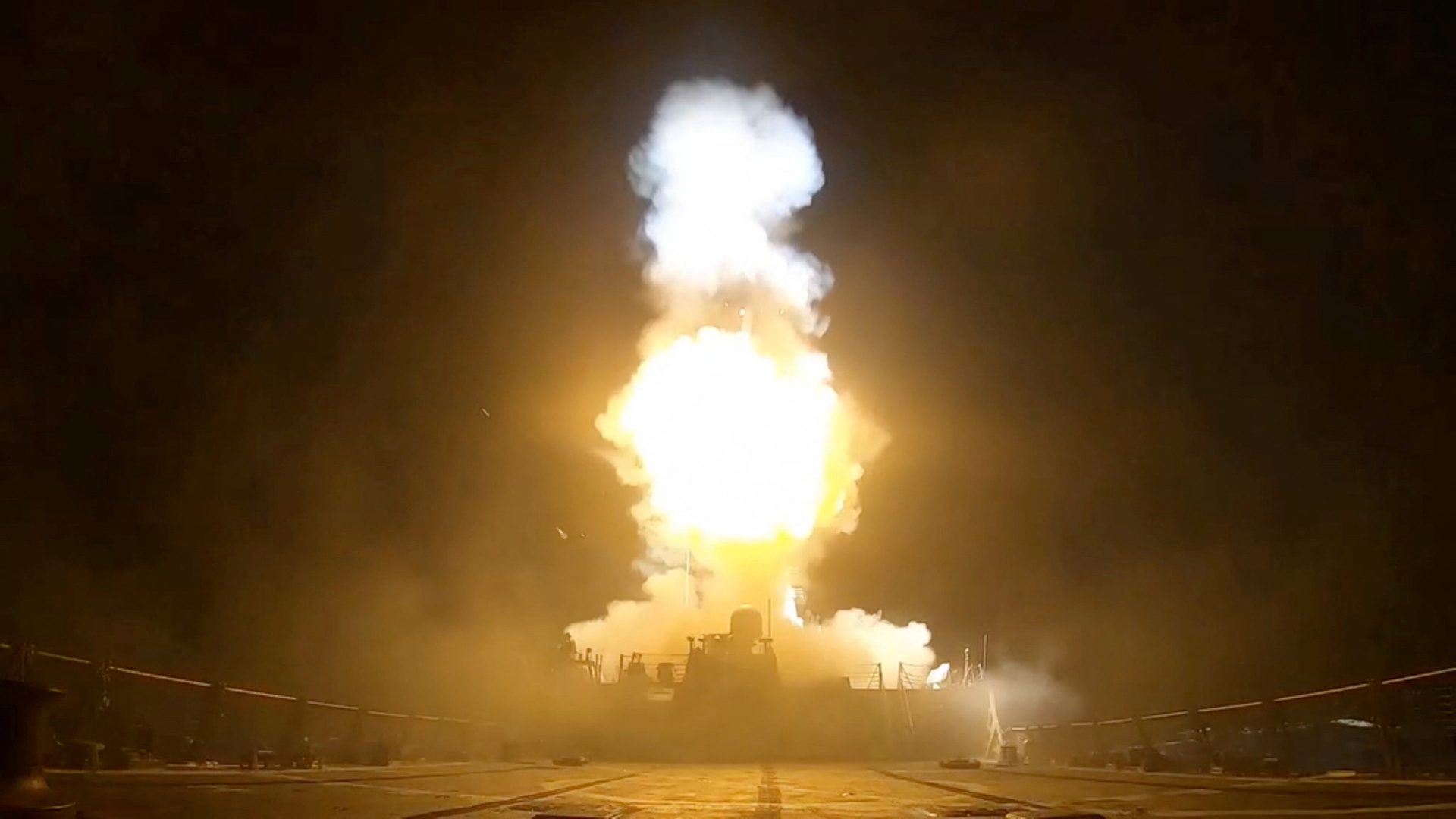
US Central Command (CENTCOM) said on Sunday that it had carried out dozens of strikes on Iran to degrade its ability to attack vessels in the strait, hours after striking hundreds of targets in the country.
US forces launched the earlier round of strikes after accusing Iranian forces of “blatantly” attacking a Cyprus-flagged container ship, the MV GFS Galaxy, as it was transiting the strait.
“The Strait of Hormuz is a vital maritime corridor for global trade. Iran does not control it,” CENTCOM said in a statement late on Sunday.
“US forces are postured and prepared to ensure that freedom of navigation remains available to commercial shipping despite Iran’s continued unwarranted aggression, harassment, threats, and arbitrary declarations.”
Iranian forces on Sunday launched a wave of missile and drone attacks against the United Arab Emirates, Qatar, Kuwait, Oman and Bahrain in response to the US strikes.
Iran’s Persian Gulf Strait Authority, which claims the right to control traffic through the Strait of Hormuz, earlier reiterated that vessels attempting to cross the waterway without using its preferred route would “not be covered by safe passage guarantees”.
“The consequences arising from transit through unauthorized routes shall be the responsibility of the owner, operator, and vessel commander,” the authority said.
Video Player is loading.
Play Video
PlaySkip BackwardSkip Forward
Mute
Current Time 0:00
/
Duration 0:00
Loaded: 0.00%
0:00
Stream Type LIVE
Seek to live, currently behind liveLIVE
Remaining Time -0:00
1x
Playback Rate
- 2x
- 1.75x
- 1.5x
- 1.25x
- 1x, selected
- 0.75x
- 0.5x
Chapters
- Chapters
Descriptions
- descriptions off, selected
Captions
- captions settings, opens captions settings dialog
- captions off, selected
Quality Levels
Audio Track
Fullscreen
This is a modal window.
Beginning of dialog window. Escape will cancel and close the window.
TextColorWhiteBlackRedGreenBlueYellowMagentaCyanOpacityOpaqueSemi-TransparentText BackgroundColorBlackWhiteRedGreenBlueYellowMagentaCyanOpacityOpaqueSemi-TransparentTransparentCaption Area BackgroundColorBlackWhiteRedGreenBlueYellowMagentaCyanOpacityTransparentSemi-TransparentOpaque
Font Size50%75%100%125%150%175%200%300%400%Text Edge StyleNoneRaisedDepressedUniformDrop shadowFont FamilyProportional Sans-SerifMonospace Sans-SerifProportional SerifMonospace SerifCasualScriptSmall Caps
ResetDone
Close Modal Dialog
End of dialog window.
Close Modal Dialog
This is a modal window. This modal can be closed by pressing the Escape key or activating the close button.
Video Duration 1 minutes 34 seconds play-arrow1:34
- Now Playing
Video Duration 01 minutes 34 seconds play-arrow01:34
- Next
Video Duration 28 minutes 10 seconds play-arrow28:10

- Video Duration 25 minutes 28 seconds play-arrow25:28

- Video Duration 01 minutes 57 seconds play-arrow01:57

- Video Duration 03 minutes 48 seconds play-arrow03:48

Show more videos
After ticking up following Washington and Tehran’s signing of a memorandum of understanding on ending the war last month, maritime traffic in the Strait of Hormuz has declined sharply amid the renewed fighting between the sides.
notification-importantGet instant alerts and updates based on your interests. Be the first to know when big stories happen.
Yes, keep me updated
Just six vessels were tracked crossing the strait between 18:00 GMT on Thursday and 06:00 GMT on Friday, compared with 18-22 daily crossings earlier this month, according to maritime intelligence platform Windward.
Nine vessels were tracked in the waterway between 18:00 GMT on Saturday and 06:00 GMT on Sunday, four of which were flying the Iranian flag, according to Windward.
Roughly 130 vessels transited the strait, a conduit for one-fifth of the global oil trade in peacetime, each day before the start of the war.
Oil prices, which had returned to pre-conflict levels following the signing of the memorandum on June 17, are now about 9 percent higher than before the US and Israel launched their initial strikes on Iran in late February.
Mukesh Sahdev, founder and chief oil analyst at XAnalysts in Sydney, Australia, said he expects the per-barrel price of Brent to remain in the upper $70s during August and September amid the heightened geopolitical uncertainty.
“There could be occasional spikes and dips outside that range,” Sahdev said in a note to clients on Saturday.
“Long-haul procurement forces refiners to make supply decisions weeks in advance,” Sahdev added.
“Those decisions have already reduced immediate reliance on the Middle East, and the latest escalation is likely to reinforce rather than reverse that trend.”
Your browser does not support the audio element.
audio-rewind
audio-play
audio-forward
audio-volume-mute
close
Read Original at Al Jazeera →