
Rivian stock spikes following latest update
Rivian shares jumped by double digits after investors got this news.
Jul 3, 2026 2:03 AM EDT

By Tony Owusu
Edited by Celine Provini
0
RIVN
BNP Paribas has been one of the few Wall Street firms that is bearish on EV industry leader Tesla. Late last year, the firm initiated coverage with an underperform rating and a $280 price target.
BNPP cited unrealistic goals and a bloated valuation as the reasons for the bearish outlook on the industry-leading EV maker. It reiterated its view in April, saying nothing had materially changed about the EV space and Tesla’s place in it.
On the other hand, BNPP has been bullish on Rivian, the startup Tesla rival that, at times, has looked on the verge of collapse.
Rivian’s goals this year seem much more attainable, so analysts at BNP Paribas are more bullish on the struggling startup EV maker.
The firm had a $23 price target on its shares since April. While the firm lowered its price target to $22 per share, according to MarketBeat, it remains well above the average price target of $18.57.
On Thursday, Rivian shares jumped as much as 10%, but were trading 8% higher to $18.55 per share at last check.
Rivian increases 2026 sales guidance
On Thursday, July 2, Rivian filed an 8-k update with the U.S. Securities and Exchange Commission. It informed the feds and investors that the company produced and delivered so many vehicles in the second quarter that it is increasing its delivery outlook for the full year.
Rivian produced 12,613 vehicles in the preceding three months, while delivering 12,194 vehicles in that time. The delivery results easily topped the company’s internal outlook of between 9,000 and 11,000.
As a result, Rivian is increasing its full-year delivery outlook to between 65,000 and 70,000 from its previous view of between 62,000 and 67,000 vehicles delivered.
The company also revealed that it will present its full quarterly results after the market close on July 30.
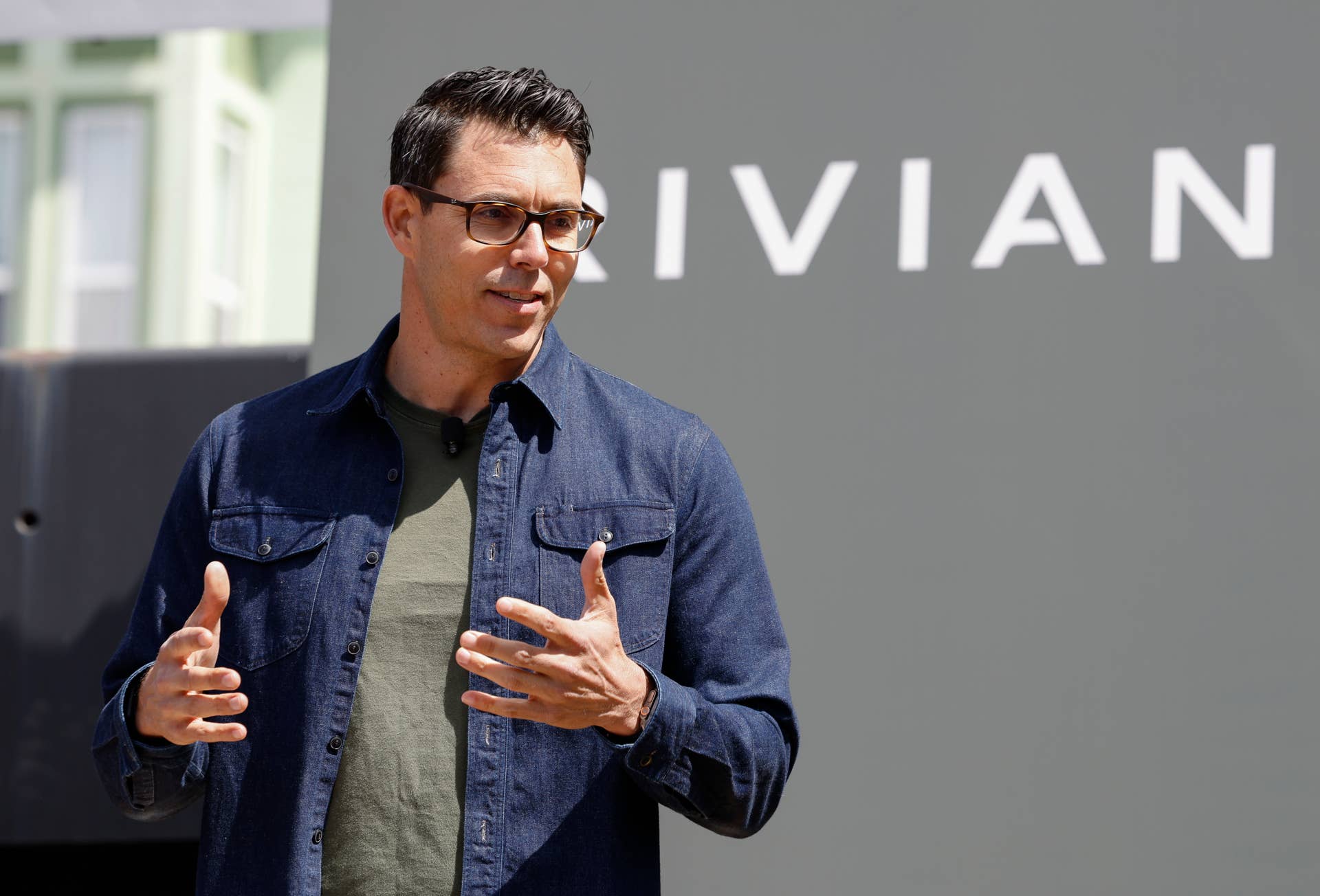
Rivian aims for FSD-like hands-free driving by the end of the year.Kimberly White / Getty Images
BNP Paribas sees big upside for Rivian stock
Elon Musk has promised investors that Tesla will more than triple its Robotaxi coverage and usher in the humanoid robot revolution by the end of the year.
Meanwhile, Rivian’s goals this year seem much more attainable, so analysts at BNP Paribas are more bullish on the struggling startup EV maker.
The firm says that although it expects better deliveries, “Rivian’s 2026 will be defined by… the Co.’s ability to offer FSD-like ‘point-to-point’ hands-free driving by year end.”
In the meantime, it says the recent $1.25 billion expanded Robotaxi partnership with Uber is enough to push the firm’s expectations for Rivian’s stock to $4 per share.
During its Autonomy & AI Day in December, Rivian introduced the Gen 3 Autonomy Computer, its third-generation compute platform, which it says will have the “leading combination of vehicle sensors and inference available in North America.”
The Gen 3 Autonomy Computer can process 5 billion pixels per second, thanks to the Rivian Autonomy Processor, its proprietary silicon chip that Rivian claims is among the first multi-chip modules used in high-compute automotive applications.
All Rivian vehicle deliveries now come with a 60-day trial of Autonomy+, its hands-free platform.
Rivian eyes in-house lidar production
Rivian may produce the lidar sensors that enable the self-driving tech it is developing in-house, CEO RJ Scaringe told Reuters recently.
Rivian said it plans to include lidar sensors on a version of its R2 vehicle coming later this year, but did not disclose which company would supply them.
The company is considering going in-house, possibly through a joint venture, as “all the real choices are coming out of China,” according to Scaringe.
“Think of it as finding a way to structurally ingest the technology,” Scaringe told Reuters. “The advancements in terms of going from the early lidars that I think a lot of us have seen — we see them here — to these much more advanced solid-state lidars, those advancements didn’t happen in the United States. Those advancements happened in China.”
About the authors
Tony Owusu
Tony Owusu has been writing for TheStreet since 2014. He covers the latest automotive business news from Ford Motor, General Motors, Stellantis, and internationally. He writes about Japanese car companies, including Toyota and Honda, and German automakers, such as BMW and Mercedes-Benz. Tony frequently writes about Tesla, Elon Musk, electric vehicles, robotaxis, and the impact of tariffs on automakers. Tony's first car was a Chevy Corsica, but after spending 10 years in New York, his new dream car is a Chrysler Pacifica.An avid sports fan, Tony’s first professional job as a reporter was covering high school sports. Nowadays, he also writes sports business news and sports gambling during football season. He is a 2009 graduate of American University, and you can follow Tony Owusu on X @Tonythestreet

Celine Provini
Celine is a writer and editor with over 20 years of experience and has covered diverse news, features, academic/research, and legal topics. At TheStreet.com, Celine is a senior editor with experience across retail, stocks, investing, personal finance, technology, the economy, and travel.
Start the Conversation
Trending Stories
01
Automotive
GM’s EV strategy is under pressure
Karl Furlong
02
Automotive
BofA sees Ford chasing a market far bigger than EVs
Faizan Farooque
03
Latest Business & Market News
Gas prices plunge into July 4 as Trump urges probe
Charley Blaine
04
Automotive
Ford CEO makes USMCA demands clear amid negotiations
Tony Owusu
Comments
Have fun. Don't be mean. Feel free to criticize ideas, not people. Report bad behavior.
Sign in to continue
Continue with Google
Sign in another way
No one has shared their thoughts yet.
Leave a comment so your voice will be heard first.
Read Original at thestreet.com →