

This is an exclusive story from our newsletter — subscribe for more
-
Discounts and special offers
-
Subscriber-only articles and interviews
-
Breaking news and trending topics
Join 200K subscribers
Already a subscriber? Sign in.
By signing up, you accept Moneywise's Terms of\ Use, Subscription Agreement, and Privacy Policy.
Not interested ? Continue reading
Top Stories
 Getty Images, Shutterstock
SpaceX just landed in millions of 401(k)s due to key index rule changes — and the same rules open the door to OpenAI and Anthropic

Jun 28, 2026
0
Share
Copy LinkEmail Facebook X LinkedIn Reddit
Follow us
Newsletter Instagram Facebook Tiktok X Youtube
Add as a preferred source on Google
Jun 28, 2026
0
Share
Copy LinkEmail Facebook X LinkedIn Reddit
Follow us
Newsletter Instagram Facebook Tiktok X Youtube
Add as a preferred source on Google
SpaceX (NASDAQ:SPCX) priced its IPO at $135 a share on June 12 and promptly went on a tear. Within four trading days, it climbed roughly two-thirds, touching $225 and a valuation near $3 trillion. Then it gave most of that back, sliding more than 30% to around $153, where it trades now — still roughly a $2 trillion company.
None of that round trip had any bearing on what happened next in millions of retirement accounts. On June 18, just five trading days after the listing, SpaceX entered the CRSP US Total Market Index — the benchmark behind the Vanguard Total Stock Market Index Fund (NYSEARCA:VTI), one of the most widely held funds in America and many other index funds.
Jun 28, 2026
0
Share
Copy LinkEmail Facebook X LinkedIn Reddit
Follow us
Newsletter Instagram Facebook Tiktok X Youtube
Add as a preferred source on Google
Advertisement
Thanks for subscribing!
Read the best of Moneywise in 5 minutes or less.
Subscribe
By signing up, you accept Moneywise Terms of Use, Subscription Agreement, and Privacy Policy.
That's the part worth understanding, because it's about to happen two more times.
Thanks for subscribing!
Read the best of Moneywise in 5 minutes or less.
Subscribe
By signing up, you accept Moneywise Terms of Use, Subscription Agreement, and Privacy Policy.
SpaceX is already entering index funds
SpaceX's entry into your index funds is a sequence already in motion, unfolding over weeks:
June 18 — CRSP. SpaceX joined the index behind VTI and Vanguard's growth funds, with an estimated $4–7 billion in passive buying.
June 29 — FTSE Russell. SpaceX is added to the Russell 1000 after the June 26 close, going live for trading on Monday, June 29. Funds like the iShares Russell 1000 ETF (NYSEARCA:IWB) pick it up automatically — an estimated $6–9 billion in buying.
Late June — MSCI. SpaceX enters MSCI's US indexes on roughly the same schedule, another estimated $3–5 billion.
July 7 — Nasdaq-100. Nasdaq has confirmed that SpaceX will join its flagship index, the one behind the Invesco QQQ ETF (NASDAQ:QQQ) and the more than $800 billion Nasdaq-100 index.
If you hold a broad index fund or a Nasdaq-100 fund, in other words, you either already own a sliver of SpaceX or you will within days, without having bought a share.
Must Read
- The ultra-rich use these 5 real estate strategies to build wealth while they sleep — you can start with just $100
- Here’s the average income of Americans by age in 2026. Are you keeping up or falling behind?
- Insurance companies profit most from drivers who auto-renew without shopping around. Comparing 100+ quotes takes 2 minutes and costs nothing
Join 250,000+ readers and get Moneywise’s best stories and exclusive interviews first — clear insights curated and delivered weekly. Subscribe now.
Why index rules changed for SpaceX
This wave didn't slip through the old rules. The rules changed to let it through.
trending now

1
News •126.3k views
Trump says proposed triumphal arch honors him
2
News •122.7k views
Trump's economic approval drops 79 pts
3
News •98.6k views
Cruz: The ‘dirty little secret’ of Trump Accounts
4
News •98.1k views
Homeowners reeling after Trump cancels grant he called DEI
5
News •85.3k views
Retirement 'magic number' hits $1.46M in 2026
Advertisement
Index funds track their benchmarks, and several major benchmarks revised their eligibility criteria this spring. The common thread was float — the share of a company's stock that actually trades publicly. SpaceX is listed with only about 4% of its shares available; the rest stays locked with insiders and Elon Musk, whose dual-class stock keeps his control intact. Under the old rules, that thin a float would have kept a company of its size out.
“Well-designed indexes represent the investable market, so they rely on free float — the shares actually available to public investors — rather than a firm's total equity market capitalization,” Alex Poukchanski, Director of Index Analytics at Morningstar Indexes — which now owns CRSP — told Moneywise. The new requirements, he said, “provide more flexibility for mega caps which are increasingly coming to market with much higher relative market caps but lower relative market float.”
As for why money-losing companies can get in at all: total-market indexes never screened on profitability. As Poukchanski put it, they “capture the investable opportunity set” and “don't select or exclude based on assessments of future viability.” Investability is the test, not profit.
One point that's been widely muddled: the five-business-day fast-track that let SpaceX enter so quickly isn't new — it has existed at CRSP since 2017. What changed this spring was the float test, not the speed.
OpenAI and Anthropic are next in line
Because the rules turn on size and float rather than any single company, they catch the next giant automatically — and the next two are already filed and waiting.
Anthropic filed confidentially on June 1; OpenAI followed on June 8, disclosing the filing itself before word could leak. Neither has priced an offering or set a firm date — OpenAI's finance chief has signaled its listing may not arrive until late 2026 or 2027, and recent reporting indicates OpenAI hasn't yet held pre-IPO investor meetings. But the structural setup is what matters, and it's nearly identical to SpaceX's.
Both are enormous, and both would float only a sliver of their stock — exactly the profile the new float rules were built to admit. OpenAI was last valued around $852 billion, Anthropic around $965 billion; with SpaceX, the three represent roughly $3.6 trillion on paper, more than the total value of every company that went public in 2021, the previous record year for US listings, according to Bloomberg.
Advertisement
Poukchanski used OpenAI as his own illustration of why the rules changed. At a roughly $872 billion valuation, he noted, a $44 billion IPO would leave OpenAI with a public float of about 5%. To clear the old 10% float threshold, the company would have had to sell something closer to an $87 billion offering — more, by the reckoning of University of Florida finance professor Jay Ritter, than all the money raised in US IPOs from 2022 through 2025 combined. The old rule, in other words, would have asked the impossible of precisely the companies now lining up.
What that means in practice: when OpenAI and Anthropic list at scale and clear the float-adjusted bar, the same machinery that pulled SpaceX into your funds in five trading days is positioned to pull them in too. The exact weight will hinge on how much stock each floats — and investment adviser Jacob Friedman has noted that a company coming public with even a 15-to-20% float would produce far larger index weights and greater immediate passive demand than SpaceX's thin float did. SpaceX, on that view, is the floor of what these inclusions look like, not the ceiling.
You don't have to pick a winner among the three, or buy any of them, to wind up holding all three. A broad index fund does it for you, by design.
Read More: About 1 in 5 Americans over 50 has zero retirement savings. Here's why it's not too late
The S&P 500 said no
The providers didn't move in lockstep — and the split is the most revealing part of the story.
Nasdaq went furthest, eliminating its minimum float requirement outright and letting the largest new listings in after 15 trading days. FTSE Russell and CRSP added or used five-day fast-track routes. MSCI didn't change anything — its 10-day rule has stood since 2007.
Then there's the one that matters most for retirement money. The S&P 500 — the benchmark one of the largest pools of 401(k) dollars tracks — considered the same kind of change and, on June 4, declined to make it. S&P Dow Jones Indices kept its existing rules: a 12-month seasoning period, a minimum float, and the four-quarter profitability test that has long kept money-losing companies out. Exceptions, it concluded, should not be granted “solely based on market capitalization.”
trending now
1
News •126.3k views
Trump says proposed triumphal arch honors him
2
News •122.7k views
Trump's economic approval drops 79 pts
3
News •98.6k views
Cruz: The ‘dirty little secret’ of Trump Accounts
4
News •98.1k views
Homeowners reeling after Trump cancels grant he called DEI
5
News •85.3k views
Retirement 'magic number' hits $1.46M in 2026
Advertisement
The result is a forked outcome. Through Russell, the Nasdaq-100, MSCI and total-market funds, SpaceX and its successors reach your account within weeks. But if your retirement savings sit in an S&P 500 fund specifically, you won't own SpaceX through it — not until mid-2027 at the earliest, and only if the company can post the profits the index still demands.
That divergence is the live argument over this whole wave, playing out between the index providers themselves. Critics of the looser approach have made a pointed version of S&P's reasoning: a profitability rule that bends only for the very largest companies isn't really a rule. A smaller firm with a healthy float but no profit can be shut out, even as a trillion-dollar company with a sliver of public stock and deep losses sails in.
How much SpaceX does your 401(k) actually hold
Here's the counterweight to the alarm: even where the door is open, inclusion isn't a single day-one flood.
Rodney Comegys, Chief Investment Officer of Vanguard Capital Management and Head of Global Equity, told Moneywise that index inclusion is “transparent, rules-based and phased, not instantaneous,” with no full-weight inclusion on day one — meaning passive flows tend to be “more measured than often assumed.” Even the largest IPO, he added, ends up as “a small piece of a diversified portfolio.”
The math bears him out. Because weight is set by float, not headline value, a $2 trillion company with a 4% float gets treated more like a $90 billion one. Morningstar estimates SpaceX will enter VTI at less than 0.2% of the fund — a weight on par with $73 billion retailer Ross Stores, somewhere around the 150th-largest holding in a fund that spans thousands of names. It can grow as more of SpaceX's stock unlocks over the coming months, but it starts small.
The case for caution on SpaceX stock
That doesn't make the worry imaginary. The buying is price-insensitive — funds buy because the rules require it, not because anyone judged $3.6 trillion a fair price for three companies that mostly burn cash. Prof G Markets co-host Ed Elson, reviewing SpaceX's filing, called the offering's valuation detached from its financials — and the stock's round trip from $135 to $225 and back toward $150 in two weeks is its own argument that the price is anything but settled.
For investors who'd rather buy in directly than wait for a fund to do it, the direct route has its own friction. The brokerages handling these IPOs enforce “flipping” rules that penalize selling too soon, and Fidelity's lowered $2,000 minimum came with restrictions that can lock repeat sellers out of future deals. For SpaceX employees holding shares, the debut also reshaped their tax and wealth-planning picture.
What it means for your retirement account
This is less a decision you're making than a current you're already in. If you hold a broad index fund, SpaceX is already there or arriving within days — in small, phased doses, as a fraction of a portfolio that spans thousands of companies. OpenAI and Anthropic are set to follow the same path when they list. That diffuse, automatic exposure is a very different thing from betting on any one of these names at its opening price — as the investors who bought SpaceX at $225 found out within a week.
The rules did change, and the exposure is real. But for most savers it arrives gradually, in slivers, folded into the market they already own — not in the single dramatic stroke the headline numbers suggest. The one exception is the S&P 500, which decided this particular wave can wait.
You May Also Like
- JP Morgan sees gold hitting $6,000/oz before 2027 — and a Gold IRA lets you hold the physical metal while deferring the tax bill. Get your free guide from Priority Gold
- Dave Ramsey warns nearly 50% of Americans are making 1 big Social Security mistake — here’s what it is and the simple steps to fix it ASAP
- Thanks to Jeff Bezos, you can now become a landlord for as little as $100 — and no, you don't have to deal with tenants or fix freezers. Here's how
- Millionaires under 43 are reshaping investing — just 25% of their portfolios are in stocks. Here’s where their money is going
Share this:
Rudro Chakrabarti
Editor
Rudro is an Editor with Moneywise. His work has appeared on Yahoo Finance, MSN, MSN Money, Apple News, Samsung News and the San Diego Union Tribune.
more from Rudro Chakrabarti

News • 19h ago
This Florida woman, 79, lost $200K to scammers. With cops in her living room, they called for $30K, kicking off a sting

News • 22h ago
Gonna buy Take-Two shares before the GTA 6 release? Here's how blockbuster game launches actually move stocks
Comments
Be the first to share your thoughts.
Comments
Explore the latest
Skip to previous ItemSkip to next Item

Retirement •14.8k views
Behind on saving for retirement? Here's the catch-up plan you can actually use

News • 2h ago
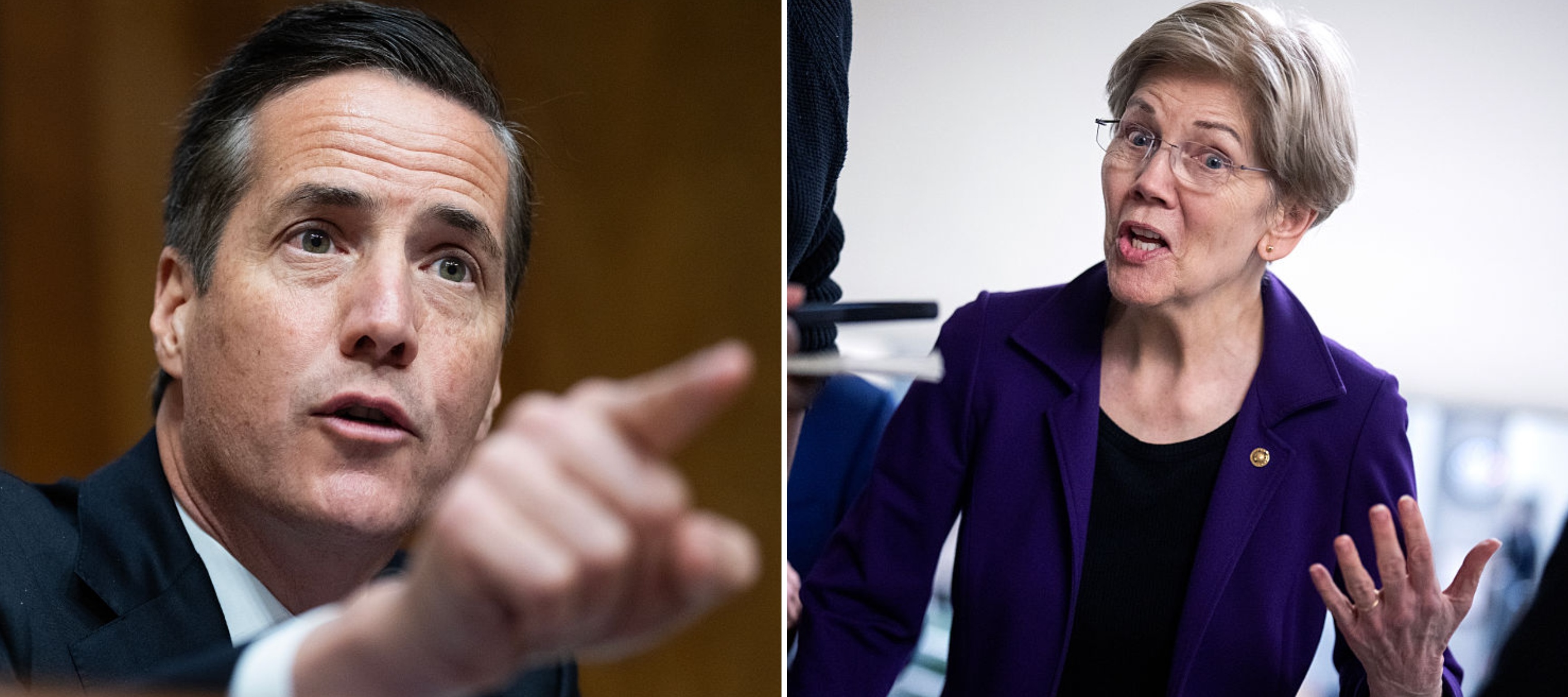
‘This is a no-brainer’: A GOP senator is teaming up with Elizabeth Warren to extend Social Security’s lifespan


News • 13h ago
Ford’s AI wasn’t smart enough to replace veteran engineers — so it hired 350 specialists to shore up its quality control issues
News • 19h ago
This Florida woman, 79, lost $200K to scammers — then had detectives in her living room when they called back for $30K more, kicking off a sting

News • 20h ago
The New York Times saw political significance in Usha Vance's coral dress that cost her only $9


News • 20h ago
New court filing alleges disturbing business practices behind grocery store sushi — and the workers keeping sushi shelves stocked could get back pay


News • 21h ago
From 'Hot Girls Read' to 'Hot Girl Walk' people are trademarking popular internet phrases and small business aren't happy about it

News • 22h ago
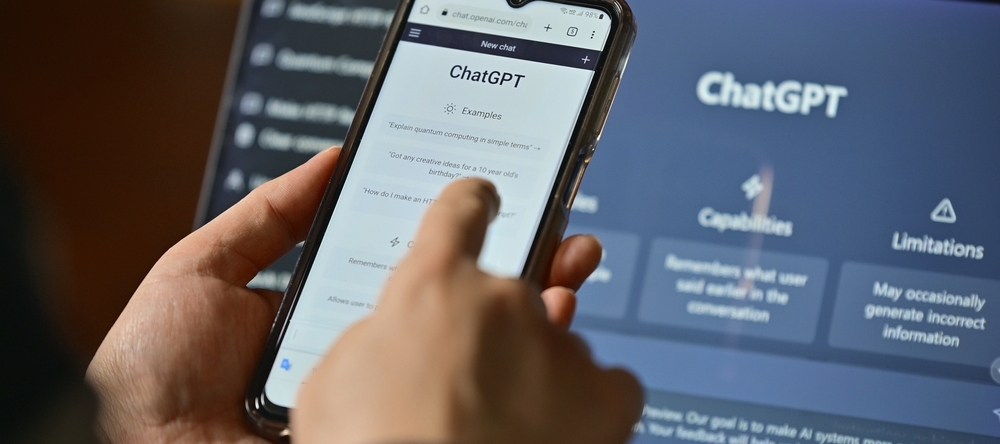
The majority of workers are using prohibited AI apps on the job and your customer information may be at risk, study finds

Explore the latest
Skip to previous ItemSkip to next Item
Retirement •14.8k views
Behind on saving for retirement? Here's the catch-up plan you can actually use
News • 2h ago
‘This is a no-brainer’: A GOP senator is teaming up with Elizabeth Warren to extend Social Security’s lifespan
News • 13h ago
Ford’s AI wasn’t smart enough to replace veteran engineers — so it hired 350 specialists to shore up its quality control issues
News • 19h ago
This Florida woman, 79, lost $200K to scammers — then had detectives in her living room when they called back for $30K more, kicking off a sting
News • 20h ago
The New York Times saw political significance in Usha Vance's coral dress that cost her only $9
News • 20h ago
New court filing alleges disturbing business practices behind grocery store sushi — and the workers keeping sushi shelves stocked could get back pay
News • 21h ago
From 'Hot Girls Read' to 'Hot Girl Walk' people are trademarking popular internet phrases and small business aren't happy about it
News • 22h ago
The majority of workers are using prohibited AI apps on the job and your customer information may be at risk, study finds
Disclaimer
The content provided on Moneywise is information to help users become financially literate. It is neither investment, tax nor legal advice, is not intended to be relied upon as a forecast, research or investment advice, and is not a recommendation, offer or solicitation to buy or sell any securities, enter into any loan, mortgage or insurance agreements or to adopt any investment strategy. Tax, investment and all other decisions should be made, as appropriate, only with guidance from a qualified professional. We make no representation or warranty of any kind, either express or implied, with respect to the data provided, the timeliness thereof, the results to be obtained by the use thereof or any other matter. Advertisers are not responsible for the content of this site, including any editorials or reviews that may appear on this site. For complete and current information on any advertiser product, please visit their website.
†Terms and Conditions apply.

Sign up free.
Join 250,000+ readers by activating your free account. Get our newsletter, a Warren Buffett investing guide, and commenting access on stories.
Subscribe
By signing up, you accept Moneywise Terms of Use, Subscription\ Agreement,
and Privacy Policy.
Already signed up?
Sign In.
Read Original at moneywise.com →