
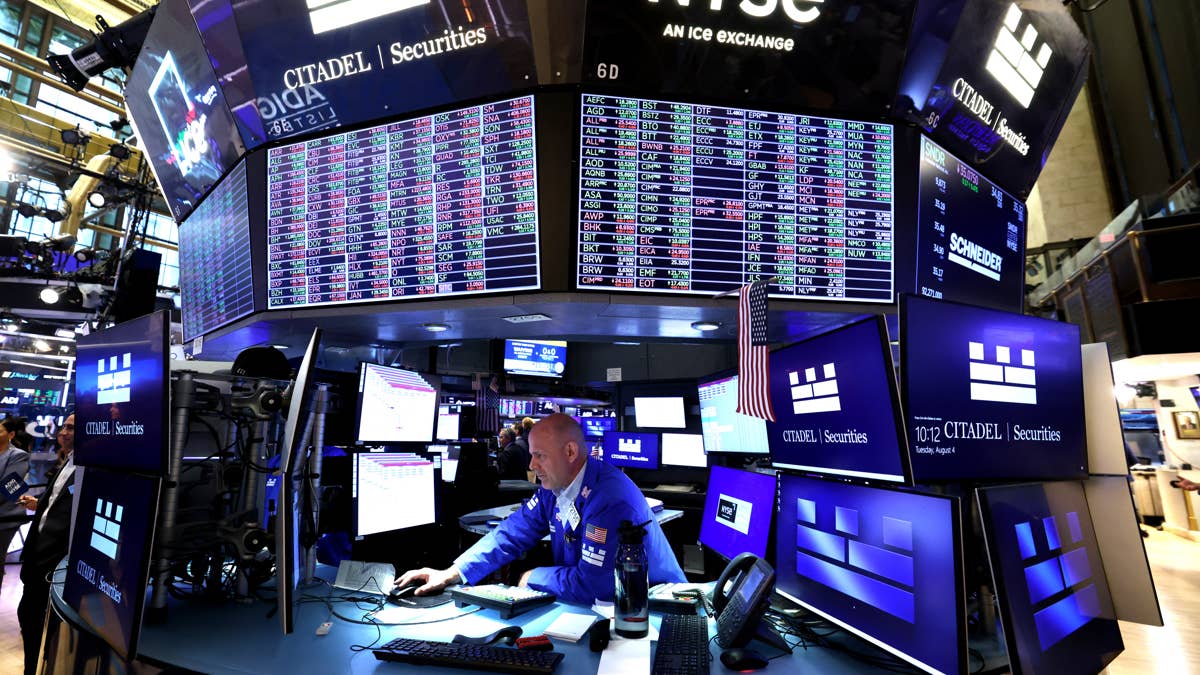
Stock market hits records as Fed removes key safety net
The Fed raises the stakes as it keeps things closer to the chest.
Aug 7, 2026 3:33 PM EDT

Edited by Celine Provini
0
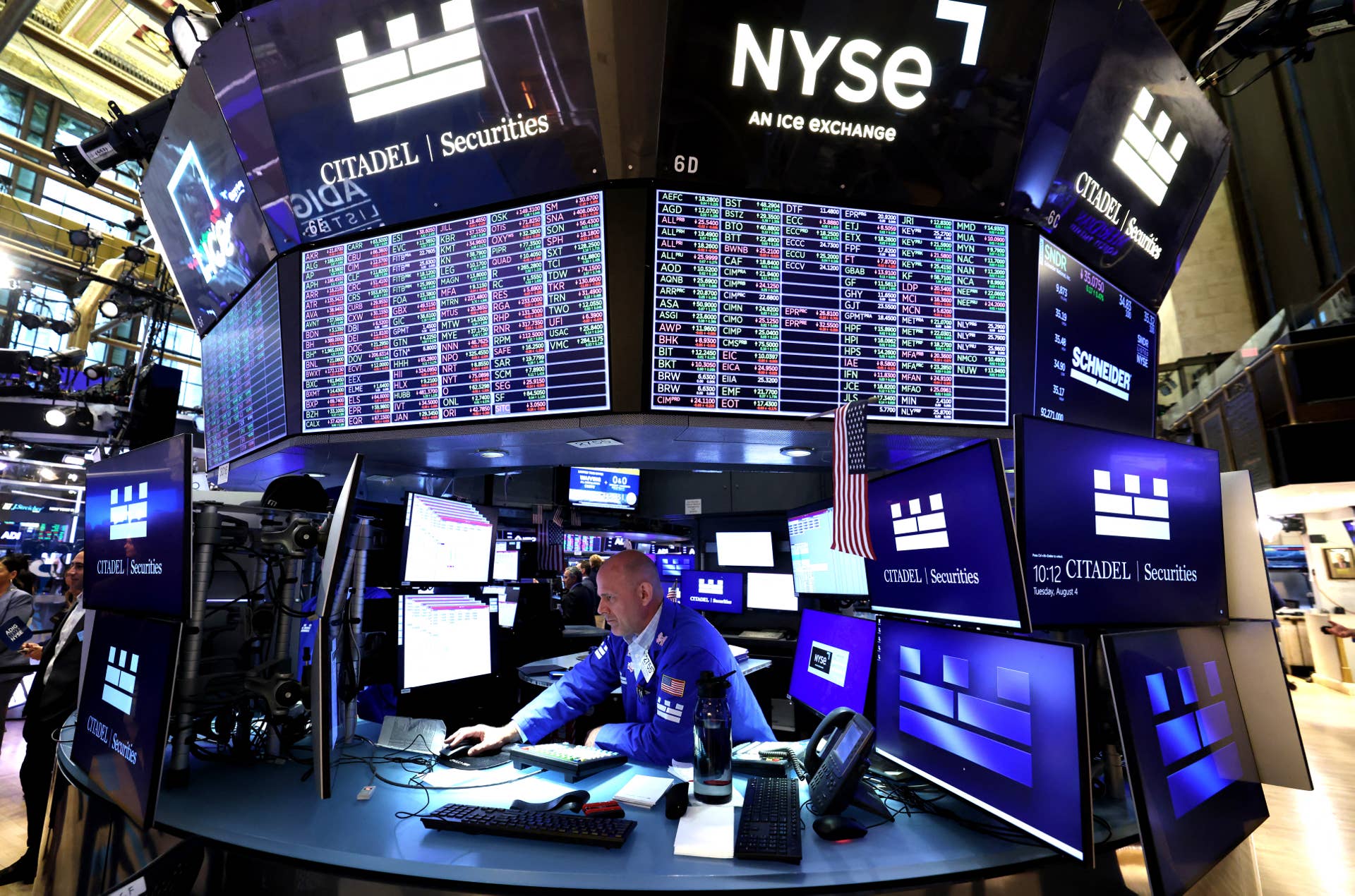 TIMOTHY A. CLARY / Getty Images
Wall Street just got the milestone investors have been waiting for.
The S&P 500 hit new highs this week, and the Dow Jones Industrial Average closed above 54,000 for the first time. The Nasdaq also jumped as technology and artificial-intelligence stocks bounced back from their summer slump.
If you’re looking at a retirement account or brokerage balance, the move looks reassuring.
There’s a catch, though.
Corporate profits are holding up unusually well, oil prices have retreated from recent peaks, and investors are finding winners beyond the most crowded of tech bets. Yet the Federal Reserve is becoming harder to read at precisely the time stocks are getting more expensive.
Investors are accustomed to heavy forward guidance from previous Fed leadership, but Chairman Kevin Warsh has moved away from that, Reuters noted. He has argued that markets should be more data-driven and less dependent on central bank forecasts.
That switch may improve discipline over time. Unfortunately, it leaves traders less sure about what the Fed will do next. It also changes the risk around record highs.
The market needs more than just robust earnings. Now it needs investors to read inflation, jobs, and interest rates correctly, without the Fed doing as much of the signaling for them.
Piper Sandler technician Craig Johnson described the recovery as “good, not great,” pointing to lower oil and yields but lingering risks.
S&P 500 earnings are giving the rally real support
Sentiment is not the strongest reason for the stock market.
It is profits.
More than half of S&P 500 companies had reported second-quarter results by July 31, FactSet said, with both the percentage of companies beating earnings estimates and the size of those beats running above recent historical averages.
That matters, since record highs are simpler to defend when earnings go up with stock prices.
Analysts are also getting more, rather than less, optimistic. For the second straight quarter, Wall Street has upped its quarterly earnings projections for S&P 500 businesses, FactSet said this week. That’s important because experts usually lower their expectations as a quarter progresses.
The strength is also showing up in individual companies. Caterpillar reported sales and revenue of $20.5 billion in the second quarter, up 24% from a year ago, and adjusted profit of $8.17 a share. Demand connected in part to data center construction and power generation needs has been a boon for the company.
Palantir also recorded a spectacular quarter as demand for its artificial intelligence products soared.
These findings explain why investors are willing to buy the dip instead of fleeing equities.
The rally is also becoming less dependent on one kind of enterprise.
Technology specialization was an obvious weakness identified earlier this summer. The market was over-reliant on a few technology stocks, to historically high levels, meaning they posed a greater danger if they faltered, Reuters reported in June.
That risk hasn’t gone away. But better industrial, financial, and other-sector performance gives the market additional ways to move on if AI stocks stumble again.
That broadening is essential since the summer sell-off showed how rapidly crowded trades may collapse.
Nasdaq flirted with correction territory before staging a strong rally.
Investors are still excited about AI. They are just becoming increasingly choosy about which companies deserve high prices.
The Fed may now be the market’s harder problem
The biggest unresolved risk may not be earnings; it may be monetary policy.
The Fed has kept its benchmark rate steady in the 3.5% to 3.75% range, and its July Monetary Policy Report indicated inflation remains high relative to the central bank’s 2% target. PCE inflation was running at 4.1% in May, up substantially from the year-ago period.
More Wall Street:
- Wall Street’s AI trade faces its biggest valuation test
- The next Wall Street shift is already underway
- Wall Street sends strong 4-word verdict on the stock market
That leaves Warsh with less leeway to soothe markets.
His idea of communication adds to the uncertainty. Warsh has highlighted the necessity of allowing bond markets to have a stronger role in price discovery and to respond to real economic facts, rather than providing investors with a clear signal of where policy is likely to head months in advance.
The move has already created increased volatility around longer-term Treasury yields, Reuters writes.
And that matters for equities. Higher Treasury yields boost the yield on offer from bonds and lower the present value of future corporate profits, putting costly growth stocks under specific pressure.
The next big test is the jobs report for July. A stronger than projected labor market could keep the Fed under pressure to remain tight.
A softer report could assuage rate anxieties but prompt questions about economic growth, leaving investors with a very constrained path.
They want growth strong enough to support earnings, but not so strong that inflation and rates remain elevated.
And then there’s the geopolitics. Oil prices fell more than 5% Aug. 4 as U.S. and Qatari officials suggested progress toward a potential resolution of the U.S.-Iran conflict and the reopening of the Strait of Hormuz, Reuters reported. Brent ended at $79.36, its lowest price in weeks.
Lower energy costs help ease one source of inflationary pressure. However, shipping through the Strait remains depressed, as Reuters noted, and oil remains highly sensitive to any breakdown in negotiations.
That leaves the inflation picture vulnerable to happenings far from Wall Street.
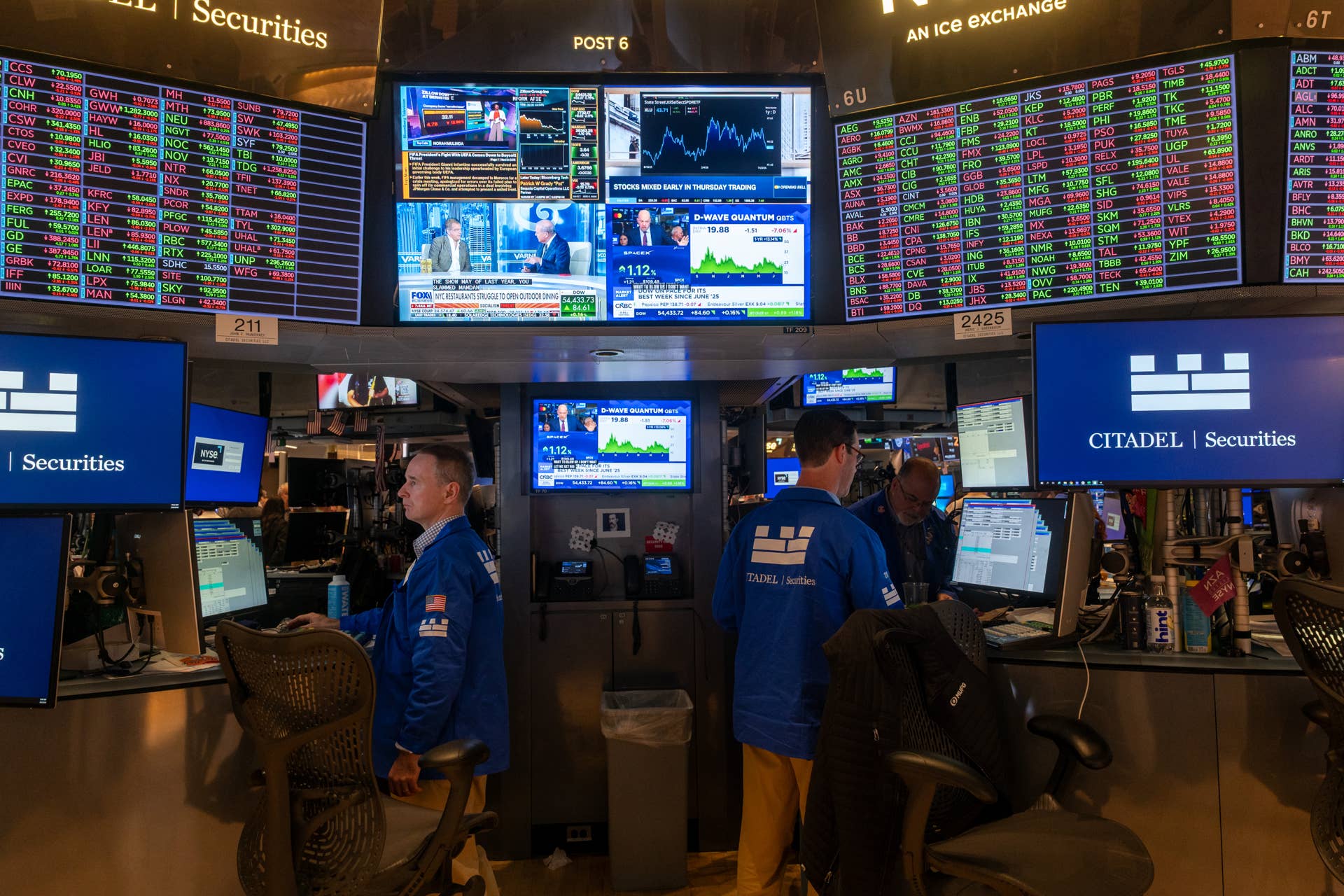
The S&P 500’s record high hides a harder question for investors.Spencer Platt / Getty Images
Record highs force investors to ask a different question
When the record highs are reached, investors often worry if the market has grown too costly. That is usually not the most useful question to ask.
Markets can keep setting new records for years if earnings growth is quick enough. The better question is, do the assumptions that justify those prices still hold?
Right now, a number looks strong. Corporate earnings are exceeding expectations. Analysts are boosting their forecasts. Tech stocks are bouncing back. Industrial enterprises are seeing the benefits of the AI infrastructure expansion. Oil prices have slipped.
But certain assumptions are still shaky. Inflation needs to keep coming down. The labor market can’t overheat. Treasury yields can’t rise too fast.
We need to see actual earnings from AI spending, not just more capital expenditures, and we need to avoid geopolitical tensions that trigger another energy shock.
What stock-market investors should watch next
- Jobs data: A hot labor market could increase the risk of tighter Fed policy.
- Inflation: Persistent price pressure would keep rates elevated.
- Treasury yields: Rising long-term yields would pressure expensive growth stocks.
- Earnings revisions: Continued upgrades would strengthen the fundamental case for record highs.
- Market breadth: Broader gains would make the rally less dependent on a handful of technology companies.
- Oil prices: Another surge could quickly revive inflation fears.
The current situation is better than it looked during the summer sell-off, but that is not a clear signal.
The S&P 500’s record high suggests that profit growth and confidence have been strong enough to offset AI volatility, geopolitical risk, and tighter financial constraints.
Now the hard part begins. Warsh’s Fed is less transparent to Wall Street. That means every jobs report, inflation release, and bond-market move gets a little more weight.
The main factor for investors considering whether to chase the surge is no longer how high equities have already soared. It is the measure of the uncertainty of prices today.
About the authors
Faizan Farooque
Follow
Faizan Farooque is a financial markets writer with nearly a decade of experience covering equities and macro-technology themes. He has contributed to TheStreet, MT Newswires, GuruFocus, and InvestorPlace, delivering breaking news, earnings coverage, and data-driven stock analysis for retail and institutional audiences. Faizan is a generalist who regularly writes about technology, consumer discretionary stocks, and economics.He previously worked at S&P Global as a data analyst, honing his fundamentals and contributing occasional news pieces. His current work focuses on corporate earnings, valuation trends, and digital-asset strategy, combining rigorous research with clear, AP-style reporting.

Celine Provini
Follow
Celine is a writer and editor with over 20 years of experience and has covered diverse news, features, academic/research, and legal topics. At TheStreet.com, Celine is a senior editor with experience across retail, stocks, investing, personal finance, technology, the economy, and travel.
Start the Conversation
Trending Stories
01
Stocks
Healthcare giant slashes key consultation fee to beat rivals
Peace Longe
9 hours ago
02
Stocks
Jim Cramer sees the writing on the wall for SpaceX investors
Hillary Remy
9 hours ago
03
Investing
Robinhood’s new venture fund comes with a bold risk label
Damilola Esebame
10 hours ago
04
Stocks
Warren Buffett sends a blunt message to stock market investors
Hillary Remy
10 hours ago
Comments
Have fun. Don't be mean. Feel free to criticize ideas, not people. Report bad behavior.
Sign in to continue
Continue with Google
Sign in another way
No one has shared their thoughts yet.
Leave a comment so your voice will be heard first.
Read Original at thestreet.com →