
Accessibility links
Fed faces critical decision on interest rates Policymakers at the Federal Reserve are meeting to discuss interest rates Wednesday. They're expected to hold rates steady, but there's a chance they could raise rates to combat stubborn inflation.
Economy
The Federal Reserve faces a critical decision on interest rates
July 29, 20265:00 AM ET
Heard on Morning Edition

The Federal Reserve faces a critical decision on interest rates
Audio will be available later today.
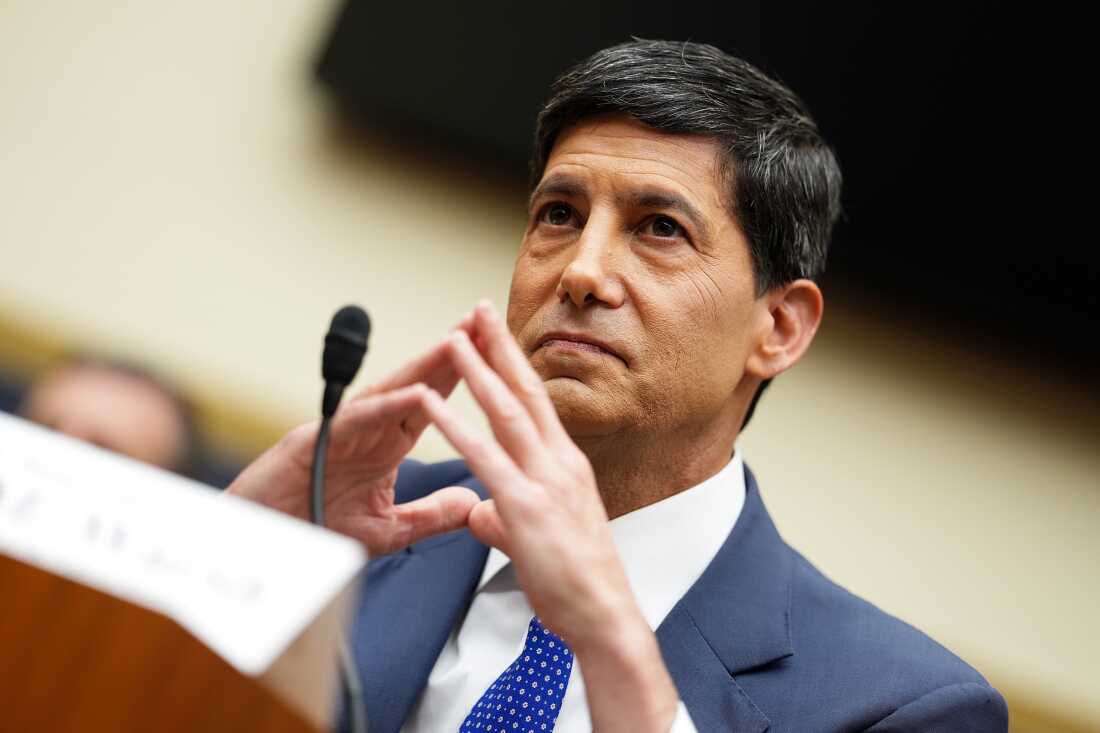
Federal Reserve chair Kevin Warsh and his colleagues are discussing interest rates this week. The central bank is on Wednesday expected to hold rates steady in an effort to curb stubborn inflation. Eric Lee/Getty Images North America hide caption
toggle caption
Eric Lee/Getty Images North America
It's decision day at the Federal Reserve — and policymakers are weighing a critical decision: What to do about interest rates in the face of stubborn inflation.

Business
Inflation slowed sharply — but it may not last
Kevin Warsh, who took over as Fed chairman two months ago, has been careful not to tip his hand about where he thinks rates should go. But Warsh told lawmakers earlier this month he and the other members of the Fed's rate-setting committee are determined to bring prices under control.
"My colleagues and I recognize that high inflation has been an undue burden on American households and businesses," Warsh told the Senate Banking Committee at a hearing this month. "The members of our committee have no tolerance for persistently elevated inflation and we share a resolute commitment to restore price stability."
At the last Fed meeting in June, committee members signaled their next move on interest rates would likely be up — not down. A wartime spike in gasoline prices pushed the annual inflation rate to 4.2% in May, its highest level in more than three years.
Inflation cooled somewhat last month, however, so Fed policymakers may feel like they have some breathing room to hold rates steady for now. But there's no guarantee. Investors see a possibility that the Fed raises rates on Wednesday in response to stubborn inflation.
Higher interest rates tend to be a drag on the job market, while lower rates can boost hiring. Weakness in the job market prompted the Fed to cut interest rates three times last year. But this spring, the labor market appeared to rebound.
"America's labor force appears to be broadly stable," Warsh told lawmakers. "Job creation has kept pace with the workforce. The unemployment rate [is] quite low and has changed little, quite frankly, over the last year."
AI is also becoming a factor for the Fed
One of the forces propping up the economy, and the stock market, is the huge investment that tech companies are making in artificial intelligence.
Warsh is generally bullish about the prospects for AI, believing it will eventually make workers more productive. But the growth of data centers is also putting upward pressure on the price of building materials and electricity and computer chips. And there's considerable uncertainty about how AI will affect workers.
"Over the long term, my best guess is this will improve the real wages and will help us on full employment," Warsh said at the Congressional hearing. "But between the short-term and the long-term, it can have a disruptive effect."
Artificial intelligence is the focus of one of several task forces that Warsh established to advise the central bank. The task forces, which are led by economists and business people from outside the Fed, are expected to make recommendations by the end of this year.

Privacy Preference Center
NPR and our service providers and vendors use cookies and similar technologies to collect information. A cookie is a string of characters that can be written to a file on the user's computer or device when the user visits a site, application, platform or service. When you visit a website or use a mobile application, a computer asks your computer or mobile device for permission to store this file on your computer or mobile device and access information from it. Information gathered through cookies may include the date and time of visits and how you are using the website. Note that if you disable or delete cookies, you may lose access to certain features of the NPR Services.
User ID: 4d1be030-e176-4197-a394-15f1aa3c6ba8
This User ID will be used as a unique identifier while storing and accessing your preferences for future.
Timestamp: --
Allow All
Manage Consent Preferences
Strictly Necessary or Essential Cookies
Always Active
These cookies are essential to provide you with services available through the NPR Services and to enable you to use some of their features. For example, these cookies allow NPR to remember your registration information while you are logged in. Local station customization, the NPR Shop, and other interactive features also use cookies. Without these cookies, the services that you have asked for cannot be provided, and we only use these cookies to provide you with those services.
Performance and Analytics Cookies
Performance and Analytics Cookies
These cookies are used to collect information about traffic to our Services and how users interact with the NPR Services. The information collected includes the number of visitors to the NPR Services, the websites that referred visitors to the NPR Services, the pages that they visited on the NPR Services, what time of day they visited the NPR Services, whether they have visited the NPR Services before, and other similar information. We use this information to help operate the NPR Services more efficiently, to gather broad demographic information and to monitor the level of activity on the NPR Services.
Functional Cookies
Functional Cookies
These cookies allow our Services to remember choices you make when you use them, such as remembering your Member station preferences and remembering your account details. The purpose of these cookies is to provide you with a more personal experience and to prevent you from having to re-enter your preferences every time you visit the NPR Services.
Targeting and Sponsor Cookies
Targeting and Sponsor Cookies
These cookies track your browsing habits or other information, such as location, to enable us to show sponsorship credits which are more likely to be of interest to you. These cookies use information about your browsing history to group you with other users who have similar interests. Based on that information, and with our permission, we and our sponsors can place cookies to enable us or our sponsors to show sponsorship credits and other messages that we think will be relevant to your interests while you are using third-party services.
Back Button
Cookie List
Search Icon
Filter Icon
Clear
- checkbox labellabel
ApplyCancel
ConsentLeg.Interest
checkbox labellabel
checkbox labellabel
checkbox labellabel
Reject AllConfirm My Choices
