Site SearchClear
SEARCH
Search Results
Symbols
No results found
- All News
- Articles
- Video
- Podcasts
0 Results
No Results Found
Authors
No results found
Sections
No results found
Columns
No results found
Market Snapshot
The Treasury market is sending Fed Chair Kevin Warsh a clear warning about rates
Rising Treasury yields show how ‘enormously worried’ the market is about inflation — and whether the Fed will back up its tough talk with action
By
July 26, 2026, 8:30 a.m. ET
Share
Add us on Google
Choose MarketWatch as a preferred source of financial news
Resize
(6 min)
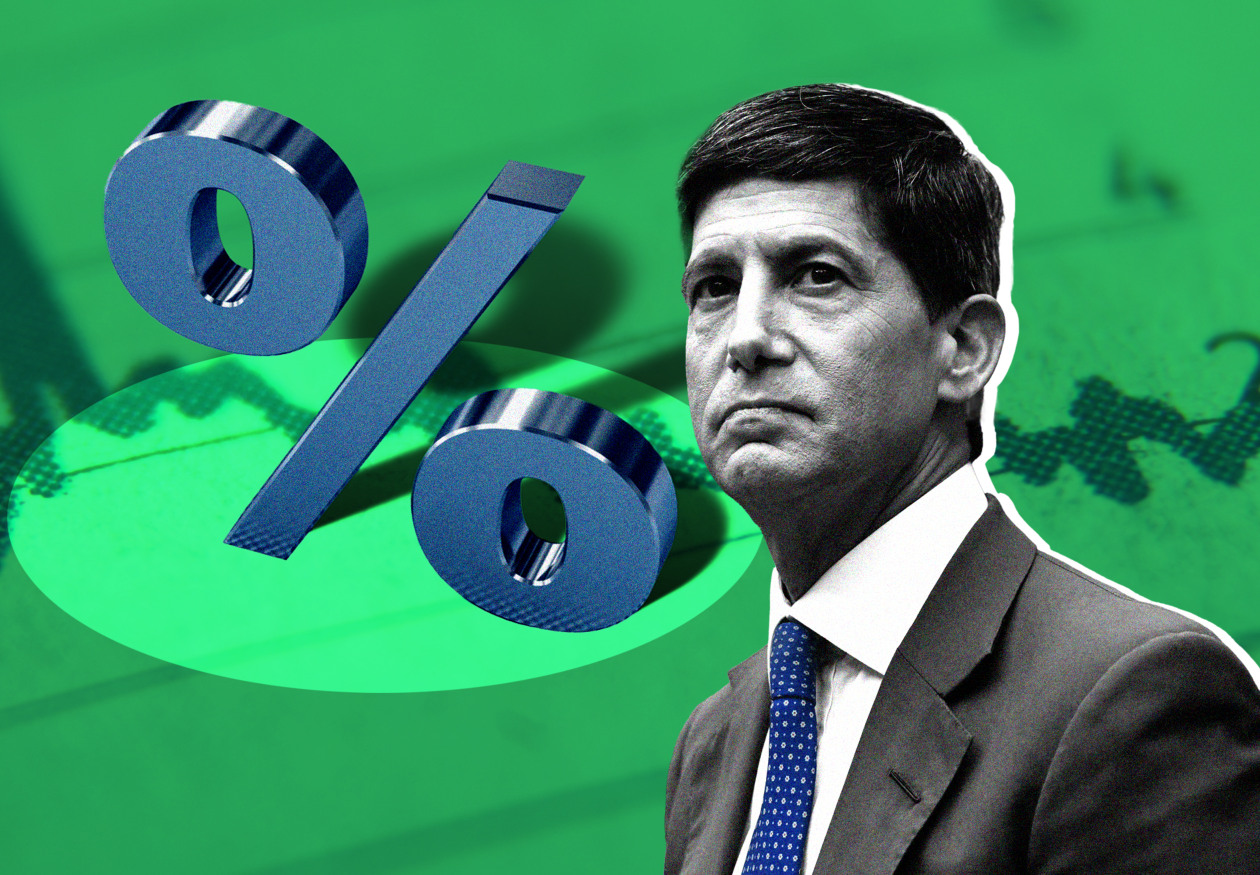
The U.S. bond market has a warning for Federal Reserve Chair Kevin Warsh: Tough talk on inflation isn’t enough.
The outbreak of new Iran-war hostilities in July took Wall Street by surprise, jolting global crude-oil prices
briefly above $100 a barrel and triggering another selloff in the crucial $30 trillion Treasury market.
That has sent the benchmark 10-year Treasury yield
up more than 30 basis points (0.30 percentage points) since the end of June, when hopes were running high for a more lasting calm out of the Persian Gulf. Treasury prices and yields move in opposite directions.
A brief Treasury-market rally that followed Warsh’s first press conference at the Fed’s helm in June also unraveled. As of Friday, the 10-year yield — which is used as the basis for mortgage rates and much of the consumer-lending economy — was at 4.678%, near the highs of the past decade, as the below chart shows.
“There is a message here for the Fed,” said Paul Christopher, head of global investment strategy at the Wells Fargo Investment Institute. “Uncertainties are piling up,” he noted, and the bond market expects to get compensated for it.
The Fed can’t control the flow of oil out of the Persian Gulf, nor hit a button and lower gas and diesel prices that recently moved back above $4 a gallon and to $5.20 a gallon, respectively, according to GasBuddy.
But it can provide a roadmap for how, and when, it expects to get inflation back down to its 2% annual target.
Warsh made it clear he wants a more tight-lipped central bank, one that isn’t telegraphing the Fed’s plans for interest rates in advance. The market has been signaling anxiety around that setup ahead of central bank’s next policy decision on Wednesday.
“We didn’t anticipate this latest chapter in the U.S.-Iran war, and that is a complication for any duration asset at the present time,” wrote David Rosenberg, founder and president of Rosenberg Research & Associates, in a Friday note. He also noted the competition that the Treasury market is now “facing from the sustained expansion in tech-related corporate debt issuance.”
Rosenberg said he changed his exposure to the Treasury market by moving out of a “long” 30-year bond
position that “has not worked out nearly as well as expected,” and into shorter-duration U.S. debt. The 30-year yield lately has stubbornly held above the 5% threshold.
Related: The Treasury market touches a worrying milestone not seen since 2007
Treasury yields followed oil prices higher in the past week. Traders sold U.S. government bonds on concerns that higher energy costs could lift inflation and trigger the Fed to take action on interest rates perhaps sooner than previously expected.
On Friday, the odds for the Fed holding rates steady on Wednesday was at 62%, according to the CME FedWatch Tool. But there was a roughly 38% chance of a hike — up from closer to 13% a week ago, when cooler inflation data for June soothed worries over rate increases.
“That shows you how enormously worried the market is about inflation and how worried it is about the Fed putting its money where its mouth is,” said Gennadiy Goldberg, head of U.S. rates strategy at TD Securities, referring to Warsh’s talk of achieving lower 2% inflation.
Basically, the Fed’s actions speak louder than its words.
It’s no secret that some members of the Fed’s rate-setting committee favor interest-rate hikes to coax inflation back down. The problem is that any increases could arrive at a precarious time for the market.
Inflation and rate hikes both tend to erode the value of fixed-income assets, and weigh on prices of other financial assets like stocks. Yet Barclays analysts expect the U.S. to face a roughly $2 trillion budget deficit in 2026, and see Treasury issuance playing a role in filling that gap.
There’s also been pressure building within the broader bond market as Big Tech “hyperscalers” increasingly issue a deluge of debt to help fund the artificial-intelligence buildout. That’s costing companies more to borrow, while concern has been growing about potential data-center overbuilding and what U.S. companies might achieve from those investments.
Moody’s Ratings said it expects almost $1 trillion in capital expenditures by the hyperscalers in 2027, following nearly $800 billion this year. The ratings team said in a Wednesday report that it expects “soaring capital spending,” leverage and off-balance-sheet commitments to threaten the group’s credit quality.
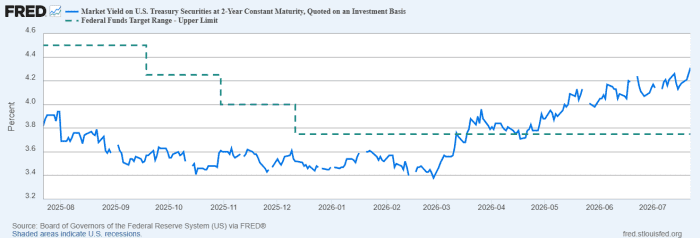
Meanwhile, the 2-year Treasury yield
crossed above the Fed’s 3.75% upper limit of its overnight interest-rate target range, which stood at 3.5% to 3.75% a few weeks into the Iran war. On Friday, it was near early-2025 levels at 4.328%, signaling anxiety in markets about potential rate hikes.
Stocks on Friday booked another week of losses amid further selling in semiconductor stocks
. The Dow Jones Industrial Average
closed the week 0.4% lower, while the S&P 500
shed 0.6% and the Nasdaq Composite
fell 2.1% for the week. Higher interest rates tend to curb spending by businesses and consumers, which in turn slows the economy and hurts stock prices.
The tech-heavy Nasdaq capped off the week 7.8% below its record close from early June, according to Dow Jones Market Data.
Investors also might consider waiting for the rotation out of tech to end, after which “you could see a good entry point” for those stocks, said Wells Fargo’s Christopher. “It probably doesn’t hurt to have some dry powder.”
Copyright ©2026 MarketWatch, Inc. All Rights Reserved. 87990cbe856818d5eddac44c7b1cdeb8

Oil prices sink, stock futures rally as U.S. and Iran pause attacks, Wall Street awaits busy week

I will definitely claim Social Security early. Why do so few people talk about the elephant in the room?
The Treasury market is sending Fed Chair Kevin Warsh a clear warning about rates

The S&P 500’s earnings growth has gone bonkers thanks to one company

There’s a technical ‘triple threat’ for stocks, but also places investors can hide
About the Author

Joy Wiltermuth is assistant managing editor, markets. She is based in New York.
Show Conversation (6)
What to Read Next
products.gobankingrates.com
products.gobankingrates.com is blocked
This page has been blocked by an extension
- Try disabling your extensions.
ERR_BLOCKED_BY_CLIENT
Reload
This page has been blocked by an extension