
Site SearchClear
SEARCH
Search Results
Symbols
No results found
- All News
- Articles
- Video
- Podcasts
0 Results
No Results Found
Authors
No results found
Sections
No results found
Columns
No results found
There’s a ‘Trump account’ hack that can unlock decades of wealth-building for your kid
‘The only reason’ to use these accounts is ‘if you’re planning to do the Roth strategy,’ one financial planner says
By
Updated June 27, 2026, 3:25 p.m. ET
Share
Add us on Google
Choose MarketWatch as a preferred source of financial news
Resize
(8 min)
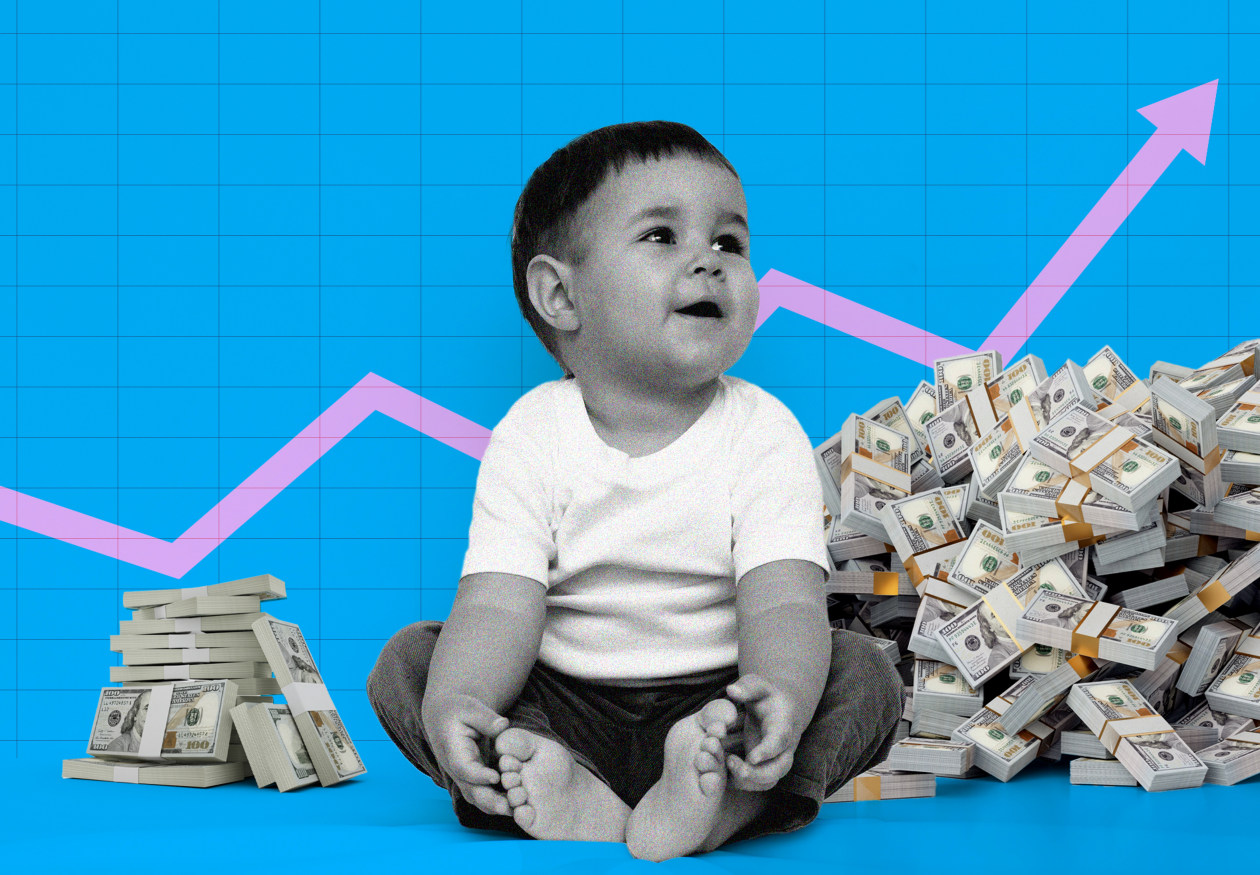
Parents who have signed their children up for the new “Trump accounts” may wonder what the best way is to use and manage the accounts after they launch on July 4.
Amid the steady drip of information about these new accounts in recent months, what is critical to understand is that they are essentially “a form of traditional IRA available for children under the age of 18,” as noted in a Congressional Research Service report.
Parents can optimize the account’s utility by thinking about it as a vehicle for jump-starting their child’s tax-free retirement savings before the child is old enough to start working, which is traditionally what makes a person eligible to contribute to retirement accounts.
“The Trump account is really a prefunding of a retirement account,” Bryan Strike, senior director of financial planning at Mercer Advisors, told MarketWatch. When a child turns 18, traditional IRA rules will apply to the account, including the opportunity to do Roth conversions when the child still pays no taxes or is in a low-tax bracket. This is the primary financial opportunity the accounts offer: allowing the Roth money to compound tax-free for decades and letting the account holder avoid having to take required minimum distributions in retirement.
Without the Roth conversion, the funds are taxed as income at the time of withdrawal — in other words, if left to sit for decades, they are a tax bomb.
There are other ways to use the money in a the new accounts, which can be withdrawn penalty-free (but not tax-free) starting the year the child turns 18, following the rules for IRAs: for example, to fund education, to buy a first home or to pay up to $1,000 in annual emergency expenses.
Still, financial experts say 529 accounts still provide more benefits for college savings than Trump accounts, and taxable brokerage accounts — which now allow kids as young as 13 to make their own trades — provide maximum flexibility, making them better for financial goals other than college and retirement.
Broadly speaking, “the only reason you should be using the Trump account” is “if you’re planning to do the Roth strategy,” Vincenzo Testa, a financial planner at Bouchey Financial Group, told MarketWatch.
Read more: Here’s what finfluencers like Dave Ramsey and Vivian Tu really think of ‘Trump accounts’
Trump accounts are IRAs for kids who don’t work
Normally, contributions to a child’s Roth IRA require them to have earned income. Parents who own businesses can hire their children as employees, maximizing the years the IRA funds can compound, which gives them a powerful head start on building a retirement nest egg. One entrepreneur told MarketWatch she plans to help her infant son retire with $5.7 million using this strategy.
More on this: Putting your baby to work as a model could net them $5.7 million by age 60. Here’s the legit way to do it.
For children who have earned income, saving directly to a custodial Roth IRA is still “generally more advantageous financially than saving in a Trump Account,” because Roth IRAs “impose no tax on qualified withdrawals, unlike Trump Accounts,” the CRS report stated.
But kids are working less than they used to: Teen employment is expected to hit a record low this summer, and parents have told MarketWatch their children are having a hard time finding work, which excludes them from the benefits of funding an IRA from an early age.
The new Trump accounts, which can be converted to Roth IRAs, give children a chance to participate in early, tax-deferred retirement savings without working.
‘The Trump account is really a prefunding of a retirement account.’
— Bryan Strike, senior director of financial planning at Mercer Advisors
Trump accounts can be funded from a mix of sources that don’t involve having a job. “The primary practical advantage of personal contributions to a Trump Account over a custodial traditional or Roth IRA is the ability to bypass the earned income limitation on contributions” if a child is not working, the CRS report says.
Those sources include the $1,000 deposit that babies born between 2025 and 2028 will be eligible to receive from the U.S. Treasury, along with contributions that philanthropic donors and various employers have pledged to make to Trump accounts. There are also individual contributions from family and friends. Individual and employer contributions are capped at $5,000 annually (this cap excludes Treasury and donor money).
Funds cannot be accessed until age 18, and at that point, they follow IRA rules and are largely not meant to be withdrawn until age 59½.
There are, of course, other ways to invest for a child, including taxable brokerage accounts, but the Roth conversion opportunity “is the aspect of Trump Accounts that deserves the most attention, and the reason they are worth taking seriously as a planning tool,” according to a post by Hassell Wealth Management.
More on teen wealth building: How teens can turn a summer job into an extra $500,000 in savings when they’re older
How to manage the Roth opportunity
After a child turns 18, any funds they have in a Trump account can be gradually converted to Roth IRA. The conversions come with a tax bill in the years they are executed, but doing this can potentially result in savings of tens of thousands to hundreds of thousands of dollars in taxes at retirement.
“If you save long-term, that’s a pretty sizable balance that you might get at 18, that you could then do a Roth conversion” at the child’s tax bracket, “which is going to be pretty low,” Rita Assaf, vice president of retirement offerings at Fidelity Investments, told MarketWatch. The strategy is to “do the conversion at that time, and lock in tax-free dollars after that.”
The Roth conversion opportunity ‘is the aspect of Trump Accounts that deserves the most attention, and the reason they are worth taking seriously as a planning tool.’
— Hassell Wealth Management
Just be cautious, she said, or consult a professional about whether the conversions would be still subject to the pricey “kiddie tax,” which applies to children and full-time students ages 23 and under.
By age 25, when “the kid’s done with school and they’re no longer eligible for the kiddie tax, I think doing small [conversions] along the way makes a lot of sense,” Strike said. “The kid can have a fully funded retirement plan, provided they don’t touch it.”
Austin Cassidy, a financial planner at Beacon Pointe, laid out a hypothetical scenario in a LinkedIn post in which a child who receives the maximum contribution every year for 18 years and invests the money in funds that grow 6% annually on average ends up with about $222,000 in Roth IRA at age 24 after paying roughly $25,000 in taxes for Roth conversions that happen in phases, and paying a 10% penalty on money withdrawn to fund a gap year. That $222,000 now has the advantage of “tax-free growth in the account for life,” Cassidy wrote.
Left to grow at 6% until the child reaches age 60, that $222,000 in a Roth account has the potential to compound to more than $1.8 million without further contributions. If the investments can grow at a higher 8% average annual rate, the total would be more than $3.5 million.
The key, Cassidy noted, is for parents to educate their children about the potential these early investments have and to establish guidelines for how to use the money. “At age 18, it is theirs. They can do whatever they want,” he said. “You can have this great plan, as a parent, that you put together for 18 years, and the kid can go and spend it on food and drinks at college.”
Still, he noted: “On the whole, I’m really, really bullish on these next generations and their ability to understand the pros and cons of the decisions that they’re making with information that they have at their fingertips.”
Need advice on a money-related issue in your life? MarketWatch’s Dollar Signs advice column is here for you. Submit questions anonymously here or write to us at dollarsigns@marketwatch.com.
Copyright ©2026 MarketWatch, Inc. All Rights Reserved. 87990cbe856818d5eddac44c7b1cdeb8

Americans’ 401(k) balances hit record levels last year. See how you compare.

Older Americans will soon have Medicare access to GLP-1s for weight loss for the first time. Here’s what they need to know.

A new bill would cap Medicare enrollees’ annual expenses at $5,000 — and could cost the government ‘tens of billions’

Social Security says I was overpaid for 7 years. I believe it’s mistaken. Can they cut my benefits?

There’s a ‘Trump account’ hack that can unlock decades of wealth-building for your kid
About the Author

Venessa Wong is a personal-finance reporter for MarketWatch based in New York. She previously covered business, inequality and culture during her tenure at BuzzFeed News and reported on the food industry for Bloomberg. Venessa is a graduate of the Columbia Journalism School and Middlebury College. Follow her on Twitter @venessawong.
Show Conversation (8)
What to Read Next
products.gobankingrates.com
products.gobankingrates.com is blocked
This page has been blocked by an extension
- Try disabling your extensions.
ERR_BLOCKED_BY_CLIENT
Reload
This page has been blocked by an extension