

Watch live
Prosecutors continue presenting evidence on Day 2 of hearing for accused Charlie Kirk shooter
Climate 7 min read
Trump promised to cut electric bills in half. His energy policy is doing the opposite, new analysis finds
By  Ella Nilsen
Updated 5 hr ago
Updated Jul 7, 2026, 10:30 AM ET
PUBLISHED Jul 7, 2026, 9:07 AM ET
Donald TrumpGreen energySustainabilityCorporate news
FacebookTweetEmailLinkThreads
Link Copied!

Electrical transmission wires from the Palo Verde Nuclear Power Plant in Tonopah, Arizona, on February 1, 2026.
Jim West/UCG/Getty Images
A sudden electricity crunch in the US, driven by artificial intelligence, is colliding headlong with the Trump administration’s attacks on wind and solar. President Donald Trump has presented his anti-renewable stance as a way to cut energy costs — but a new analysis suggests limiting energy development at a time of high demand will result in Americans paying even more for power.
The new report from clean energy think tank Energy Innovation suggests higher energy bills will continue for the next decade, tied directly to Trump’s policies. It comes as energy affordability is emerging as a key issue in this year’s midterm elections.
A year ago, Republicans in Congress killed a clean energy law that had contained billions in subsidies for renewables, electric vehicles, rooftop solar and household batteries. The administration has made it harder to permit clean energy projects and has tipped the scales in favor of more expensive coal-fired power. And Trump’s government has waged a largely successful onslaught against the budding electric vehicle market in the US.
Ad Feedback
Energy Sec. Chris Wright said he was “thrilled” to celebrate the anniversary of Trump ending the clean energy tax credits last week, calling renewable energy “low-value.” In a statement, Department of Energy spokesperson Ben Dietderich described the Biden administration’s policies as “energy subtraction” that made energy more expensive and the grid less reliable. Dietderich added the Trump administration was “working relentlessly” to reverse those policies.
⚡ Learn more about climate and nature with CNN Weather App
On the campaign trail, Trump vowed to cut electricity bills in half in his first year in office.But the collective impact of the administration’s actions will raise costs on American households by more than half a trillion dollars by 2040, Energy Innovation found. On average, individual households will pay $460 more for their energy costs by 2035, and up to $490 more per household by 2040.
US household energy spending could skyrocket over the next 15 years
US household energy spending could skyrocket over the next 15 years
President Trump's sweeping tax law dramatically curtailed subsidies for renewable energy and electric vehicles and rolled back pollution regulations on vehicles and power plants. This could result in hundreds more in annual household energy costs, according to the think tank Energy Innovation. This chart shows the change in estimated household spending between a new Energy Innovation report and one it put out last year, when the subsidies and regulations were still active.
Difference in energy spending between 2025 and 2026 forecasts, USD
A chart shows that prices for household energy spending for both vehicles and home appliances could skyrocket from around $17 in 2026 to about $494 in 2040.
0200$400
Chart explorer. Use arrow keys ↑ ↓ ← → to navigate.
$5
−$1.1
$22.1
−$4.1
$51.1
−$21.9
$67.9
−$14.6
$69.9
−$5
$102.5
$26.9
$141.1
$46.2
$175
$71.1
$222.3
$98
$250.7
$126.4
$290.4
$168.1
$324
$208.9
$340.8
$210.5
$343.6
$192.7
$336.7
$163.7
$337.7
$156.6
Vehicles
Home appliances
Source:Energy InnovationGraphic:Sam Hart, CNN
The White House does not consider Energy Innovation’s report to be fair and non-partisan, White House spokesperson Taylor Rogers said.
“It’s no surprise that Energy Innovation — an organization that received over $20 million in direct funding from one of the largest progressive dark money groups — wrote a fraudulent analysis on President Trump’s One Big Beautiful Bill,” Rogers said in a statement. “The reality is the Working Families Tax Cuts ended Biden’s costly Green New Scam, rolled back burdensome regulations, and bolstered US energy production to lower prices for American families.”
Trump and congressional Republicans are making it tougher “to build these sources of electricity right when we need to add all this generation to meet growing demand,” said Robbie Orvis, Energy Innovation’s senior director of modeling and analysis. “There’s just a direct line from that set of policies to increasing energy bills.”
Megaphone Embeddable Player

CNN One Thing
Why Talk of 'Climate Hushing’ is Getting Louder
00:00:00
Forward 15 seconds
Back 15 seconds
00:00:00
Share
Subscribe
Description
Share CNN One Thing
Share this episode with your friends
Share via FacebookShare via Twitter
Subscribe to CNN One Thing
Keep up to date by subscribing to this podcast
Description
A new report from global energy think tank Ember found that solar generated more US energy than coal in May 2026 for the first time on record. It comes at a time when the Trump administration has been actively hostile towards the development of wind and solar projects, despite a growing need for more electricity as more AI data centers come online. So, is this a minor blip, or a sea change? And is the current political climate making talk of climate change taboo on the campaign trail?
For more: ‘Afraid to get my next bill’: Americans brace for higher costs to cool their homes this summer
Guest: Jane Flegal, Searchlight Institute Senior Fellow
Host: David Rind
Producer: Paola Ortiz
Showrunner: Felicia Patinkin
Photo By: RyanJLane/E+/Getty Images
Trump’s policies are adding fuel to the fire, Orvis said. Electricity rates have spiked nationwide by 7.4% since last fall — with over a dozen states seeing double digit increases year-over-year. Several factors are contributing, but voter ire seems to be concentrated on data centers’ vast electricity use, which has contributed to price spikes in mid-Atlantic states, in particular. In addition to electricity bills, US consumers have also had to contend with rising gas prices, which have pushed up inflation.
Trump’s tax bill “will help lower electricity costs by allowing market forces dictate what new electricity generation gets built,” Dietderich told CNN in a statement.
But clean energy analysts say Trump policy is driving cost increases. “It is materially impacting Americans’ pocketbooks in a negative sense,” said Sam Ricketts, co-founder of clean energy consulting firm S2 Strategies. “We cannot overlook that it is the wrong direction. We need to change course.”

An aerial view of a solar panel array on June 17, 2026 near Lancaster, California. For the first time in US history, solar energy outpaced coal by supplying 12.8 percent of the nation's electricity compared to coal's 12.2 percent, according to a report by clean energy think tank Ember.
Mario Tama/Getty Images
Solar is booming, but a cliff is coming
Even under an anti-renewables administration, solar and batteries are booming.
Solar and battery storage represented a whopping 91% of the new energy that was built in the first quarter of the year. Big batteries, which store energy when the sun isn’t shining and wind isn’t blowing, are fixing renewables’ intermittency issues.A loophole written into Trump’s tax law at the eleventh hour gives developers a longer window to start and finish these projects, and now they are literally racing to build them. Energy Innovation estimates that 170 gigawatts of new solar will come online from 2026 to 2030, along with 43 gigawatts of wind. That’s a lot, but it’s significantly less than if the tax credits making them even cheaper had remained in place.
And Energy Innovation sees a solar cliff coming after that cutoff deadline.
After 2030, solar deployment “really drops off” due to the lack of tax credits, Orvis said. Amid spiking energy demand from data centers, “it’s a pretty terrible time to pull back on things, either make it much harder to build or basically make it much more expensive to build.”
An EPA spokesperson told CNN in a statement subsidies distort the true costs of solar and wind and don’t factor in the costs of battery backup. “The reliability cost is real regardless of whether the federal government is subsidizing the generation side,” the spokesperson said.
Of course, a new administration and Congress could vote to reinstate tax credits for wind and solar after the 2028 presidential election, but that future is uncertain.
⛅ Get CNN Weather in your inbox
- The forecast is just the beginning. We’ll send you expert coverage and the stories behind the weather — so you always know more than just the number. Sign up for the newsletter
Fewer EVs on the roads raises costs for everyone
Before getting the axe from Trump, federal subsidies once allowed consumers to deduct $7,500 off the sticker price of a new electric vehicle at the dealership, and up to $4,000 for a used vehicle.
The loss of those credits, combined with the administration’s repeal of tailpipe emissions rules, will significantly slow EV uptake in the US, Energy Innovation projects. While previous projections suggested that EVs would make up 68% of new car and SUV sales in 2035, Energy Innovation now estimates that EVs will only be 23% of that market.
“I wouldn’t say that EVs are cratering, but new EV sales are stalling out,” said Adrian Deveny, founder of consulting firm Climate Vision and a former top Senate Democratic staffer. “That’s a really disappointing trend. Across the rest of the world, the rate of new EV sales is accelerating rapidly.”
Fewer EVs on the road will eventually raise costs for drivers of gas vehicles, because there will be increased demand for gasoline, and more people will be driving less efficient vehicles for longer, Orvis said.
It’s not all bad news for EVs, however. The used EV market in the US has been surprisingly strong, as a wave of previously leased vehicles starts to flood the market. And there is also renewed interest from customers, driven in part by expensive gas prices and the fact that many used EVs are now cheaper than their gas-powered counterparts.
Still, that bright spot can’t offset the broader picture for the US EV market, which remains “pretty bleak,” Orvis said.
Expensive coal-powered electricity will remain on the grid for longer
Besides attacking solar and wind, the administration has also been focused on ensuring the resurgence of coal as an energy source. One of most consequential boosts the administration has given the coal industry is rolling back a suite of anti-pollution rules, essentially giving older coal plants a longer lifespan.
“Unlike past leaders, including the previous administration, which waged war on specific energy sources like coal and natural gas, the Trump administration simply prioritizes delivering affordable and reliable energy access for the American people,”the DOE’s Dietderich said in a statement.
But coal-fired power is more expensive than natural gas and renewables, so more coal on the grid for a longer period will mean higher power bills for consumers, Orvis and Deveny said.

A heavy machinery operator is seen moving coal at Signal Peak Energy's Bull Mountains Mine, on May 21, 2025, near Roundup, Montana.
Matthew Brown/AP
“I think a lot of Americans still don’t realize that coal is no longer a cheap source of energy, it’s actually now one of the most expensive sources of energy,” Deveny said.
And with polluting coal operating for longer, associated health costs will also rise — especially in communities near coal power plant smokestacks. The Energy Innovation analysis found Americans’ direct healthcare-related costs would rise $43 billion by 2040, with the bulk of that coming from worse or new childhood asthma cases driven by poor air quality.
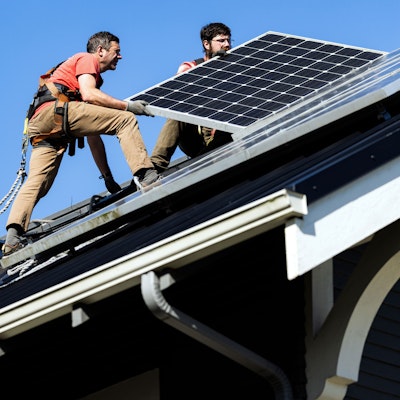
It will cost more to add rooftop solar and batteries to your home
Another casualty of Trump’s tax bill was the consumer tax credits that helped defray the cost of weatherizing homes and adding rooftop solar, home batteries, heat pumps and other energy efficient appliances.
Two years ago, those tax credits were proving popular, with more than 3.4 million households claiming $8.4 billion in savings to upgrade and weatherize their homes. Energy Innovation projects that the end of those credits, plus the EPA’s termination of the Solar for All program, will cut distributed solar deployment by 21 GW through 2040.
Deveny, who helped write Democrats’ 2022 clean energy law, said one of the major lessons he learned is a future bill needs to contain more clean energy tax credits for consumers, helping people realize the savings in their own homes.
“I wish we had done a lot more policy that really laser-focused on making sure that American families’ energy prices were going to go down,” he said. “In the future there’s going to be so much more emphasis on making sure that a climate policy is energy affordability policy and delivers real tangible affordability benefits to American families.”
Donald TrumpGreen energySustainabilityCorporate news
FacebookTweetEmailLinkThreads
Link Copied!
Ad Feedback
Paid Content
Paid Content
Scan the QR code to download the CNN app on Google Play.
Scan the QR code to download the CNN app from the Apple Store.
Read Original at CNN →