Breaking\ Donald Trump Issues Fresh Warning to Iran as JD Vance Begins Talks
- U.S.
News Politics Tech Fact Check Sports
- Global
Iran War Russia-Ukraine Middle East China And Asia Live Blog Better Planet All World News
- Lifestyle
Family & Parenting Entertainment Travel Pets Automotive Relationships Science Health Personal Finance Better Workplaces Readers Choice
- Opinion
- Rankings
Health Finance Products Education Workplaces Corporate Responsibility All Rankings
- Social
Facebook Instagram Threads YouTube Reddit TikTok Twitter/X
- Extra
Newsletters Newsmakers Unconventional Events Podcasts Vantage Magazine CEO Circle Announcements Leadership Dev Pragad
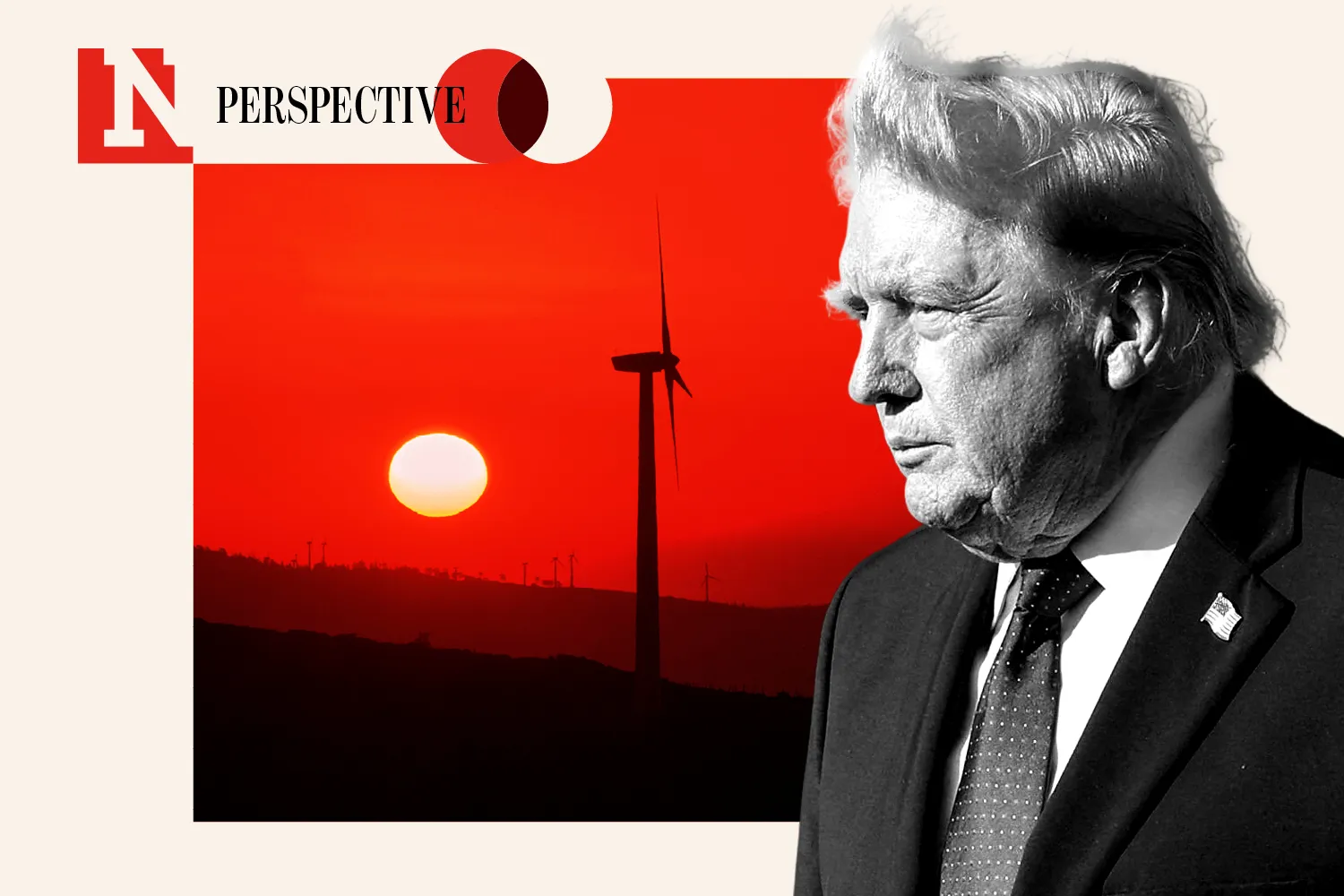
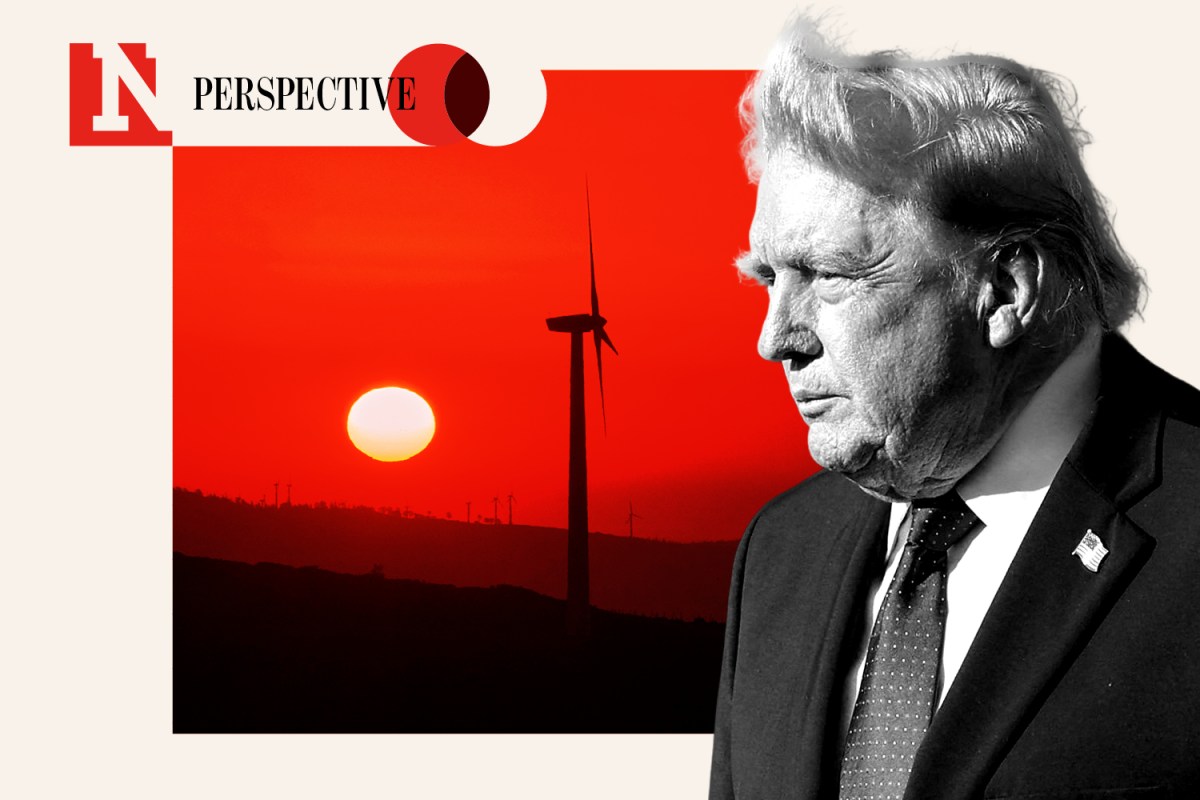
President Donald Trump is taking down wind energy, and cutting back on solar, while pushing for oil and gas. China is the winner. | Newsweek/Getty

By Newsweek Editors
13
Share
Newsweek is a Trust Project member
See more of our trusted coverage when you search.Prefer Newsweek on Googleto see more of our trusted coverage when you search.
President Donald Trump has blown a lot of hot air about wind energy these past few years, his complaints largely centered on the aesthetic qualities (or lack thereof) of turbines and their alleged threat to birdlife.
Now, he's making good on these so-called "windmills."
But Trump's winds of change on American energy should blow elsewhere. To use one of his favored metaphors, the hottest energy source right now, and indeed for the next few billion years, is shining right over us.
Read More on Analysis
In January 2025, on Trump's first day back in office, the White House withdrew all areas on the Outer Continental Shelf from new or renewed offshore wind leasing.
This week, the Trump administration agreed to reimburse Invenergy $765 million to end four offshore wind leases, bringing reported lease-buyback spending to nearly $2.6 billion.
Given all his "drill, baby, drill!" rhetoric, it's easy to dismiss Trump's anti-wind push as choosing fossil-fuel nostalgia over climate realism. But there's more to it than that, not least a desire to reduce energy costs for American consumers.
Trump found the renewable coalition's weakest target, even if he's mistaking that weakness for a wholesale verdict on clean energy.
Offshore wind is vulnerable. Solar is the main event and, increasingly, the cheapest one to scale.
Trump Throws Money Into the Wind
The administration's wind policy moved quickly from Trump's rhetoric to the machinery of policy.
Last year's memorandum said existing wind leases should face review for possible termination or amendment.
Agencies were directed immediately to stop issuing new or renewed approvals, rights of way, permits, leases or loans for onshore or offshore wind projects pending review.
The new Invenergy agreement covers four early-stage offshore wind leases off the coasts of New Jersey, Maine and California. The company will redirect the money toward natural-gas plants in the Midwest and geothermal projects in the West.
Interior Secretary Doug Burgum framed the deal as a move away from offshore wind and toward "dependable, secure energy infrastructure."
That is, indeed, the strongest version of the Trump case. Offshore wind is costly, slow and exposed to political delay.
The flaw, however, is what comes next. Trump has identified a weak link and decided to break the chain. But a president more serious about American energy security would strengthen the stronger links.
Trump's critics see something uglier than energy realism. When the administration cut a similar but larger deal with TotalEnergies in March, seven Democratic-led states sued.
New York Governor Kathy Hochul called it a "pay-not-to-play scheme" and "an outrageous abuse of taxpayer dollars." Attorney General Letitia James said the administration had "cooked up" a sham deal to pay a foreign company to abandon offshore wind for oil and gas.
Strip away the heat and their complaint is an industrial one. The country is paying to unwind development rights it had already sold.
Offshore Wind Is the Soft Target
Offshore wind generates real electricity, and it still has a regional case to make.
DOE/NREL's 2024 market report said eight states had procurement mandates totaling 45,730 megawatts of offshore wind capacity by 2040.
The same report described the industry’s exposed flank, saying rising interest rates, supply-chain constraints and higher commodity prices from 2021 through 2023 pushed offshore wind costs higher globally and in the U.S.
Invenergy's own record shows the problem in miniature.
The company had already canceled Leading Light Wind off New Jersey after citing supply-chain, equipment, vendor and regulatory challenges.
NREL's offshore-wind supply-chain road map estimated that at least $22.7 billion in ports, vessels and manufacturing facilities would be needed this decade to meet annual demand for components, ports and vessels in 2030.
But pro-renewable advocates should resist the temptation to defend every project as if all clean-energy technologies carry the same strategic weight.
They do not. Offshore wind can matter. It is also expensive, construction-heavy, politically exposed and easy to caricature.
Trump's error, on the other hand, begins when he treats those liabilities as proof that the future belongs to gas.
The Sun Shines on Solar
The U.S. Energy Information Administration said in January that utility-scale solar is the fastest-growing source of U.S. electricity generation in its forecast, rising from 290 billion kilowatt-hours in 2025 to 424 billion by 2027.
EIA also said nearly 70 gigawatts of new solar generating capacity projects were scheduled to come online in 2026 and 2027.
The February EIA capacity outlook made the hierarchy even clearer.
Solar accounts for 51 percent of planned U.S. utility-scale generating capacity additions in 2026, followed by battery storage at 28 percent and wind at 14 percent.
DOE's solar page says costs have fallen, solar can support household savings, and solar paired with storage or microgrids can help communities restore power when the grid goes down.
Even in Trump's tech-adjacent universe, the point is hard to miss.
Elon Musk, Trump's now-trillionaire ally, has called solar power "so obviously the future for anyone who can do elementary math."
"The Sun rounds up to 100% of energy in our solar system, even if Jupiter and all non-solar mass is burned," Musk has said.
Coming from one of the country's most visible industrialists, that reads less as a climate plea than a bet on which technology scales.
Wind still has a role; solar has the plot.
China Counts Factories
Which brings us to China, the global leader in solar energy.
China did not become dominant in solar by hugging trees: Its environmental record is atrocious by the standards of green campaigners.
It did it by counting factories.
The International Energy Agency says China's share of all solar-panel manufacturing stages exceeds 80 percent.
Moreover, it invested in excess of $50 billion in new PV supply capacity since 2011 while creating more than 300,000 manufacturing jobs across the solar PV value chain.
The IEA's 2025 China investment analysis said China's clean-energy investment topped $625 billion in 2024 and that China achieved its 2030 wind and solar capacity target in 2024, six years early.
The American energy-independence debate still sounds too often like a rerun of a drilling argument.
China, years ahead, is already treating panels, batteries, inverters and grid equipment as industrial power.
Once again, this is not lost on Musk, who called China "an amazing powerhouse of manufacturing and understands very well that solar is the future.
"America needs to do the same," Musk said, touting China’s progress on solar.
That is the nationalist case Trump keeps missing.
If America wants energy dominance, the question is who manufactures the infrastructure of the next energy system.
On that test, shouting at turbines—sorry, "windmills"—is a sideshow.
In Defense of Wind
To be fair to wind, its best defense is practical, unsentimental and strong.
DOE's Solar Futures fact sheet says that in deep decarbonization scenarios, solar would supply 45 percent of U.S. electricity generation in 2050, with other zero-carbon sources, especially wind, supplying the rest.
The same fact sheet says storage, long-distance transmission, flexible renewable generators and strategic curtailment are important tools for maintaining grid reliability as solar and wind expand.
Offshore wind advocates also have a good geographic argument.
Turn Forward's Hillary Bright said the buybacks were not one-for-one swaps because replacement projects would not deliver power to the same states the offshore wind farms would have served.
Dropping gas or geothermal into another region, she warned, "does nothing" to address the reliability and affordability problems facing the Northeast and mid-Atlantic.
It's a point that deserves respect. A power plant in one region does not automatically solve a supply problem in another.
Solar Sunset
The conclusion, nonetheless, still holds.
The case for wind does not require pretending offshore wind should be the flagship of the clean-energy future. Nor does the case for solar require tribalism about the sun’s near-incomprehensible potential.
It requires ranking technologies by cost, speed, scale and strategic value.
The policy indictment is damning, particularly as China, America’s great power rival, accelerates away.
Trump's wind attack has not produced a solar pivot, despite it clearly being the future of energy generation on Earth.
The IEA's Renewables 2025 report says the U.S. renewables forecast was revised down by almost 50 percent.
It cited policy changes including an earlier phaseout of federal tax credits, new import restrictions, suspended offshore wind leasing and permitting limits for onshore wind and solar PV projects on federal land.
Within that revision, U.S. solar was cut by almost 40 percent, the single largest piece. Trump is not merely neglecting the main event—he is snuffing it out. The Sun is setting on solar under this president.
Trump's critics are right that his policy slows clean energy. They should also stop pretending every turbine is equally worth defending.
Offshore wind is the renewable portfolio’s soft target; solar is the cheaper, faster, more scalable industrial race America cannot afford to lose. Trump's hot air is aimed at the wrong target.
He should stop shouting at windmills and start asking why the energy technology of the century is being manufactured somewhere else. Why isn't the American solar sector the world's hottest right now?
View 13Comments
Recommended For You

The Fission Theory of JD Vance
10 min read
The Conversation: Trump’s Reflecting Pool Problem
4 min read

Conventional Wisdom: Prior Art Edition
3 min read

Iran Is Celebrating a Deal With the US—Now the Fight Begins at Home
9 min read
8 min read
Donald Trump’s 14-Point MOU Deal With Iran: Dissected
12 min read

Prince Archie and Lilibet’s UK Visit Suggests Meeting With King Charles
5 min read
Anti-Elite, Pro-Drone: This Is a New Age for Terrorism
7 min read

Trump Enters a Cage Fight in the Emperor’s New Clothes
10 min read
Why Donald Trump’s Rockets Fall Like Feathers
6 min read
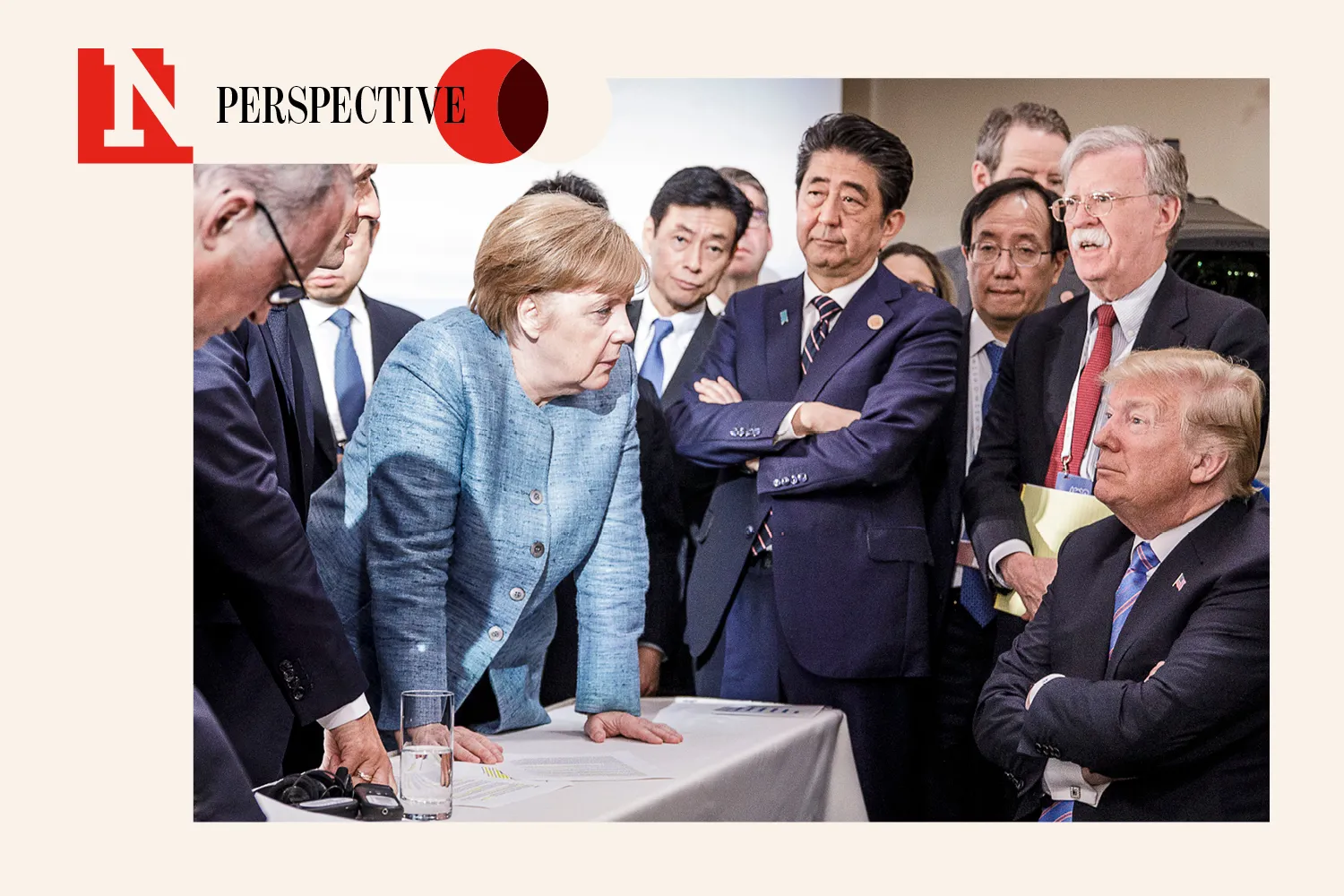
How the G7 Is Insuring Itself Against Trump
14 min read

Prince George Going to $85k-a-Year Eton College Sparks Debate
11 min read

How Iran Turned Survival Into Leverage at Negotiating Table
8 min read

European Royalty in Crisis: Andrew, Epstein and Norwegian Rape Trial
9 min read
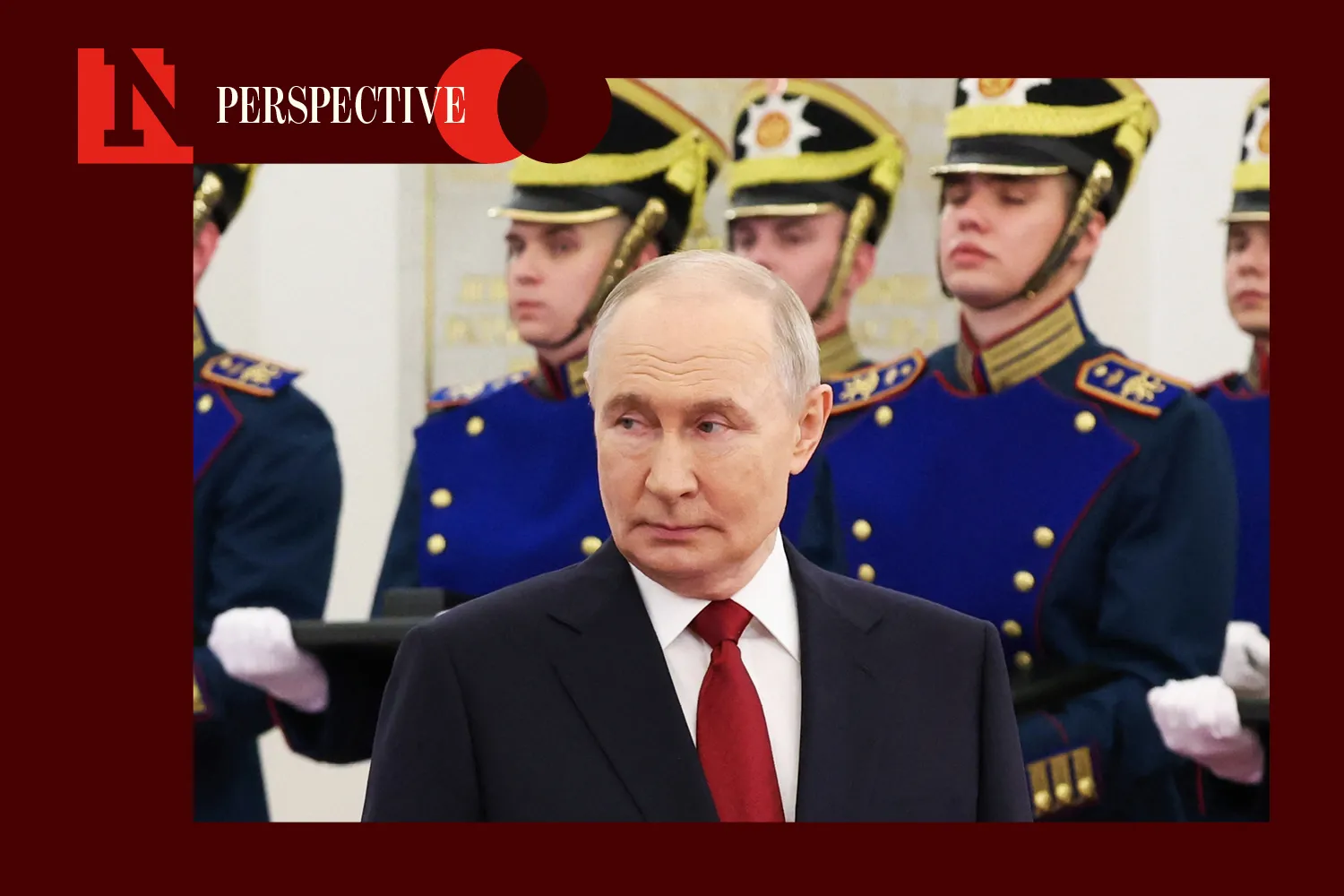
7 Reasons Trump’s Iran Deal Is Good, Bad and Ugly for Putin
8 min read
Related Podcasts
Submit Correction
View Editorial & AI Guidelines
Read Original at Newsweek →