Trendingnow
1
2
3
Meet the Zillennials: The luckiest micro-generation in the workforce, born between 1993 and 1998
1
2
3
Meet the Zillennials: The luckiest micro-generation in the workforce, born between 1993 and 1998
U.S. debt is a looming crisis today but was once its own revolutionary masterstroke that helped launch a global financial superpower

By Jason Ma Jason Ma
Weekend Editor Down Arrow Button Icon
By Jason Ma Jason Ma
Weekend Editor Down Arrow Button Icon
July 4, 2026, 3:03 PM ET
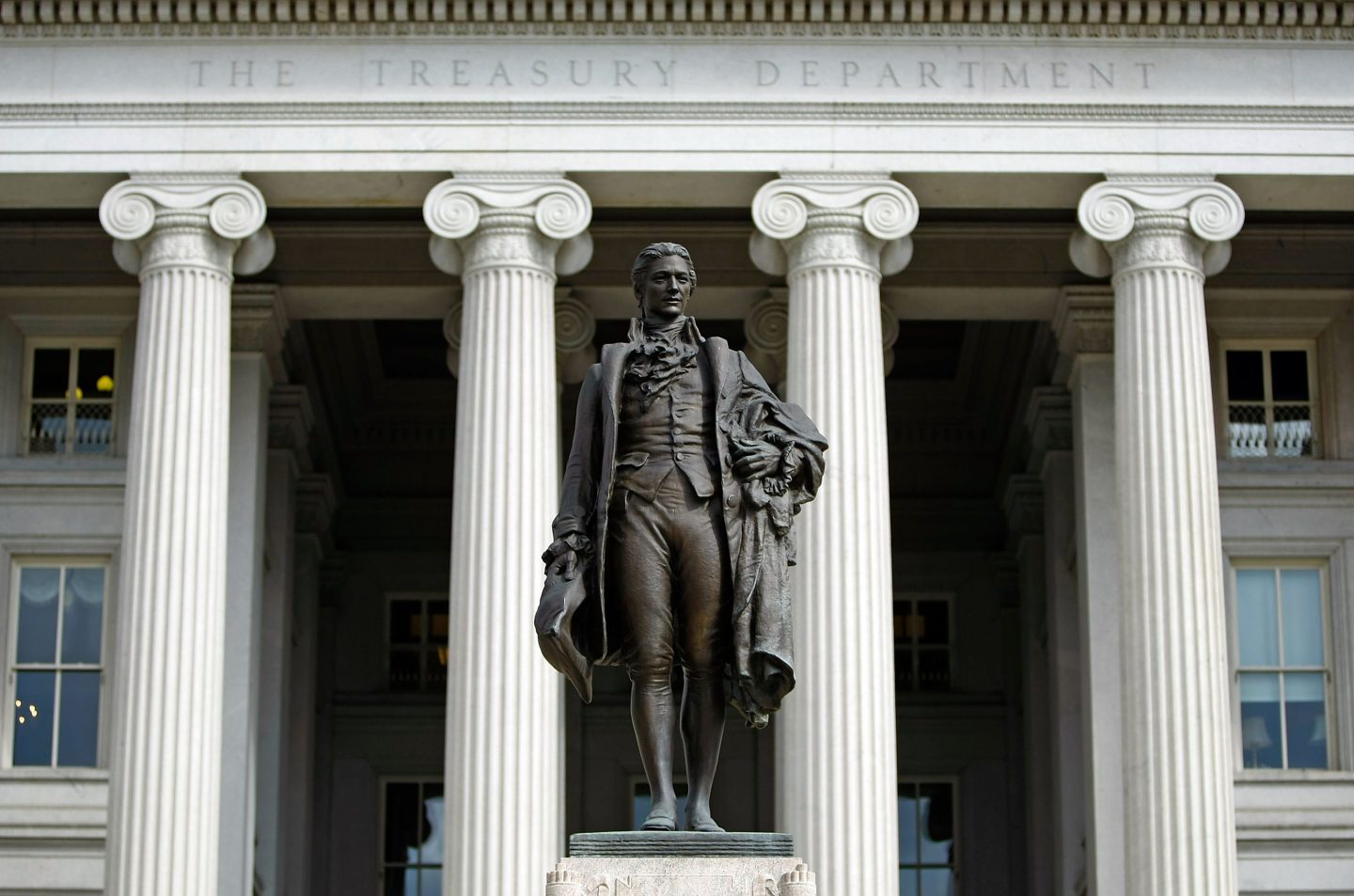
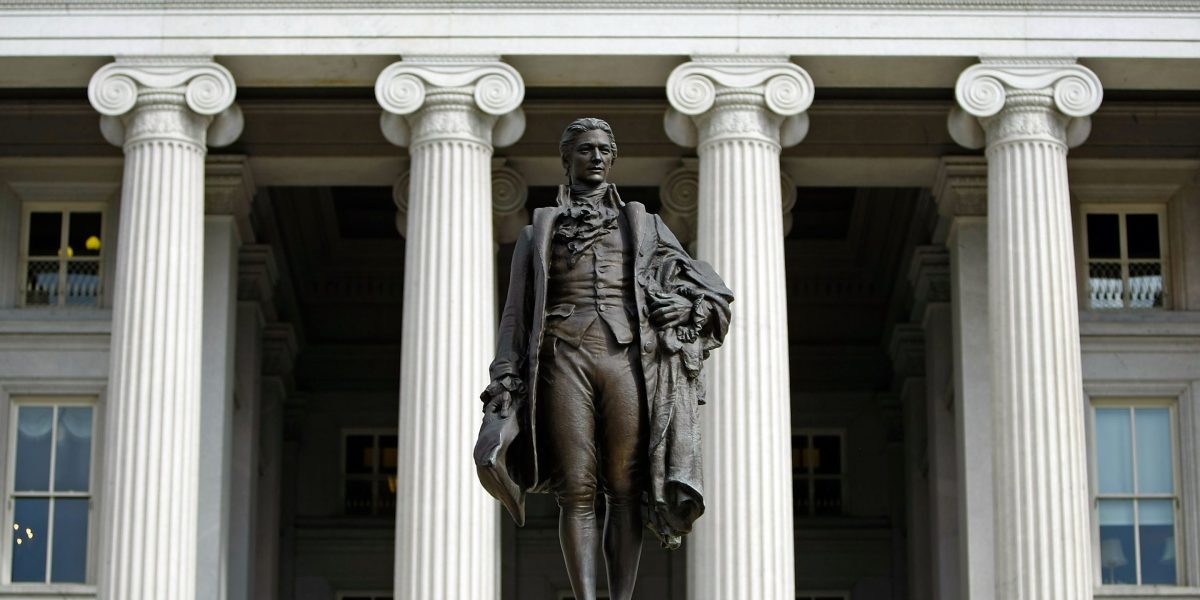
A statue of the first United States Secretary of the Treasury Alexander Hamilton stands in front of the U.S. Treasury September 19, 2008 in Washington, DC. Chip Somodevilla/Getty Images
Add Fortune on Google for similar content.
Add us on Google
Add us on Google
Believe it or not, U.S. debt was once a source of national strength, before it became a sword of Damocles hanging over the federal government and the bond market.
Recommended Video
While the nation celebrates the 250th anniversary of the Declaration of Independence, the origin of U.S. financial might can be traced back to a controversial decision in 1790 to consolidate debts from the Revolutionary War.
Alexander Hamilton, who served as the first Treasury Secretary, is considered the architect of American finance as he engineered one of the most consequential economic decisions in early U.S. history.
He recognized how debt can unlock resources that could transform the young republic. But first he had to untangle the mess created by the Revolutionary War.
To fight off the British Empire, the Continental Congress borrowed heavily domestically and internationally via various instruments, while individual states racked up their own war debts.
Under Hamilton’s plan, the nascent federal government took on state debts and consolidated everything into one national debt. At the same time, he committed the U.S. to repaying the debt in full rather than claiming that the government established by the Constitution wasn’t responsible for war-era borrowing.
For a fragile new country, this was a revolutionary idea and established its creditworthiness early on, as investors had expected the U.S. to instead default on its debts or force investors to take a hair cut.
By building a reputation for reliability, demand for U.S. debt grew, and Treasury bonds were soon traded in European markets. This also allowed the U.S. to borrow more money relatively cheaply, as investors were reassured by the “full faith and credit of the United States,” with fresh debt helping finance the Louisiana Purchase.
Fast forward more than two centuries to today, and Treasury bonds underpin the global financial system and are considered one of the world’s safest assets.
They also fill reserves in central banks and corporate coffers while also reinforcing the U.S. dollar’s status as the top reserve currency, enabling the U.S. to flex its financial muscle wherever greenbacks are exchanged.
This “exorbitant privilege” has allowed to U.S. to borrow more cheaply than its fiscal profligacy would otherwise permit.
U.S. debt is now $39 trillion, with publicly held debt equaling the size of the entire economy. Interest costs alone are $1 trillion a year, topping the defense budget and adding to a pile that’s soon headed for territory not seen since the immediate aftermath of World War II.
The explosion in red ink, especially in the last 20 years, has fueled growing and increasingly dire alarms, as the trajectory is unsustainable. Meanwhile, lawmakers continue cutting taxes that weaken revenue without tackling the biggest drivers of spending, namely Social Security and Medicare.
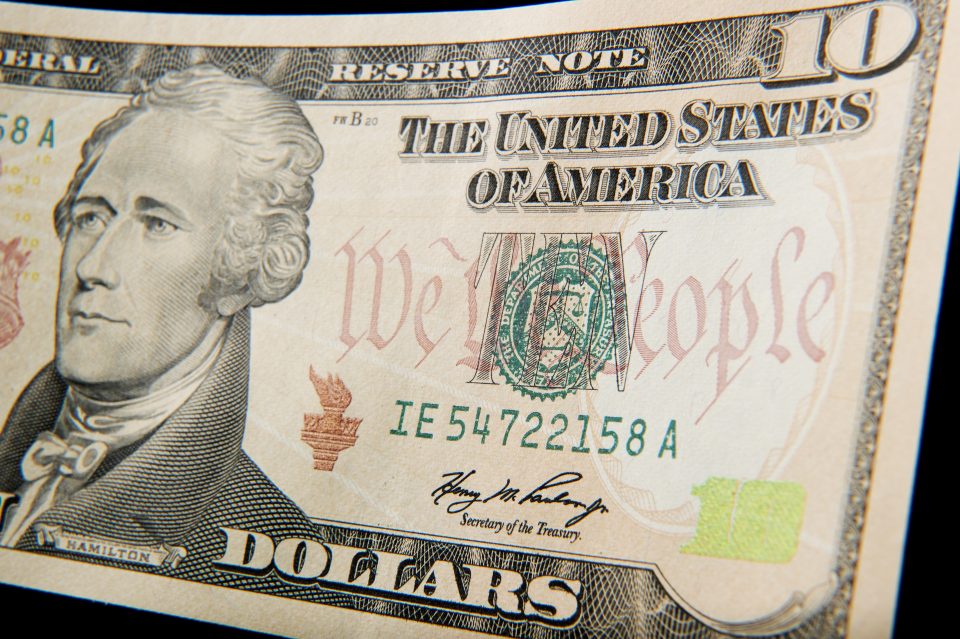
A close-up of the front of the US 10-dollar bill bearing the portrait of Alexander Hamilton, America’s first Treasury Secretary, is seen on December 7, 2010 in Washington, DC.
PAUL J. RICHARDS/AFP via Getty Images
But for now, investors are continuing to buy new U.S. debt, though some recent Treasury auctions required a higher yield to draw the necessary demand.
The Treasury market also remains the world’s deepest and most liquid, with over $30 trillion in outstanding securities and more than $1 trillion in daily trading volume.
content frame
An error has occurred
CEO Daily Newsletter
Start your day with our five-minute briefing on the news, trends, and chatter shaping business.
Email address:
By creating an account, I have read and agreed to Fortune's Terms of Use and Privacy Policy.
Sign up
Thank you for subscribing to CEO Daily!
Subscribe to Fortune today for unlimited access
Subscribe for $1
Although the precise debt level that would spark a crisis is unknown, the Penn Wharton Budget Model recently put the threshold at more than 210% of GDP.
Above that “outer bound,” there’s no feasible tax on labor income that can finance interest payments on U.S. debt at returns acceptable to investors, PWBM warned.
According to PWBM, the outer bound of federal debt is the solvency limit, beyond which defaulting on either Treasury debt or pay-as-you-go transfers like Social Security becomes a near certainty on an inflation-adjusted basis.
The debt-to-GDP ratio is about 100% today, and forecasts from the Congressional Budget Office see it hitting 175% by 2056—suggesting 210% is decades away on its current trajectory.
But depending on how much healthcare costs rise and boost Medicare spending, that threshold could come much sooner.
The U.S. has 25 more years in a lower-growth scenario, 22 years with medium growth, and 19 years with higher growth, PWBM estimated. But even that may downplay the risk.
“Under the historical growth rate of healthcare costs, there is a 25% chance of hitting the debt maximum in 14 years,” it added.
Subscribe to Fortune Gulf Brief. Every Tuesday, this new newsletter delivers clear-eyed, authoritative intelligence on the deals, decisions, policies, and power shifts shaping one of the world’s most consequential regions, written for the people who need to act on it. Sign up here.
About the Author
By Jason MaWeekend Editor
Jason Ma is the weekend editor at Fortune, where he covers markets, the economy, finance, and housing.
See full bioRight Arrow Button Icon
Add Fortune on Google for similar content.
Add us on Google
content frame
An error has occurred

News leaders rely
on - for $1/week
Latest in Economy

By Jason MaJuly 4, 2026
8 hours ago
By Jason MaJuly 4, 2026
11 hours ago
content frame
An error has occurred
Unlock the reporting leaders trust to stay ahead

Iran’s envoy to China says Beijing to get Hormuz concessions
By BloombergJuly 4, 2026
15 hours ago
By Sydney LakeJuly 4, 2026
17 hours ago

By John Leicester and The Associated PressJuly 3, 2026
2 days ago

On Wall Street, analysts increasingly don’t believe the U.S. government’s ‘misleading’ job numbers
By Jim EdwardsJuly 3, 2026
2 days ago
Most Popular
By Preston ForeJuly 4, 2026
23 hours ago

By Wyatte Grantham-Philips and The Associated PressJuly 2, 2026
2 days ago

Meet the Zillennials: The luckiest micro-generation in the workforce, born between 1993 and 1998
By Nick LichtenbergJuly 3, 2026
2 days ago

Economists have found an answer to slowing cognitive decline: Avoid retiring early, study finds
By Sasha RogelbergJuly 2, 2026
3 days ago

By Orianna Rosa RoyleJuly 3, 2026
2 days ago

By Preston ForeJuly 4, 2026
20 hours ago
search by querylyAdvanced Search
content frame
An error has occurred
CEO Daily Newsletter
Start your day with our five-minute briefing on the news, trends, and chatter shaping business.
Email address:
By creating an account, I have read and agreed to Fortune's Terms of Use and Privacy Policy.
Sign up
Thank you for subscribing to CEO Daily!
Subscribe to Fortune today for unlimited access
Subscribe for $1
content frame
An error has occurred
CEO Daily Newsletter
Start your day with our five-minute briefing on the news, trends, and chatter shaping business.
Email address:
By creating an account, I have read and agreed to Fortune's Terms of Use and Privacy Policy.
Sign up
Thank you for subscribing to CEO Daily!
Subscribe to Fortune today for unlimited access
Subscribe for $1
Read Original at Fortune →