Skip to main content Skip to navigation
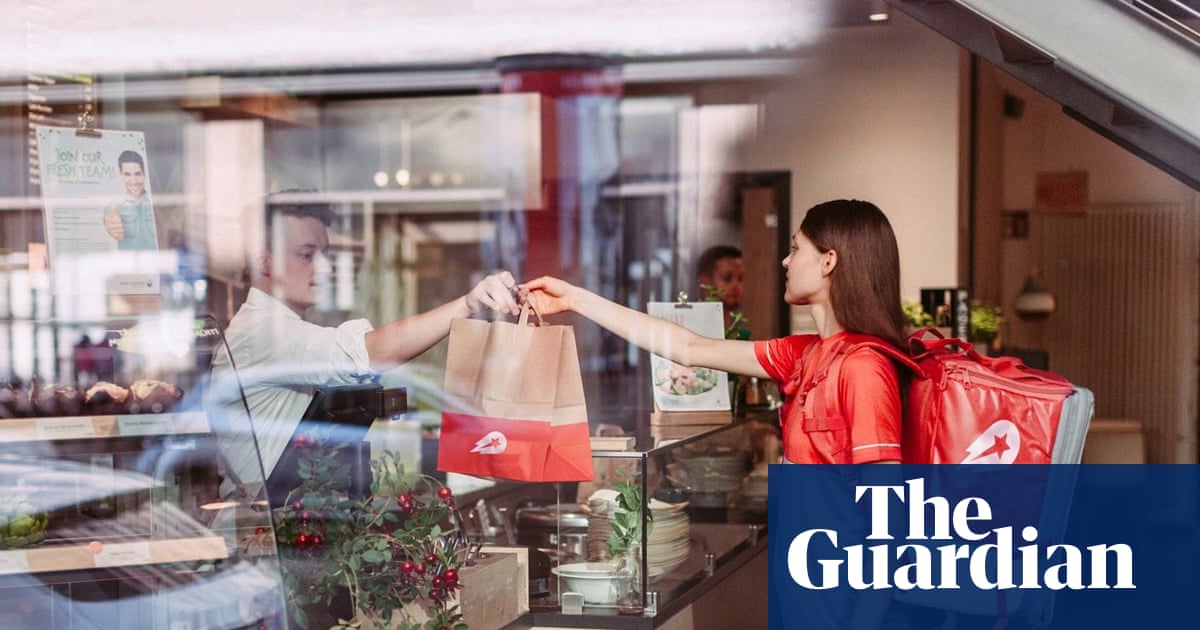
Uber said it would maintain Delivery Hero’s headquarters in Berlin and make no changes to its workforce until at least 2029. Photograph: Delivery Hero
Uber said it would maintain Delivery Hero’s headquarters in Berlin and make no changes to its workforce until at least 2029. Photograph: Delivery Hero
Uber to buy Germany’s Delivery Hero in $14.8bn global deal
Agreement combines Uber Eats with food delivery brands in 99 countries and expands taxi service reach
Uber has reached an agreement to take over the German takeaway company Delivery Hero in a $14.8bn (£11bn, or €12.9bn) deal that would create a global food delivery giant.
The US tech firm said it had offered to pay €41.50 a share to Delivery Hero’s shareholders, valuing the business at $14.8bn. Uber will pay $13.7bn after accounting for its previous purchases of a quarter of Delivery Hero’s shares, most recently in May.
The deal would combine Uber Eats with Delivery Hero’s brands across 99 countries, including Asia’s foodpanda, Latin America’s PedidosYa, and talabat in the Middle East. The combined company booked $236bn in orders in 2025.
Under the deal, the San Francisco-based Uber will not acquire Delivery Hero’s operations in 14 countries where it already has a strong presence, including the Glovo app that serves countries such as Portugal and Spain, foodora in countries such as Norway and Sweden, and Yemeksepeti in Turkey. They will instead be bought for $1.6bn by SSW Partners, a New York-based private equity firm.
Splitting the deal with SSW will help to prevent Uber dominating those markets, an important consideration for competition regulators.
Delivery Hero does not operate in the UK, where Uber Eats is among the biggest players in food delivery.
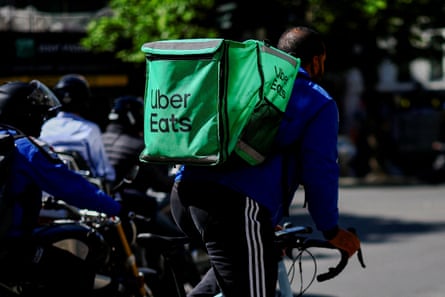
The deal will combine Uber Eats with Delivery Hero’s brands across 99 countries. Photograph: Sarah Meyssonnier/Reuters
The takeaway delivery industry has grown in popularity in the past two decades, with a huge array of apps opening across the world and a boom in deliveries during coronavirus lockdowns. However, since the pandemic bubble burst, delivery companies have focused on trying to be big enough to cover significant operating costs – and putting pressure on delivery workers’ pay and conditions.
That has led to a wave of takeovers as businesses chase greater scale. The US’s DoorDash last year took over Britain’s Deliveroo for £2.9bn, while the South African-owned investment group Prosus bought JustEat Takeaway for €4bn (£3.4bn).
Delivery Hero’s board and executives unanimously supported the takeover, and said they intended to recommend it to shareholders. Prosus said it had committed to sell its 17% shareholding in Delivery Hero to Uber.
Kristin Skogen Lund, chair of Delivery Hero’s supervisory board, said: “The food delivery business is highly competitive and scale-dependent. It is challenging to build from a European base, yet we have achieved an enormous amount over 15 years.
“Joining forces with a strong partner now is the right move for Delivery Hero to best secure its future competitiveness and ability to deliver value for all our stakeholders.”
Uber said it will maintain Delivery Hero’s headquarters in Berlin and make no changes to its workforceuntil at least 2029, and pledged to invest €2bn in Germany over the next five years. The deal is expected to close in the second half of 2027.
Uber said it will offer taxi services and food delivery in 58 markets after the deal completes, up from 34. It said it benefits from taxi customers also using its food delivery services, and that people who use both services tend to spend three times more on its app.
Dara Khosrowshahi, Uber’s chief executive, said: “By bringing our platforms together, we will extend affordable, reliable delivery to many millions more people in many of the world’s most dynamic economies, while creating more opportunities for merchants and couriers.
“Together, we’ll nearly double the number of markets where we offer both mobility and delivery services, scaling a proven platform that we believe will create significant long-term value for our customers and shareholders.”
Delivery Hero’s founder, Niklas Östberg, started his first food delivery company in 2008 in Sweden. He founded Delivery Hero in 2011 in Germany and listed it on the Frankfurt Stock Exchange in 2017.
Under pressure from activist investors, Östberg agreed in May to leave the company. He said: “I’m grateful to our people for building this company over 15 years and we look forward to this great next chapter together.”
Explore more on these topics
Dynamic pay on platforms such as Uber should be banned, says TUC

Uber driver Michael was assaulted by passengers. He says the platform’s response added insult to injury
‘I don’t want to waste the gas’: Uber and Lyft drivers reeling as fuel prices soar
- Queensland ebike laws could cripple Uber Eats, DoorDash and shared e-vehicle schemes, industry warns

Queensland ebike laws could cripple Uber Eats, DoorDash and shared e-vehicle schemes, industry warns

Uber adds fuel surcharge for non-EV fares in Australia amid petrol price rises
Uber launches women-only option across the US
Uber found liable for sexual assault by driver and ordered to pay victim $8.5m