
ADVERTISEMENT
Delays, detours, and passed-out riders: Waymos keep blocking SF firefighters
Robotaxis have become a huge headache for emergency responders trying to save lives.
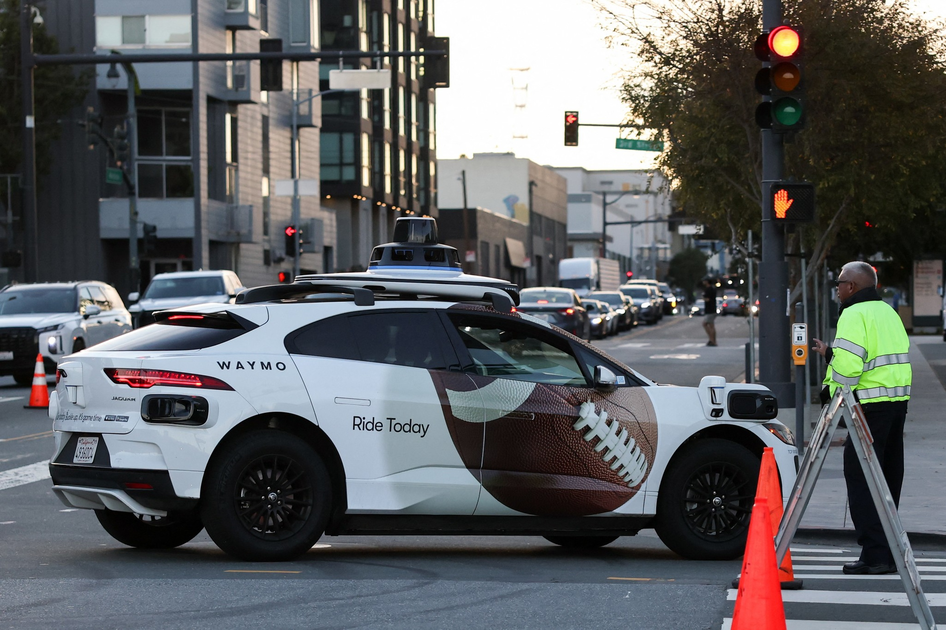
Public agencies have called for autonomous vehicle companies to address reports of the cars obstructing emergency responders. | Source: Patrick T. Fallon/AFP/Getty Images

By Jessica BloughNews Intern
PublishedJul. 10, 2026at6:00am
Share
Share
- Copy linkto this article
- Email (opens in new tab)
- Twitter (opens in new tab)
- Bluesky (opens in new tab)
- Facebook (opens in new tab)
- LinkedIn (opens in new tab)
- Telegram (opens in new tab)
- WhatsApp (opens in new tab)
- Reddit (opens in new tab)
Close share menu
There are $0 comments on this story
PublishedJul. 10, 2026at6:00am
 Add The Standard as a preferred source on Google
On a brisk night in December, a San Francisco Fire Department rescue vehicle was dispatched to a stabbing reported on 15th Street in the Mission. While navigating Bernal Heights’ narrow streets, it came across a Waymo stuck perpendicular to the roadway, blocking all vehicles.
The responders got out and knocked on the robotaxi’s window to trigger a call to Waymo customer service. After a company representative failed to remotely reposition the car, the emergency responders were forced to get in the driver’s seat to move it out of the way.
“Verbal instructions for manual mode were provided but proved ineffective,” said a fire department report of the incident, acquired by The Standard. “It seemed like the gear selector on the Waymo was not working right. When the car was properly placed into reverse, it still only drove forward which could have caused further damage.”
ADVERTISEMENT
The ordeal lasted 15 minutes. By the time the emergency personnel freed their vehicle from the traffic, a different crew had already arrived at the scene of the stabbing.
Since April 2025, San Francisco firefighters have filed at least 31 internal reports documenting Waymos and other robotaxis obstructing emergency operations — delays and blockages that are now drawing scrutiny from federal and state regulators and prompting new inquiries at both the state and local level.
This week, during Fourth of July celebrations, Waymos clogged city streets after encountering unexpected road closures and running out of battery power. It was the latest snafu for the vehicles, which were suspended from roads during the 2025 blackout caused by a PG&E substation fire when, confused by a lack of signals, they simply stopped in the middle of the road.
San Francisco was one of the first areas to widely adopt self-driving cars, but the city’s emergency responders considered them a source of aggravation long before this week’s foggy fireworks display. As the technology continues its march across the country, policymakers are beginning to take action, often citing San Francisco as a poster child.
Jonathan Morrison, administrator of the National Highway Traffic Safety Administration, said (opens in new tab) the agency has “identified a clear pattern of driverless AVs interfering with law enforcement and other first responders.”
Complaints from first responders prompted California to pass laws requiring autonomous vehicle companies to answer calls from them within 30 seconds. Additionally, emergency officials must have the ability to block autonomous vehicles from entering certain areas.
On the local level, Supervisor Connie Chan plans to propose legislation to cite companies when their autonomous vehicles obstruct first responders.
“The goal is to have a conversation about what type of incident is occurring because of these types of technology, but also hold these companies accountable that they need to make improvements to their technologies. This is going to impact their bottom line,” Chan said. “This is only the first step.”
Waymo did not respond to questions about specific incidents reported by the SFFD and raised by The Standard, saying only that it was reviewing them and takes such interactions seriously. “Our goal is to support first responders, not create additional work for them,” a spokesperson said.
Firefighters, paramedics, and EMTs are instructed to file reports whenever they come across an autonomous vehicle “obstructing emergency operations,” SFFD Lt. Mariano Elias said. The reports are sent to Deputy Chief of Operations Pat Rabbitt, who passes them along to the robotaxi companies.
The reports represent a tiny fraction of AV trips in San Francisco — Waymo says its cars interact with 50,000 emergency vehicles weekly in California without issue, and most reports describe delays of five minutes or less. But they likely undercount the real total: only one report references the December 2025 blackout, when dozens of autonomous vehicles were stranded on roads.
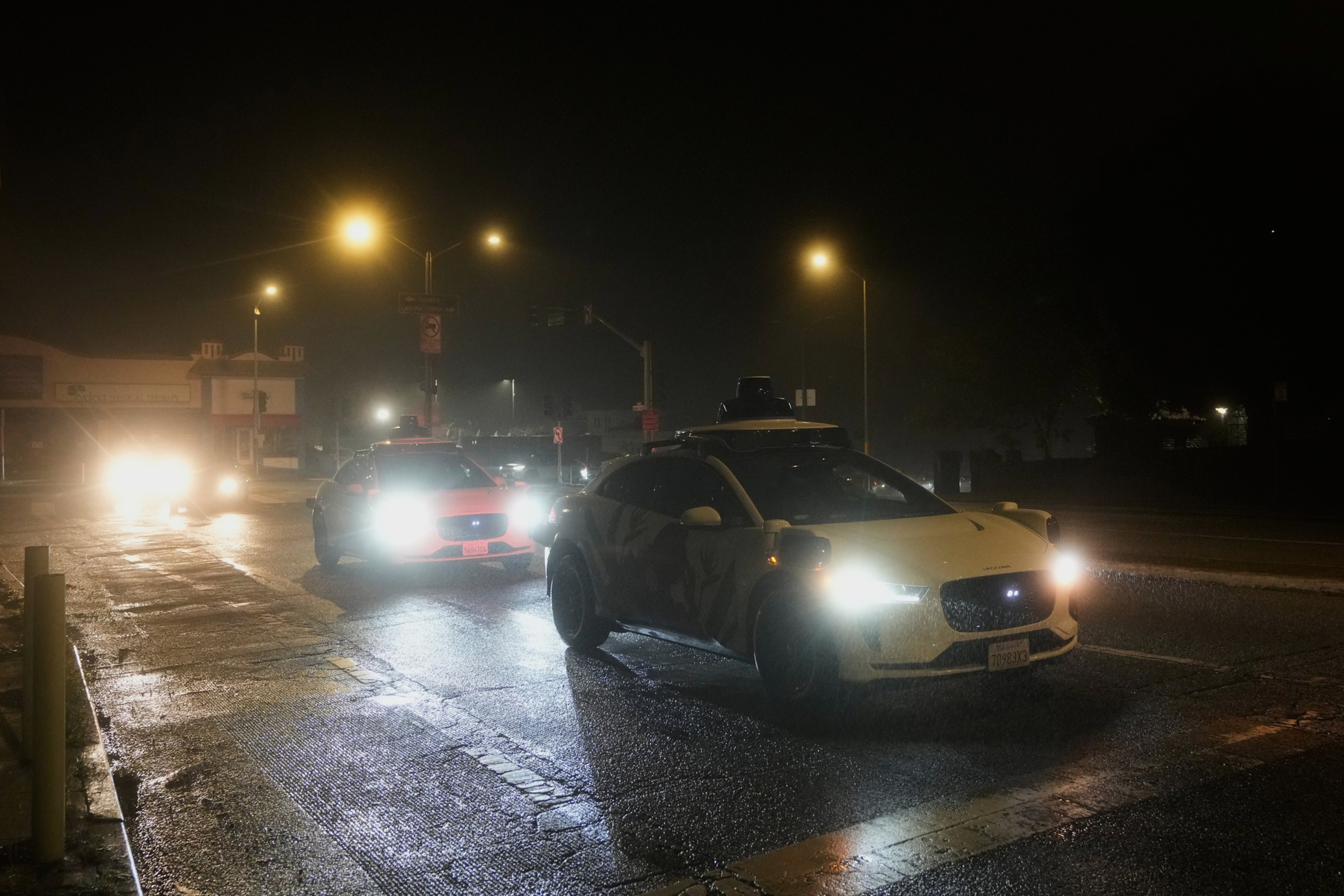
Waymos caused chaos during a 2025 blackout when the power outage knocked out traffic lights. | Source: Jeff Chiu/AP
The reports paint a picture of emergency services’ interactions with robotaxis that go from absurd to alarming.
According to the documents, Waymos have blocked firehouse exits, got stuck in front of responding ambulances and fire engines, and impeded emergency responders’ ability to fight fires. In at least four cases, officials reported that emergency vehicles encountered stalled or stopped Waymos while responding to life-threatening “Code 3" calls.
More about Waymo

Power Play
She was City Hall’s ‘event czar.’ Her absence may explain the July 4 chaos
-
Waymos stalled and snarled traffic after SF’s biggest fireworks show in years
-
‘It is insanity’: SF luxury condo owners fume over aggravating neighbors. (They’re Waymos)
On the morning of Feb. 21, a Waymo attempted a three-point turn on Sanchez Street in Duboce Triangle and got stuck facing the sidewalk, blocking a fire engine responding to a medical call for someone experiencing shortness of breath. Firefighters spent several minutes verifying their identities with a Waymo representative before SFPD and a tow truck were called in to help navigate around the car. The report described the company’s representatives as “very uncooperative.”
A Waymo representative told The Standard the company operates a 24/7 emergency response line and trains for first responders. “No technology is perfect, but Waymo’s fleet learns from individual events in a way human drivers cannot: When we identify an opportunity to improve, those learnings can be applied across our entire fleet,” the spokesperson said.
The company said the reports reflect the reporting agency’s perspective, not the full picture.
William Riggs, director of USF’s Autonomous Vehicles and the City Initiative, cautioned that the reports reflect a small number of interactions with no comparison to how human drivers might impede first responders.
Have thoughts on this story?
Start the conversation
“We have a lot of cities trying to figure out how they document interactions with emergency responders on their roadways,” Riggs said. “There’s very little scientific rigor or standardization across municipalities on how cities are collecting data on their interactions with the vehicles.”
He warned that the blame game could crowd out collaboration on real fixes.“When all you have is finger pointing, you’re going to end up with an incident where there’s no room for collaboration,” Riggs said.
Asleep at the wheel
During a June 12 hearing by the Board of Supervisors Budget and Appropriations Committee, Supervisor Chan asked Fire Chief Dean Crispin about the impact of stalled Waymos on emergency response during the December blackout.
“It definitely creates a delay in response and a danger to the residents,” Crispin said.
The fire department once responded to a passenger fast asleep in the back seat of a Waymo. Although the documents list just one example, Elias said the department has been summoned by 911 calls from robotaxi companies to waken unconscious passengers at least 100 times.
“If somebody falls asleep in a Waymo, Waymo automatically calls 911, and then we end up responding,” Crispin said. “It is a draw on our resources.”
Waymo said it contacts emergency services only in cases of a potential medical concern or severe impairment. The robotaxis first emit loud noises and try to call the passenger through both their phone and the car’s speakers before ringing 911.
Zoox and Waymo both host training sessions for first responders on how to interact with autonomous vehicles on the road. Firefighters and first responders learn to put their hands on the window of the vehicles to activate customer service, according to the reports.
Waymo said the cars are trained to yield to emergency vehicles and detect sirens and lights through audio and visual sensors.
Zoox did not elaborate on how it handles the incident reports, while Waymo said they are used as feedback to understand each situation and determine whether operational changes are needed.
“We continue to work closely with public safety agencies in San Francisco and across California to help ensure our vehicles respond safely and predictably around emergency scenes, emergency vehicles and first responders,” a Waymo spokesperson said.
Two incident reports filed by the same officer, nearly a year apart, show that even as the vehicles gain experience, the obstructions keep happening.
SFFD Lt. Michael F. Digre filed a report about a May 8, 2025, incident in which a Waymo blocked the ability of his fire truck to achieve an “aerial shot,” which means positioning a ladder to reach a building on fire. The Waymo was unable to navigate around the truck until a firefighter physically entered the vehicle and drove it out of the way.
Eleven months later, on April 6, Digre reported that a Waymo had again obstructed the ability of the fire truck to achieve an aerial shot. And again, a firefighter had to manually take over the vehicle to drive it out of the way.
The relationship between autonomous vehicle operators and emergency services providers has been growing more contentious. In a March meeting between first responders and regulators reported by Wired (opens in new tab), Mary Ellen Carroll, executive director of San Francisco’s Department of Emergency Management, accused Waymos of “backsliding” in their responsiveness to emergencies. Morrison issued “a call to action for AV developers and operators to immediately focus their resources on fixing this issue.”
That frustration is filtering down to the people filling out the paperwork. One February report by Fire Suppression Captain Kenneth C. Cordero says SFFD staffers often do not have the time or capacity to note the license plate numbers of the cars and immediately report them to the company.
“I understand that this technology is probably here to stay, but it could use many improvements,” the report concludes. “I have stopped completing these forms because I have been told to include information that I do not have.”
-
Copy link to this article
More about the author
News Intern·
Contact
Contact Jessica
Close
-
@jessblough.01
Jessica Blough is a news reporter at the San Francisco Standard. Previously, she reported for Mission Local and was an associate editor at Alta Journal.
Filed under
AI AI Is Eating SF Autonomous Vehicles Business Cars National Highway Traffic Safety Administration Robotaxis San Francisco Fire Department Waymo Zoox
Read Original at The San Francisco Standard →