
Trendingnow
1
2
3
1
2
3
Why odds of SpaceX merger with Tesla keep climbing every time the stock shoots up

By Shawn Tully Shawn Tully
Senior Editor-at-Large Down Arrow Button Icon
By Shawn Tully Shawn Tully
Senior Editor-at-Large Down Arrow Button Icon
June 20, 2026, 4:00 AM ET
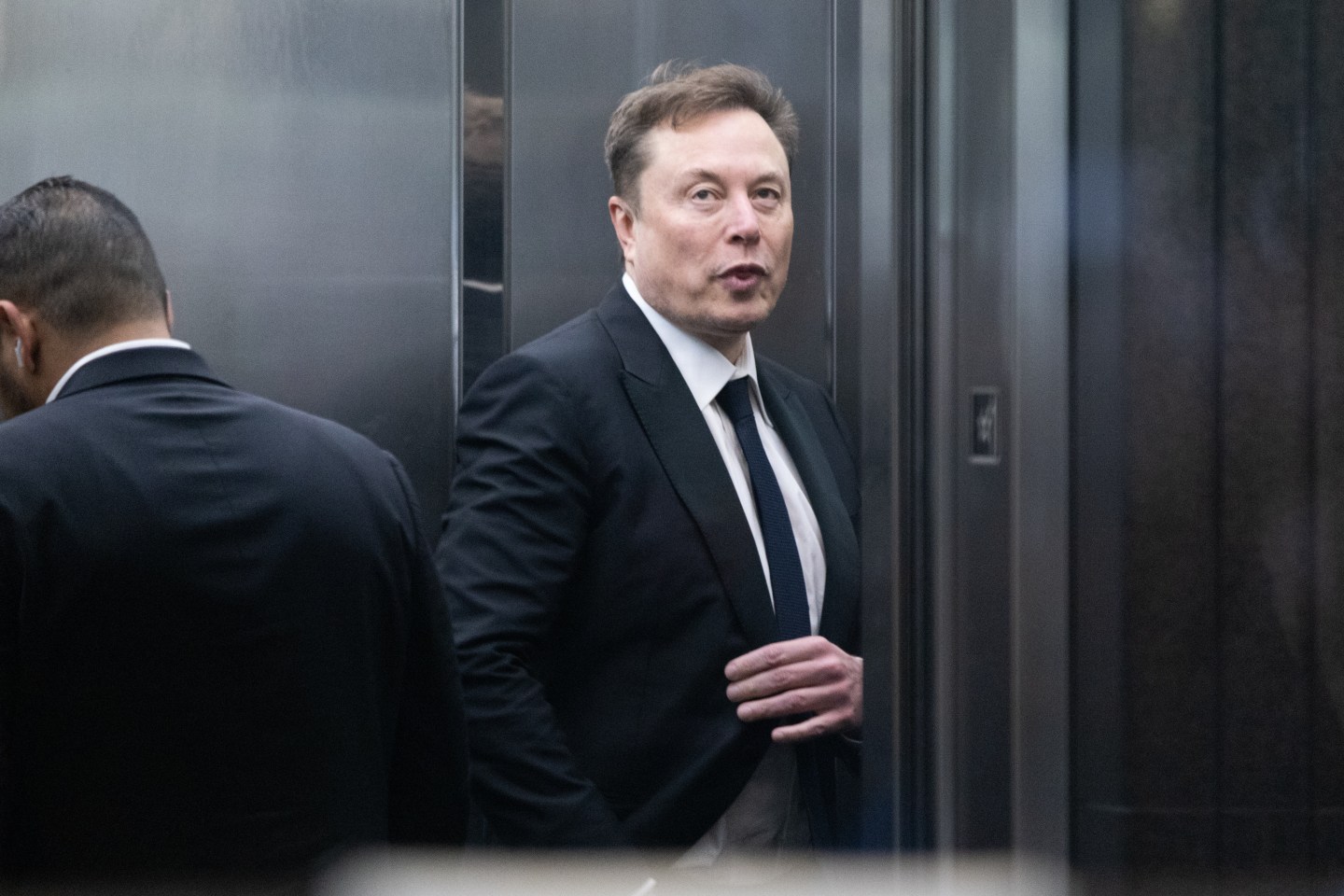
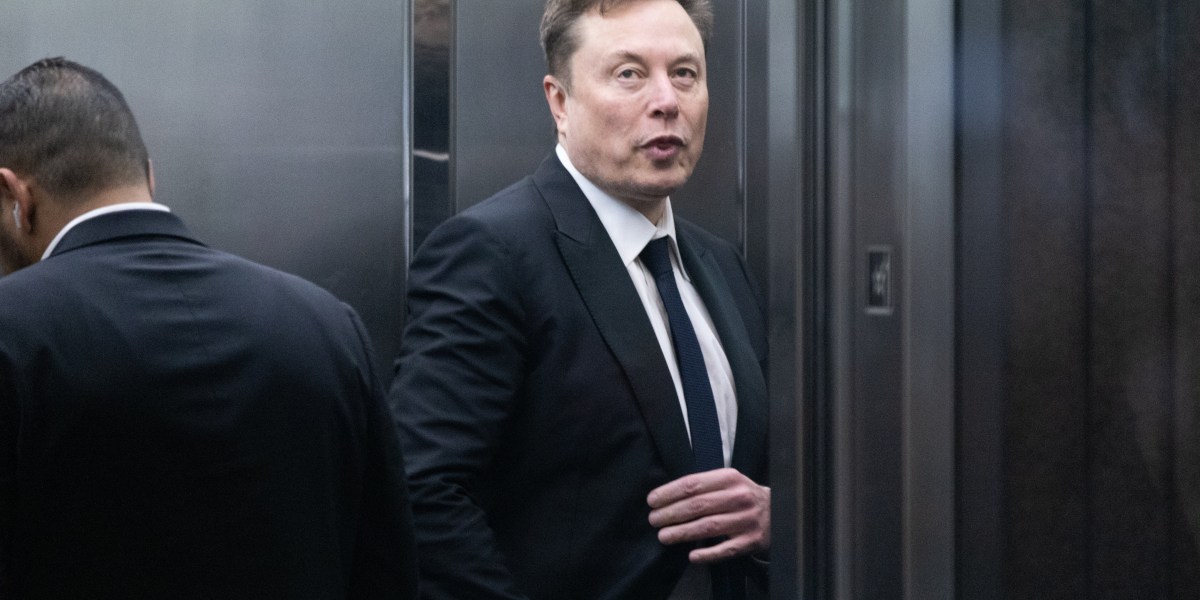
Some have speculated Elon Musk may be toying with a megamerger. Photo by Benjamin Fanjoy/Getty Images
Add Fortune on Google for similar content.
Add us on Google
Add us on Google
In a CNBC interview on June 12, host Morgan Brennan asked SpaceX president and COO Gwynne Shotwell whether the rocket and AI player might buy Elon Musk’s second largest holding, Tesla. She didn’t dismiss the possibility, and even suggested that it might make sense. “There’s a convergence we’re all trying to accomplish in the future,” she declared, adding that the tie-up “might make Elon’s life a little easier.”
Recommended Video
Since SpaceX’s stupendous debut hours after Shotwell’s CNBC appearance, the math governing a potential union has improved substantially. The reason: SpaceX shares have shot to such celestial heights that it can now purchase Tesla by offering far less stock than would have been required had its valuation settled at its pre-trading level.
That scenario makes it easier to solve a nagging problem that plagues the Musk empire: How to bail out Tesla. The EV-maker’s fundamentals are getting weaker and weaker. In the past four quarters, Tesla posted just $3.4 billion in GAAP net earnings down from $15 billion in 2023 and $7.0 billion in 2024. Yet its market cap is still hovering around $1.5 trillion, a number almost entirely based on Musk’s promises of big profits from robots and self-driving cars, products not yet selling, and whose advertised entry on the market keeps getting delayed. In fact, many on Wall Street fear that Tesla’s notched that astronomical market cap less on hopes of wonders to come, and more on the possibility SpaceX will bid something close to what the carmaker’s selling for to clinch a colossal takeover.
Here’s how the new numbers make a transaction a lot more attractive for Musk and his fellow SpaceX shareholders, at least in theory. At the offer price of $135 a share, SpaceX would have boasted a valuation of around $1.75 trillion—you saw that number quoted everywhere, pre-June 12. Hence, if SpaceX bought Tesla in an all-stock transaction, and both players maintained the same valuations after they unveiled the merger plan, SpaceX would need to issue 46% more shares (that’s Tesla’s $1.5 trillion divided by the total equity value of $3.25 trillion).
But since SpaceX started trading, its shares have vaulted 37% to $185 by the close on June 18, the end of its first week on the Nasdaq, sending its valuation to $2.44 trillion. As a result, SpaceX could buy Tesla by issuing “only” 38% of its shares. That’s a big improvement over the previous requirement of 46%.
Even before SpaceX went on its historic moonshot, sundry prominent figures on Wall Street viewed a deal as inevitable. Wedbush analyst Dan Ives put the odds of a merger at 80%. Long-time Tesla investor Ross Gerber, citing that Musk had already folded xAI into SpaceX, concluded that this new gambit would advance his vision of running one big company amounting to a kind of Berkshire Hathaway of AI-driven tech. Betting site Kalshi displayed odds of 52% that it would happen by May of next year.
Today, the Kalshi denizens have raised that number just two points, to 54%. Still, SpaceX has achieved a phenomenal market cap that looks highly excessive versus its extremely modest fundamentals. That hands Musk a big opportunity for marshaling a hugely overvalued stock to salvage great value for himself and the other Tesla owners.
The SpaceX S-1 filing makes a big deal over the sundry areas of collaboration between the two companies. Those include partnering to develop digital workflows and their joint-ownership in the Terafab facility that plans to produce a gigantic one terawatt a year in compute hardware. Tesla also owns around $4 billion in SpaceX stock via its previous stake in xAI, purchased by the rocket-maker in February.
Musk’s position that his two top holdings share a common AI vision gives him cover for justifying a deal. The problem: the combo would create one of the strangest creatures in the annals of capitalism. If the valuations for both companies stayed about the same through completion of a merger, the combined entity would sport a market cap of $4 trillion, making it fourth most valuable U.S. enterprise behind Nvidia, Alphabet, and Apple, and over one trillion ahead of Amazon and Microsoft. Yet unlike all of those big-earners, it would have negative profits, since SpaceX’s losses in the past four quarters more than offset Tesla’s puny gains.
Put simply, Musk would be using one incredibly pricey stock to buy another of the same genre. It would be a great deal for Tesla and terrible for SpaceX shareholders. Though SpaceX would suffer less dilution due to the big run-up, its shareholders would still go from owning 100% of the company to less than two-thirds. What would they get in return? Tiny earnings from Tesla’s bedrock EV business, and the addition of a multi-product portfolio also encompassing robotaxis, robots and batteries to the sprawling rocket, Starlink, and AI assortment it’s already running. Musk would be making SpaceX even more of a conglomerate, and even harder to manage. We’d soon see if Musk harbors the special, Warren Buffett-like genius to make such a disparate collection work when company after company, from GE to Honeywell, is dumping the conglomerate model.
Of course, a deal that looks this crazy may not happen. But by sending shares of SpaceX orbital, its fans and Wall Street boosters just made what looks like something that could only happen in Musk’s mind all the more likely.
Subscribe to Fortune Gulf Brief. Every Tuesday, this new newsletter delivers clear-eyed, authoritative intelligence on the deals, decisions, policies, and power shifts shaping one of the world’s most consequential regions, written for the people who need to act on it. Sign up here.
About the Author
By Shawn TullySenior Editor-at-Large
Shawn Tully is a senior editor-at-large at Fortune, covering the biggest trends in business, aviation, politics, and leadership.
See full bioRight Arrow Button Icon
Add Fortune on Google for similar content.
Add us on Google
Latest in Big Tech
Finance
Lorem ipsum dolor sit amet, consectetur adipiscing elit, sed do eiusmod tempor incididunt ut labore et dolore magna aliqua. Ut enim ad minim veniam
By Fortune Editors
October 20, 2025
Finance
Lorem ipsum dolor sit amet, consectetur adipiscing elit, sed do eiusmod tempor incididunt ut labore et dolore magna aliqua. Ut enim ad minim veniam
By Fortune Editors
October 20, 2025
Finance
Lorem ipsum dolor sit amet, consectetur adipiscing elit, sed do eiusmod tempor incididunt ut labore et dolore magna aliqua. Ut enim ad minim veniam
By Fortune Editors
October 20, 2025
Finance
Lorem ipsum dolor sit amet, consectetur adipiscing elit, sed do eiusmod tempor incididunt ut labore et dolore magna aliqua. Ut enim ad minim veniam
By Fortune Editors
October 20, 2025
Finance
Lorem ipsum dolor sit amet, consectetur adipiscing elit, sed do eiusmod tempor incididunt ut labore et dolore magna aliqua. Ut enim ad minim veniam
By Fortune Editors
October 20, 2025
Finance
Lorem ipsum dolor sit amet, consectetur adipiscing elit, sed do eiusmod tempor incididunt ut labore et dolore magna aliqua. Ut enim ad minim veniam
By Fortune Editors
October 20, 2025
Most Popular
Finance
Lorem ipsum dolor sit amet, consectetur adipiscing elit, sed do eiusmod tempor incididunt ut labore et dolore magna aliqua. Ut enim ad minim veniam
By Fortune Editors
October 20, 2025
Finance
Lorem ipsum dolor sit amet, consectetur adipiscing elit, sed do eiusmod tempor incididunt ut labore et dolore magna aliqua. Ut enim ad minim veniam
By Fortune Editors
October 20, 2025
Finance
Lorem ipsum dolor sit amet, consectetur adipiscing elit, sed do eiusmod tempor incididunt ut labore et dolore magna aliqua. Ut enim ad minim veniam
By Fortune Editors
October 20, 2025
Finance
Lorem ipsum dolor sit amet, consectetur adipiscing elit, sed do eiusmod tempor incididunt ut labore et dolore magna aliqua. Ut enim ad minim veniam
By Fortune Editors
October 20, 2025
Finance
Lorem ipsum dolor sit amet, consectetur adipiscing elit, sed do eiusmod tempor incididunt ut labore et dolore magna aliqua. Ut enim ad minim veniam
By Fortune Editors
October 20, 2025
Finance
Lorem ipsum dolor sit amet, consectetur adipiscing elit, sed do eiusmod tempor incididunt ut labore et dolore magna aliqua. Ut enim ad minim veniam
By Fortune Editors
October 20, 2025
Latest in Big Tech

By Preston ForeJune 20, 2026
8 hours ago
Executive pay climbed again in 2025—and the CEO-to-worker gap kept widening
By Catherina GioinoJune 20, 2026
10 hours ago
Why odds of SpaceX merger with Tesla keep climbing every time the stock shoots up
By Shawn TullyJune 20, 2026
12 hours ago

By Sasha RogelbergJune 19, 2026
1 day ago

By Sebastian Herrera and Beatrice NolanJune 18, 2026
2 days ago
Google DeepMind unveils plan to protect itself from its own rogue AI agents
By Jeremy KahnJune 18, 2026
2 days ago
Most Popular
By Sydney LakeJune 19, 2026
1 day ago

By Orianna Rosa RoyleJune 18, 2026
3 days ago

By Preston ForeJune 17, 2026
3 days ago

By Tristan BoveJune 20, 2026
12 hours ago
By Preston ForeJune 20, 2026
8 hours ago

By Nick LichtenbergJune 17, 2026
3 days ago
© 2026 Fortune Media IP Limited. All Rights Reserved. Use of this site constitutes acceptance of our Terms of Use and Privacy Policy | CA Notice at Collection and Privacy Notice | Do Not Sell/Share My Personal Information
FORTUNE is a trademark of Fortune Media IP Limited, registered in the U.S. and other countries. FORTUNE may receive compensation for some links to products and services on this website. Offers may be subject to change without notice.
Read Original at Fortune →